

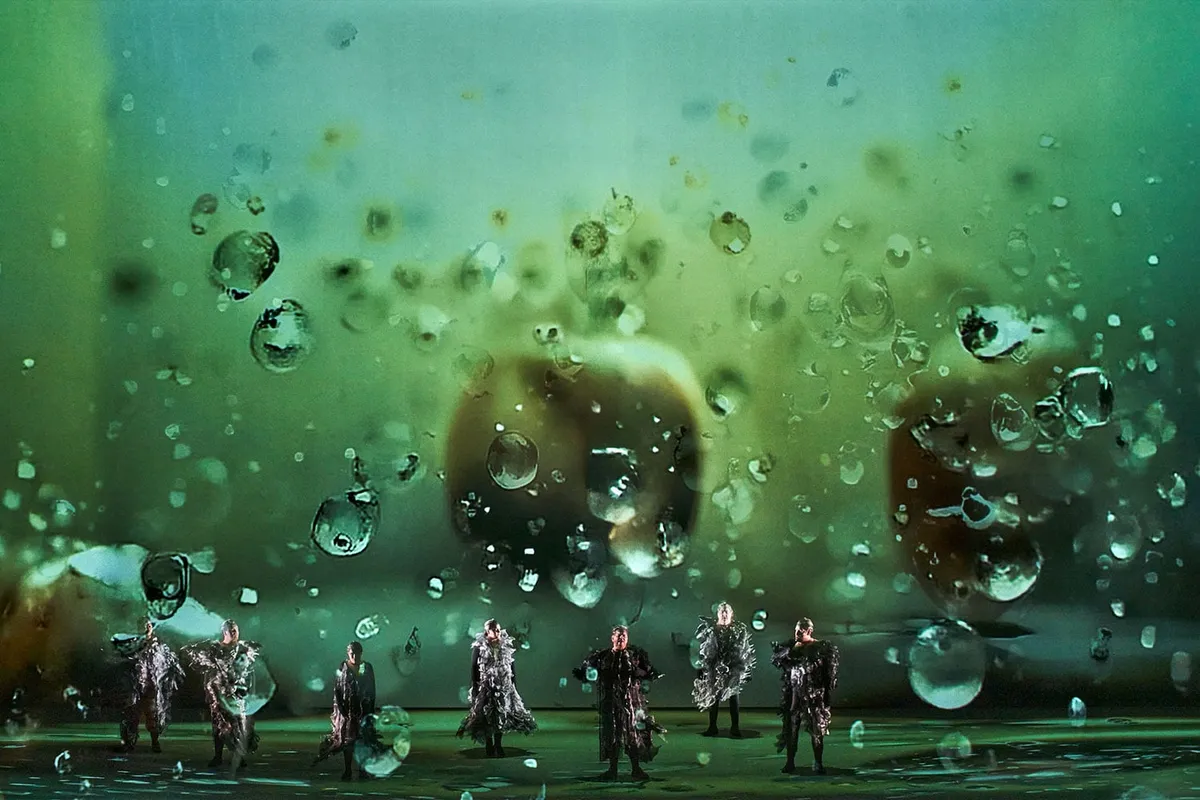
The historic Bayreuth Festival is currently hosting a rare and highly anticipated performance of Richard Wagner’s complete four-opera cycle, ‘Der Ring des Nibelungen’ (The Ring of the Nibelung). This year’s festival, commemorating the 150th anniversary of the cycle’s premiere in 1876 at the Bayreuth Festspielhaus, has drawn opera enthusiasts from around the globe, with fewer than 6,000 attendees securing tickets for the entire series.
A Coveted Event for Wagner Enthusiasts
Attending the Bayreuth Festival, particularly for the ‘Ring’ cycle, is a pilgrimage for dedicated Wagner fans, often referred to as ‘Wagnerians’. Tickets for the 150th-anniversary performances were in extremely high demand, with advance sales concluding last year. The entire four-opera cycle is being performed only three times during the festival. Given the Festspielhaus’s seating capacity of 1,940, the total number of unique individuals experiencing the full cycle is estimated to be well under 6,000, highlighting the exclusivity of the event.
The journey to Bayreuth itself can be an adventure. One attendee recounted a five-hour drive from Salzburg, complicated by a multi-car collision on the Autobahn that caused significant delays. Such traffic incidents, while common on German roads, can add to the challenges of reaching the festival on time. Another fan, who departed an hour earlier from the same city, arrived at the venue just 15 minutes before the performance began, having been stuck in traffic for an hour and a half due to further accidents.
‘Die Walküre’ Takes Center Stage
The festival features leading opera singers, with this year’s ‘Ring’ cycle conducted by Christian Thielemann. The performances showcase renowned artists such as baritone Michael Volle as Wotan and tenor Klaus Florian Vogt as Loge. The production is staged in the very theatre where the cycle first premiered, a place steeped in musical history, having hosted luminaries like Franz Liszt, Johannes Brahms, Pyotr Ilyich Tchaikovsky, and Anton Bruckner, as well as intellectuals like Friedrich Nietzsche and Emperor Wilhelm I.
On August 13th, the second opera of the cycle, ‘Die Walküre’ (The Valkyrie), was performed. The cast included Michael Volle as Wotan, Camilla Nylund as Brünnhilde, and Elisabeth Teige as Sieglinde. The powerful performances were met with thunderous applause, a traditional hallmark of the Bayreuth Festival, often accompanied by boos from audience members who disagree with certain artistic choices.
Innovation and Controversy: AI in Production
A significant point of discussion surrounding this year’s festival is the production’s staging. The festival organizers have stated that the stage designs for the 150th-anniversary ‘Ring’ cycle were created using artificial intelligence (AI), which selected and edited historical production images. This innovative approach has sparked debate among attendees and critics.
During the performance of ‘Die Walküre’, the use of a ‘shadow screen’ (also known as a ‘shamach’) displayed a montage of historical stage photos from past productions. While intended to evoke nostalgia for long-time festival-goers, some felt the sheer volume of images was distracting and detracted from the live performance. The visual clutter sometimes obscured the main singers, making it difficult to fully appreciate their performances. Despite these staging choices, the vocal prowess of artists like Volle and Vogt, along with Thielemann’s masterful conducting, ensured a compelling musical experience.
The distinctive ‘Bayreuth Sound,’ achieved through the unique acoustics of the Festspielhaus and the precise direction of the orchestra, was evident throughout the performance. Thielemann’s meticulous attention to detail extended to the singers’ vocal projection and diction, ensuring clarity and impact. The orchestra’s performance was described as both powerful and refined, capturing the essence of Wagner’s complex score.
The ‘Ring’ Cycle’s Narrative and Scale
‘Der Ring des Nibelungen’ is an epic tetralogy based on Norse mythology, depicting a struggle for power centered around a magical ring. The cycle comprises four operas: ‘Das Rheingold’ (The Rhinegold), ‘Die Walküre’ (The Valkyrie), ‘Siegfried’, and ‘Götterdämmerung’ (Twilight of the Gods). The total performance time exceeds 16 hours, making it one of the most ambitious works in the operatic repertoire. Typically, the operas are performed individually over several years or days, but the Bayreuth Festival presents the entire cycle within a short period.
This year, ‘Das Rheingold’, the first opera, was performed on the opening night. The production’s staging, particularly the use of AI-generated visuals, has been a talking point. While some appreciate the experimental nature, others yearn for more traditional stagings that prioritize the singers and the dramatic action on stage.
Looking Ahead: ‘Lohengrin’ and Beyond
The festival’s program also includes Wagner’s early masterpiece, ‘Lohengrin’, which is not part of the official Bayreuth ‘Ring’ cycle but is being performed for the first time in the festival’s history. This historical drama, running for over five hours, delves into the legend of the Swan Knight. Its inclusion marks a significant departure from the festival’s traditional focus.
The remaining operas of the ‘Ring’ cycle, ‘Siegfried’ and ‘Götterdämmerung’, will conclude the series. The intense atmosphere and the shared experience of witnessing this monumental work create a unique bond among the attendees. The festival offers a rare opportunity for opera lovers worldwide to immerse themselves in Wagner’s genius, a privilege shared by a select few each year.
Conclusion
The Bayreuth Festival continues to be a mecca for opera aficionados, offering a blend of historical significance, artistic excellence, and contemporary innovation. The 150th-anniversary ‘Ring’ cycle, despite debates over its production methods, stands as a testament to Wagner’s enduring legacy and the passion of his followers. The unique atmosphere, the challenging music, and the shared cultural experience make attending the festival an unforgettable event for the fortunate 6,000 who manage to secure a place.
