

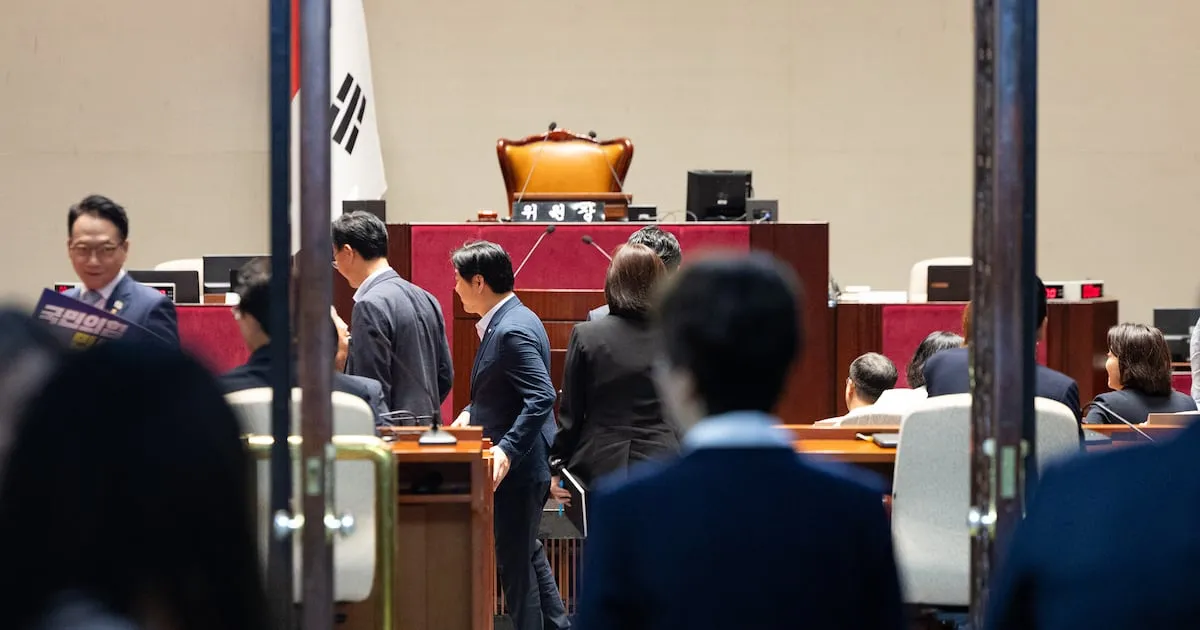
A significant number of lawmakers have expressed strong reservations regarding the government’s proposed tax reforms and real estate supply measures. During a recent party meeting, legislators voiced concerns that the current policies could negatively impact upcoming elections and disproportionately affect homeowners, particularly those in the Seoul metropolitan area. The prevailing sentiment among many elected officials was that the proposed tax adjustments, especially those targeting non-occupant single-homeowners, were overly punitive and lacked practical effectiveness.
Criticism Mounts Over Property Tax Proposals
The government’s plan to adjust property taxes has drawn considerable fire from within the ruling party. While a few representatives acknowledged the government’s stance on ‘normalizing property taxes,’ the majority argued for the repeal of what they termed ‘punitive’ taxes on individuals owning a single home but not residing in it. This sentiment was particularly strong among lawmakers representing the Seoul area, who fear electoral repercussions.
One non-incumbent lawmaker from the Seoul region stated, “Taxes on non-occupant single-homeowners are ineffective and cause significant political damage.” The legislator questioned the necessity of focusing on property taxes when other tax revenues, such as those from the semiconductor industry, were reportedly exceeding 50 trillion won. This perspective highlights a growing unease about the government’s fiscal priorities.
Electoral Concerns and Housing Affordability
A representative whose constituency includes the Han River belt expressed alarm over the backlash from local residents following the tax reform announcement. “If things continue this way, we will definitely lose the next Seoul mayoral election,” the lawmaker warned. This sentiment underscores the perceived link between the government’s real estate policies and public opinion, especially in key urban centers.
The issue of housing affordability for younger generations was also raised. A legislator pointed out that many individuals in their 30s and 40s, who purchased their first homes through loans, are unable to move in due to budget constraints. This representative advocated for revising the government’s proposal concerning long-term holding special taxes, suggesting the removal of holding period restrictions to offer relief.
Another lawmaker from a Seoul district echoed these concerns, noting that while their area has no apartments meeting the current property tax 기준 (based on a public housing price of 1.4 billion won), residents remain highly anxious. The need for policy adjustments to address this widespread unease was emphasized.
Furthermore, a call was made to ease loan-to-value (LTV) ratios for specific situations, such as when residents in redevelopment zones require relocation loans but cannot secure them, or for first-time homebuyers. This suggestion aims to facilitate housing transitions and support individuals entering the property market.
Broader Economic Context and Policy Effectiveness
Following the meeting, one legislator met with reporters and questioned the rationale behind increasing property taxes when other tax revenues were projected to exceed 100 trillion won. The lawmaker expressed strong pessimism, stating, “If this continues, the next general election will be a disaster.” This sentiment reflects a broader concern that the government might be misjudging the public’s tolerance for tax increases amidst other economic pressures.
Another representative drew parallels to past electoral defeats, noting that the Democratic Party’s significant losses in previous elections were largely attributed to real estate issues. “The current government is making the same mistakes,” the lawmaker asserted, questioning the viability of future electoral success if these policies persist. This historical perspective adds weight to the concerns about the current administration’s approach.
Debate Over Real Estate Supply Measures
Beyond tax policies, the government’s real estate supply strategies also faced scrutiny. A lawmaker from the Seoul metropolitan area, whose district is included in the government’s supply plans, criticized the proposal to build an additional 10,000 homes. The legislator argued that such a plan inadequately addresses existing infrastructure challenges, such as sewage systems, and would exacerbate traffic congestion, deeming the measure unrealistic.
Conversely, another Seoul-based representative argued for a more aggressive government investment in housing supply. This individual proposed a substantial expansion of the housing supply fund to the tune of 15 to 20 trillion won and called for the reinforcement of the Korea Land and Housing Corporation (LH) organizational structure. This viewpoint emphasizes the need for a larger-scale intervention to meet housing demands.
A Contrasting View on Tax Justice
However, not all lawmakers shared the critical view of the tax reforms. One representative from the Seoul region expressed support for the government’s tax adjustments, framing them as a necessary step towards tax justice. This lawmaker pointed out that South Korea’s property ownership taxes are significantly lower compared to developed nations, suggesting that the current tax levels are insufficient.
This dissenting opinion highlights the internal debate within the party regarding the appropriate balance between property taxation, housing affordability, and electoral considerations. The differing perspectives suggest a complex challenge for the government in formulating policies that satisfy diverse public and political interests.
The discussions reveal a deep divide on how best to address the nation’s real estate challenges. While many lawmakers are concerned about the immediate political and economic fallout of the proposed tax hikes and supply measures, others believe a more robust approach to property taxation is essential for long-term fiscal health and equity.
