

The South Korean government has announced a significant initiative to attract approximately 100 billion won (around $75 million USD) in new investments by expanding the types of businesses eligible for relocation within the national industrial complexes in Gumi and Pohang. The key change involves adding the secondary battery resource recycling sector to the list of permissible industries, a move designed to stimulate growth and innovation in these critical industrial hubs.
Expanding Industrial Scope and Investment Incentives
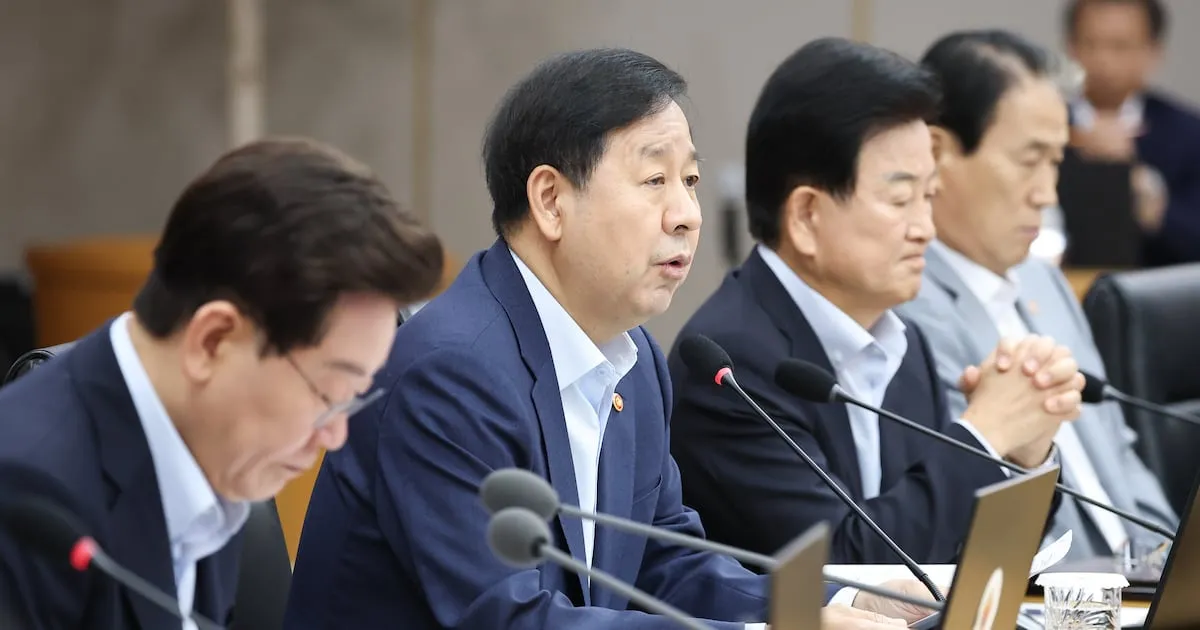
This policy update was revealed following an emergency economic response meeting chaired by Vice Minister of Economy and Finance Gu Yun-cheol. Previously, only manufacturing companies were permitted to establish operations related to secondary batteries within the Gumi and Pohang national industrial complexes. The inclusion of the battery recycling sector signifies a strategic effort to capitalize on the burgeoning demand for sustainable energy solutions and the circular economy.
Beyond the industrial complex expansions, the government is also pushing for legislative amendments to streamline construction processes for businesses. For industrial complexes that have seen significant development, such as the Yongin Semiconductor Cluster, the government plans to revise the Building Act. This revision will allow for separate building permits for new constructions, such as factory expansions, distinct from existing structures. Currently, the one-to-one permit principle under the Building Act requires modifications to existing permits for any new construction, a process that can be cumbersome and time-consuming.
Further incentives are being introduced to support the semiconductor industry. A practical support law, already in effect, will be enhanced to exempt certain assets and profits derived from the 출현 (chulhyeon – appearance or emergence) of semiconductor company personnel. This aims to foster greater collaboration and mutual growth within the semiconductor supply chain.
Targeted Support for Key Industries
The government is also looking at specific regional initiatives. In Ochang, plans are underway to facilitate the expansion of manufacturing facilities for bio-companies. This includes exploring the possibility of rezoning and purchasing adjacent non-agricultural land (녹지 – nokji) for facilities that are physically connected to existing ones. This measure is intended to support bio-companies, like those considering expansions within the Ochang Science and Industrial Complex, to build new, integrated facilities.
Another targeted measure involves the Iksan National Food Cluster. To address the low occupancy rates in certain sectors, the government intends to swiftly rezone areas currently designated for beverage manufacturing to accommodate food manufacturing businesses that have high demand for such facilities. This strategic rezoning is expected to attract new investments into the food industry cluster.
Broadening Development Zones and Future Outlook
In a broader move to support emerging industries and green initiatives like the RE100 (Renewable Energy 100%) campaign, the government plans to increase the proportion of designated “limited industry zones” within industrial complexes. These zones, which currently allow all types of businesses to operate, will see their limits expanded from 30% to 50% of the total complex area. This expansion aims to provide greater flexibility for companies requiring specific operational environments, fostering a more adaptable industrial landscape.
These comprehensive measures underscore the government’s commitment to revitalizing key industrial regions, attracting cutting-edge industries, and fostering a supportive environment for business investment and technological advancement. By removing regulatory hurdles and offering targeted incentives, South Korea aims to solidify its position as a global leader in manufacturing, technology, and sustainable industries.
