

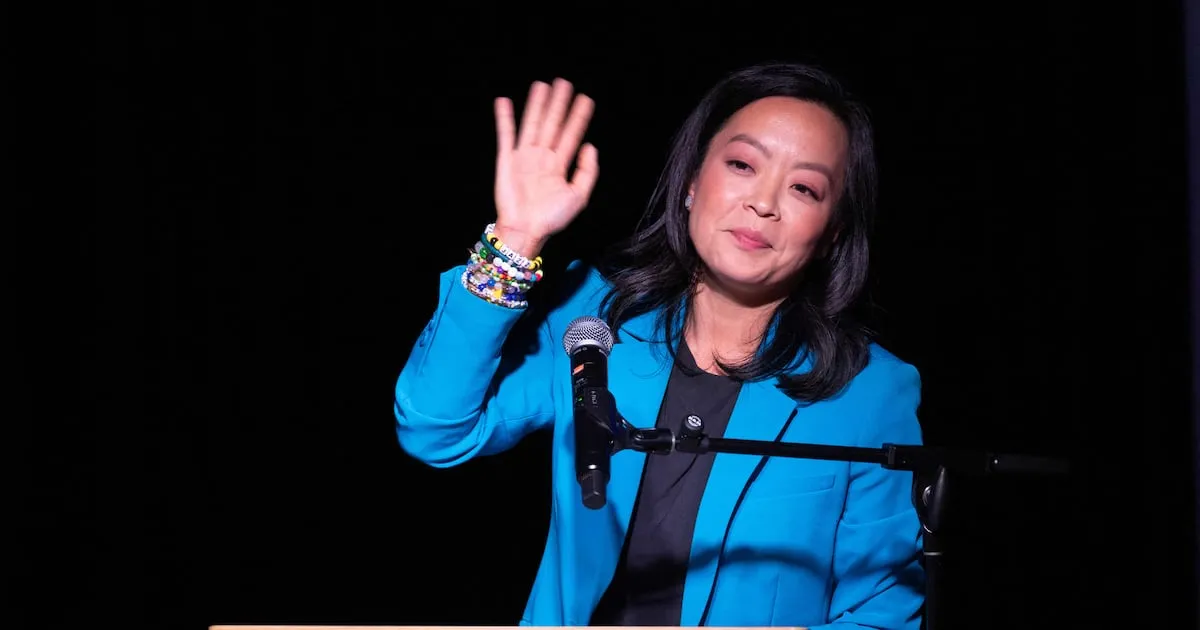
Recent primary elections in the United States have once again brought the reliability of public opinion polling into sharp focus. In a particularly striking example, a Democratic primary in Wisconsin saw a candidate, Frances Hong, suffer a significant defeat despite numerous polls indicating a substantial lead. This outcome mirrors similar inaccuracies observed in other recent contests, raising questions about the methodologies and predictive power of current polling practices.
Wisconsin Primary Shocks: Polls Showed One Outcome, Reality Another
The Wisconsin gubernatorial primary for the Democratic party was expected to be a comfortable win for Frances Hong, a second-generation Korean American. Pre-election surveys consistently placed her ahead of her main rival, David Crowley, the Milwaukee County Executive, by margins as wide as 20 percentage points. However, the actual election results told a drastically different story. Crowley secured victory with 39.8% of the vote, narrowly edging out Hong, who received 39.4%, a difference of just 0.4 percentage points, or approximately 3,000 votes.
The discrepancy was particularly jarring given that some of the most significant polling errors occurred just days before the vote. A poll conducted by the non-profit organization ‘State Neighbor’ between August 3rd and 6th surveyed 1,473 likely Democratic voters. This poll projected Hong with 44% support and Crowley with 22%, indicating a 22-point lead for Hong. The stated margin of error was ±2.3 percentage points. If these poll numbers were accurate, the actual difference between the candidates should have been within that margin. Instead, the final result showed a difference of over 22 percentage points from the poll’s projection, with Crowley emerging victorious.
State Neighbor’s methodology involved weighting the sample based on factors such as gender, age, race, education level, geographic location, and past voting records. Despite these adjustments, the poll failed to capture the true electorate sentiment.
Pattern of Inaccuracy: More Polls Miss the Mark
This wasn’t an isolated incident. Other polls in the lead-up to the Wisconsin primary also showed a similar pattern of overestimating Hong’s support. A poll from the University of Wisconsin Law School, considered a representative survey in the state, released in late July showed Hong leading her competitors by over 20 percentage points with 38% support. Another State Neighbor poll, conducted separately, showed Hong at 44% and Crowley at 15%, a staggering 29-point difference.
The consistent narrative from multiple polls pointed to an overwhelming victory for Hong, yet the election ballot revealed her as the loser. What’s even more concerning is that these same polling organizations had experienced similar significant failures just a week prior in a different state.
Michigan Primary: A Repeat Performance of Polling Errors
In the Democratic primary for Michigan’s Senate seat, polls had suggested that progressive candidate Elissa Slotkin held a comfortable lead over her opponent, State Senator Mallory McMorrow, by a margin of two digits. A Reuters report just before the election stated, “Recent polls show Elissa Slotkin leading by two digits.” However, the actual results were far closer. Slotkin narrowly won, with a margin of less than 1%, or just over 14,000 votes out of 1.5 million cast.
State Neighbor, the same organization that polled the Wisconsin race, acknowledged in its post-election report for Michigan that its polls had “overestimated Elissa Slotkin’s lead by about 12 percentage points.” The organization cited several potential reasons for this miscalculation, including the possibility that Slotkin’s supporters were more enthusiastic about participating in the poll, lower response rates from lower-income voters, an overrepresentation of voters aged 65 and older, and a failure to adequately capture rural voters.
In response to these identified issues, State Neighbor made significant adjustments to its methodology for the Wisconsin poll. They halved the proportion of respondents aged 18-29 from 18% to 9% and increased the proportion of respondents aged 65 and older from 34% to 44%. Despite these substantial changes, the poll still significantly overestimated Hong’s support, projecting her lead by more than 20 percentage points above the actual outcome.
Minnesota and Beyond: A Broader Trend of Polling Discrepancies
The polling inaccuracies are not limited to one party or one state. On the same day as the Wisconsin primary, a Public Policy Polling (PPP) survey in Minnesota showed the Democratic candidate for Senate, Angie Craig, leading her opponent, Kevin Cramer, by 14 percentage points (46% to 32%) in a primary race. However, the actual election results showed Craig winning by a much larger margin, approximately 19 percentage points (around 59% to 32%). This suggests that polls may sometimes underestimate the victory margin for the leading candidate.
These instances highlight a recurring problem where polling data deviates significantly from actual election outcomes. It’s not just about misjudging the margin between specific candidates but a broader issue of polls failing to accurately reflect the electorate’s true intentions.
Historical Context: A Long-Standing Challenge for Pollsters
This trend of substantial polling errors is not unique to the current election cycle. Election data analysts point out that since 2014, polls for US Senate and gubernatorial primaries have, on average, missed the actual margin between the first and second-place finishers by about 13 percentage points. In roughly two out of every ten competitive primaries, polls have incorrectly identified the actual winner.
The margin of error has widened in recent years. For 2024, the average polling error has reached 16.1 percentage points. Several high-profile cases illustrate the magnitude of these misses:
- In the 2024 Nevada Republican Senate primary, the average of final three weeks of polling predicted Sam Brown would win by 18 percentage points. The actual result showed him winning by 45 percentage points.
- In the same year’s Ohio Republican Senate primary, polls suggested a near tie between Bernie Moreno and Matt Dolan. Moreno ultimately won by a decisive 18 percentage points.
- In the 2014 Iowa Republican Senate primary, polling indicated Joni Ernst had a 16 percentage point lead. The actual difference between candidates was a substantial 38 percentage points.
Analyzing the Causes: Why Are Polls Failing?
Analysts reviewing the Wisconsin results, similar to the Michigan case, suggest that polls may be failing to adequately reach and capture certain segments of the electorate, particularly middle-of-the-road Democratic voters. While major media outlets had characterized Hong as the “front-runner” or “favorite” just days before the election, the underlying polling data that informed these assessments proved unreliable.
Ironically, former President Donald Trump has frequently criticized polls showing him with historically low approval ratings as “fake polls.” The recent string of significant polling failures in US political contests might inadvertently lend some credence to his claims, highlighting a potential crisis of confidence in the accuracy of public opinion surveys.
The recurring pattern of major polling errors underscores a critical challenge for political forecasting. As election cycles continue, understanding and addressing the root causes of these discrepancies will be crucial for pollsters seeking to provide accurate insights into public sentiment.
