

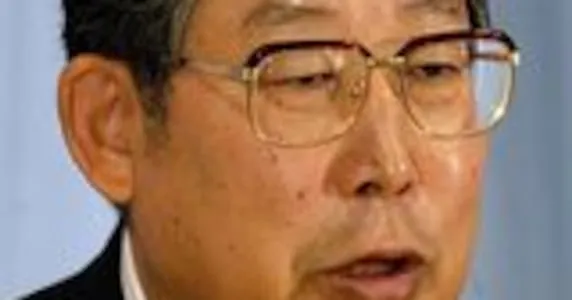
Hiroshi Okuda, the former president of Toyota Motor Corporation who was instrumental in the global expansion of the company, particularly through the introduction of the hybrid vehicle Prius, passed away on March 8th (local time) at the age of 93 due to old age. Okuda’s leadership marked a significant era for Toyota, steering it towards becoming a global automotive powerhouse.
Early Career and Rise Through the Ranks
Born in Mie Prefecture, Japan, Okuda joined Toyota Automatic Loom Works (now Toyota Motor Corporation) in 1955 after graduating from Hitotsubashi University. He began his career in the accounting department and was later dispatched to the Philippines. Despite initial perceptions of this move as a political maneuver, Okuda demonstrated exceptional ability in the field, successfully negotiating the recovery of overdue funds. His acumen caught the attention of Shoichiro Toyoda, who hailed from a founding family, leading to Okuda’s promotion to executive in 1982. He also participated in the ‘North American Business Preparation Office,’ which was established to prepare for Toyota’s entry into the U.S. market, overseeing site selection for factories and other facilities. The Kentucky plant established in the U.S. subsequently grew into a core production hub for Toyota in North America.
Ascension to Presidency and Driving Change
Okuda assumed the presidency of Toyota in August 1995, succeeding Tatsuro Toyoda, who stepped down due to health issues. This appointment was notable as Okuda was the first president not from a founding family since the merger of Toyota Motor Sales and Toyota Motor Co. in 1982, which formed the current Toyota Motor Corporation. At the time, Toyota faced challenges, including a declining market share in Japan and slow progress in its overseas expansion efforts. Okuda diagnosed the company with ‘big corporate disease,’ believing it was dedicating too much time to internal adjustments. He famously stated, “The worst thing is to change nothing,” advocating for significant transformation within the organization.
The Prius Revolution and Global Strategy
A prime example of Okuda’s transformative vision was the world’s first mass-produced hybrid passenger car, the Prius. The launch date was moved up by a year, from its initially planned late 1998 release to late 1997. This accelerated introduction signaled Toyota’s commitment to environmental technology. Following the Prius’s debut, Toyota elevated ‘environment’ as a key keyword for its future automotive business. The company aggressively expanded its global production facilities in the U.S., Europe, and Asia, rapidly increasing worldwide sales volume. Okuda’s strategic push significantly boosted Toyota’s global presence and influence.
Impact and Influence Beyond Toyota
Toyota’s growing impact did not go unnoticed. According to Nikkei, the U.S. automotive industry was reportedly taken aback by Okuda’s pronouncements. During U.S.-Japan automotive trade negotiations, there were even instances where Toyota’s response was directed at Okuda personally. Beyond the automotive sector, Okuda also wielded considerable influence in business and policy circles. In 2002, he was appointed as the first chairman of the Keidanren (Japan Business Federation) after its merger with the Japan Association of Corporate Executives (Keizai Doyukai). Leveraging his extensive network, which included relationships with prominent political figures like then-Prime Minister Junichiro Koizumi, Okuda actively participated in policy-making processes. In a ‘Long-Term Vision’ released in January 2003, he addressed Japan’s declining birthrate, proposing an increase in consumption tax and the acceptance of foreign labor. He also adopted a critical stance towards the prevailing corporate trend of easily reducing labor costs to achieve short-term recovery.
Legacy
Hiroshi Okuda’s tenure as president was characterized by bold decision-making and a forward-thinking approach. His championing of the Prius and his strategic expansion of Toyota’s global footprint fundamentally reshaped the automotive landscape. His influence extended beyond corporate leadership into national policy, where he advocated for innovative solutions to demographic and economic challenges. Okuda’s passing marks the end of an era for Toyota and leaves a lasting legacy on the global automotive industry.
