

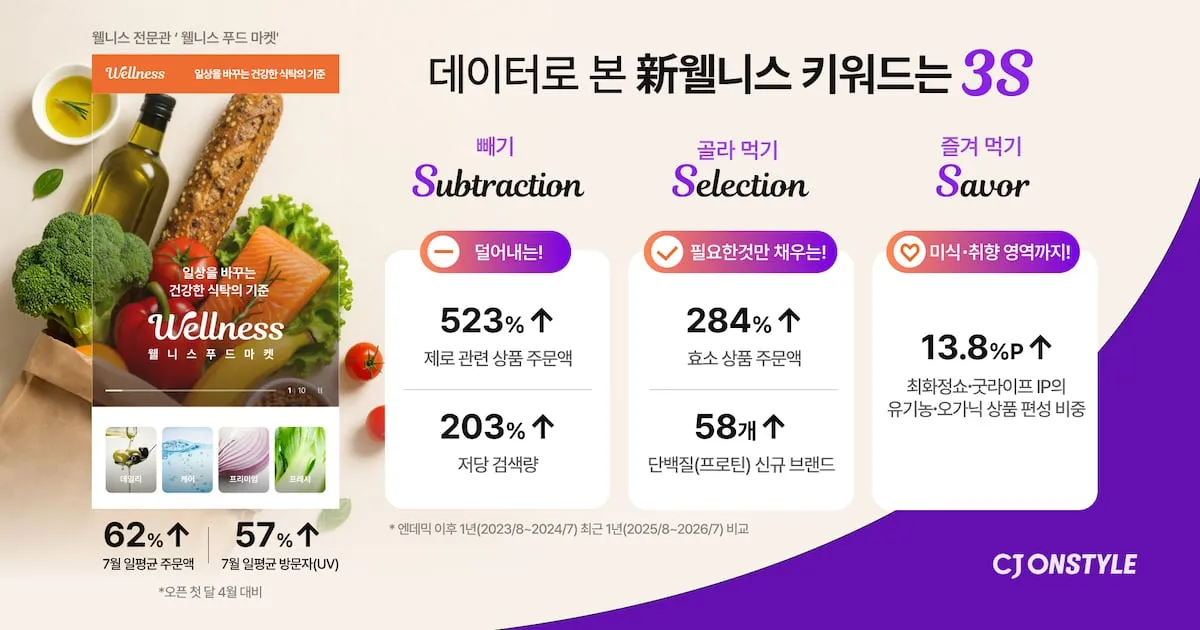
Consumer spending on wellness products is undergoing a significant transformation, moving beyond general health supplements to a more targeted approach focused on removing unwanted ingredients and seeking specific functional benefits. Data from CJ Onstyle, a South Korean e-commerce platform, reveals a pronounced shift towards what they term the ‘3S’ approach: Subtraction, Selection, and Savoring.
The Rise of ‘Subtraction’ in Wellness Choices
The most striking change in consumer behavior is the growing desire to eliminate ingredients perceived as detrimental to health. This ‘subtraction’ trend is evident in the dramatic increase in demand for products explicitly marketed as having fewer or no undesirable components. For instance, orders for ‘zero sugar’ items on CJ Onstyle surged by 523% in the year ending July 2024, compared to the previous year. Similarly, sales of fruit juices with added sugars saw a 793% jump, while olive oil purchases increased by 463%.
This focus on removal is also reflected in search queries. On the CJ Onstyle mobile app, searches for ‘low sugar’ (저당) increased by 203%. Terms like ‘zero sugar’ (제로슈거) and ‘no additives’ (무첨가) also saw substantial growth, rising by 164% and 100%, respectively. This indicates a consumer base that is not only interested in adding beneficial nutrients but is equally, if not more, concerned with actively reducing or avoiding specific elements in their diet.
‘Selection’ and ‘Savoring’: Tailoring Wellness to Individual Needs
Beyond subtraction, consumers are increasingly engaging in ‘selection,’ choosing products that offer highly specific health benefits rather than general wellness. This is leading to a diversification of product offerings and a fragmentation of the market into niche categories. Previously, convenience foods like Home Meal Replacements (HMR) dominated sales. However, recent top-selling brands highlight a new focus on specific ingredients and functions. Brands like ‘La Fille,’ specializing in collagen, ‘Grain On,’ emphasizing enzymes, ‘Yiayia & Friends’ for olive oil, and ‘Doicaam’ for fruit juices, have gained prominence by marketing their products based on core ingredients and targeted benefits.
In the functional food sector, this trend is particularly pronounced. Instead of opting for multi-benefit products, consumers are now selecting items tailored to their precise needs. While sales of general functional foods like red ginseng and multivitamins saw a decrease of approximately 30%, demand for specific supplements such as enzymes skyrocketed by 284%. Products related to skin health, including collagen and hyaluronic acid, also experienced a significant rise of 103%. Even probiotics, traditionally focused on gut health, have seen their market segment expand, with sales increasing by about 10% as products are now tailored for skin, oral health, and blood sugar management.
The Expanding Protein Market and Diversified Consumption
The protein market is also experiencing a broadening appeal. In the past year, CJ Onstyle has introduced 58 new protein-related brands. While the market was once dominated by sports nutrition supplements, it is now seeing an influx of brands offering protein in everyday food, beverages, and snacks. This caters to consumers looking to incorporate protein into their regular diet rather than solely relying on post-workout supplements.
CJ Onstyle’s Strategic Response to Evolving Wellness Trends
In response to these evolving consumer preferences, CJ Onstyle has revamped its wellness product categorization. The platform now divides functional health foods into 111 detailed subcategories, allowing customers to easily find products based on specific functions and goals. This enhanced curation aims to provide a differentiated shopping experience.
The company is also integrating wellness content more deeply into its media offerings, featuring wellness products in broadcast content such as ‘Choi Hwa-jeong’s Power Time’ and ‘Kang Eun-hee’s Good Life.’ In April, CJ Onstyle launched a dedicated ‘Wellness Food Market’ within its mobile app, further strengthening its curated selection of wellness items.
A representative from CJ Onstyle commented on the shift, stating, “Current wellness is evolving beyond simply purchasing functional health foods. It has transformed into a holistic consumption that considers what to eat, how to manage it, and what lifestyle to build.” The company plans to continue expanding its wellness curation, closely reflecting changes in customer lifestyles to offer unique and personalized shopping experiences.
Conclusion: A More Informed and Personalized Approach to Health
The data from CJ Onstyle paints a clear picture of a wellness consumer who is more informed, more discerning, and more focused on personalization. The emphasis has shifted from broad health claims to specific ingredient scrutiny and targeted benefits. As consumers increasingly seek to subtract the undesirable and select the precisely beneficial, the wellness market is adapting by offering a wider array of specialized products and enhanced shopping experiences. This trend suggests a move towards a more integrated and mindful approach to health and well-being, where consumption is carefully considered as part of an overall lifestyle strategy.
