

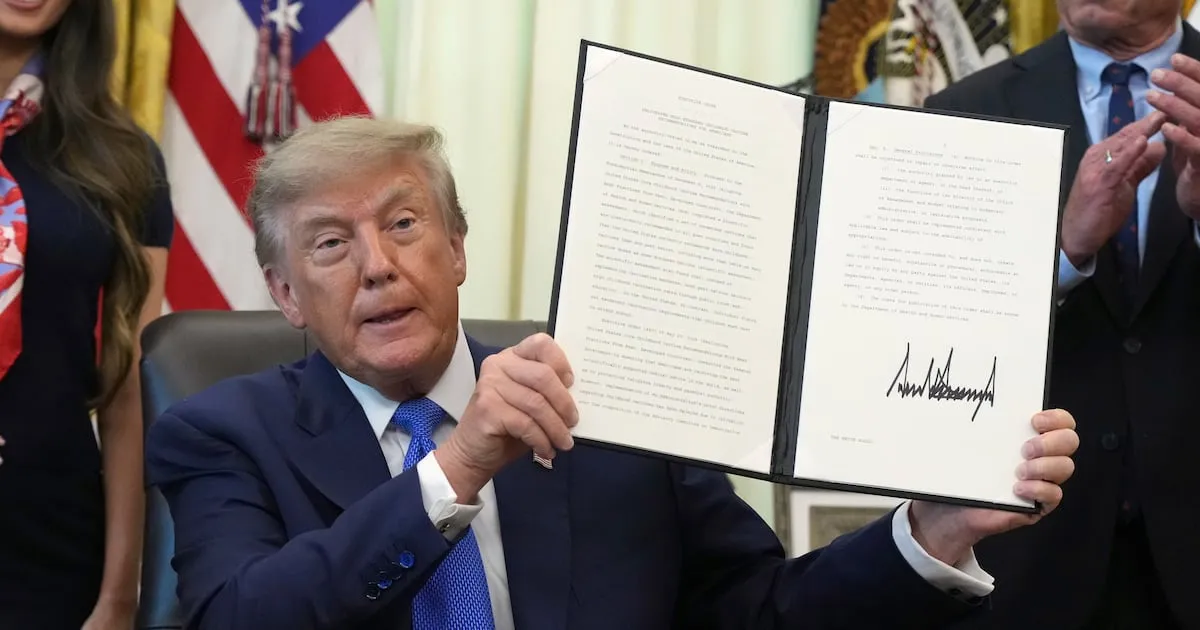
The Trump administration has issued an executive order significantly altering recommended childhood vaccination schedules, prompting concerns from medical and scientific communities about potential increases in infectious disease outbreaks. The order reduces the number of diseases for which routine vaccination is recommended for all children and modifies the way multiple vaccines are administered.
Key Changes to Vaccination Recommendations
The executive order, signed by President Donald Trump, revises the schedule for childhood immunizations. Under the new guidelines, the number of diseases recommended for routine vaccination by the U.S. Centers for Disease Control and Prevention (CDC) has been reduced from 17 to 11. These 11 diseases include measles, mumps, rubella, polio, diphtheria, pertussis (whooping cough), tetanus, Haemophilus influenzae type b (Hib), pneumococcal disease, human papillomavirus (HPV), and chickenpox.
Vaccinations for Hepatitis B and Hepatitis A are now recommended only for specific high-risk groups. For other children, the decision to vaccinate will be made through a “shared clinical decision-making” process between a doctor and parents, considering the child’s overall health status. The administration has also decided not to routinely recommend vaccines for Hepatitis B, COVID-19, and influenza for all children.
Shifting Vaccine Administration Practices
Beyond the diseases covered, the administration is also changing how vaccines are administered. Instead of receiving combination vaccines, such as the MMR (measles, mumps, rubella) vaccine, children may now receive individual vaccines for each disease at different times. President Trump has advocated for spacing out the recommended vaccines over the first year of a child’s life, suggesting that only 20% of the current vaccine dosage be given during each visit, allowing the body time to cope.
“Children used to receive only a fraction of the vaccines required today,” President Trump stated, suggesting that children were healthier in the past when fewer vaccines were administered. He further claimed that current high rates of autism were not present in previous decades, implying a link between the number of vaccines and the rise in autism diagnoses. While acknowledging that the exact cause of autism remains unknown, he suggested that the widespread prevalence of the condition is linked to these changes and that his administration aims to reduce autism incidence to previous levels.
The President also shared that his own children received vaccinations spaced out over time, and he believes this approach has a significant impact on preventing autism.
Medical and Scientific Community Rebuttal
However, the medical and scientific communities have largely refuted the claims linking vaccines to autism, stating there is no credible scientific evidence to support such a connection. Public health officials and medical organizations have expressed serious concerns regarding the administration’s new vaccination policies.
Concerns include the potential for increased exposure to preventable diseases if vaccination schedules are spaced further apart. Longer intervals between doses could extend the period during which children are vulnerable to infections. Furthermore, a reduction in the overall number of recommended vaccinations could lead to lower overall immunization rates, potentially triggering renewed outbreaks of diseases that have been largely controlled.
The practical implementation of these changes also faces hurdles. Reports indicate that individual vaccines for measles, mumps, and rubella are currently unavailable in the United States, despite the administration’s directive to administer them separately. The actual effectiveness of this new executive order remains uncertain.
Legal and Jurisdictional Challenges
The New York Times reported that the authority to mandate childhood vaccinations for school entry lies with individual state governments, not the federal government. The executive order also includes provisions that could allow the Department of Justice to pursue legal action against state governments that maintain religious or medical exemptions for vaccinations, potentially challenging existing state laws.
This is not the first time the Trump administration’s vaccination policies have faced legal challenges. In January, following a CDC proposal to shorten the recommended list of pediatric vaccines, six medical organizations, including the American Academy of Pediatrics, filed a lawsuit. A federal court issued a preliminary injunction in March, temporarily blocking the revised recommendations.
Broader Implications for Public Health
The debate over vaccine schedules and their potential links to health conditions like autism has been ongoing for years, often fueled by misinformation. Major health organizations worldwide, including the World Health Organization (WHO) and the CDC, consistently affirm the safety and efficacy of vaccines as a cornerstone of public health, credited with eradicating or drastically reducing the incidence of many life-threatening diseases.
The administration’s move to alter established vaccination guidelines, particularly by questioning the link between vaccines and autism and suggesting a reduction in vaccine load, runs counter to decades of scientific consensus. Public health experts warn that such policy shifts could undermine trust in vaccines and jeopardize the hard-won gains in controlling infectious diseases, potentially leading to a resurgence of illnesses that pose significant risks, especially to infants and immunocompromised individuals.
The long-term impact of these changes on public health remains a significant concern, with many anticipating further legal battles and continued debate within the medical community and among the public.
