

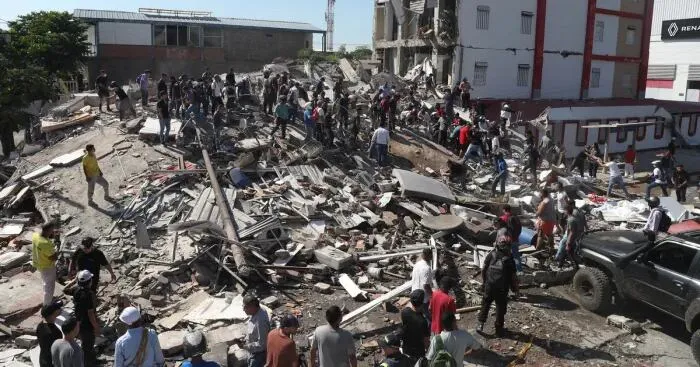
A powerful magnitude 7.4 earthquake struck southwestern Colombia on September 10th, causing widespread destruction and claiming the lives of at least 20 people. The tremor, which hit near the town of San José del Palmar in the Chocó department, also led to the collapse of dozens of buildings, trapping many individuals and raising fears that the death toll could climb significantly. Rescue efforts are underway amidst the devastation.
Devastating Impact in Southwestern Colombia
The earthquake’s epicenter was located in the Pacific coastal region, approximately 60 kilometers east of Pasto, the capital of the Nariño department. The city of Pereira, a major urban center, reported at least 18 fatalities directly from the quake, with additional people feared trapped in collapsed structures. Mauricio Salazar, the mayor of Pereira, confirmed the grim figures in an interview with local media, describing the scene as catastrophic.
Further north, in the town of Manizales, two additional deaths were reported by Mayor Jorge Eduardo Rojas. The earthquake’s tremors were felt across a wide area, causing significant damage to infrastructure and homes. Cities such as Cali, Armenia, and Cartago also experienced substantial structural damage, with reports of buildings collapsing and residents being trapped.
Widespread Structural Damage and Trapped Victims
The scale of destruction is extensive, with at least 20 structures confirmed to have collapsed in Cali alone. The city’s mayor, Alejandro Eder, took to social media platform X (formerly Twitter) to convey the severity of the situation, highlighting the urgent need for rescue operations for those still trapped.
Local media outlets, including Blu Radio, have been relaying accounts of severe damage in various towns across the affected region, including Manizales, Cali, and Armenia. The full extent of the casualties and damage is still being assessed, as official figures from the national government are yet to be released. However, the preliminary reports paint a dire picture of the earthquake’s impact.
Government Response and Rescue Efforts
In response to the disaster, the Colombian Civil Aviation Authority reported that six airports in the southwestern region—including those in Pereira, Manizales, Quibdó, Armenia, Cartago, and Buenaventura—experienced damage and reported the incident. This has potentially hampered initial relief and rescue operations.
President Gustavo Petro, who officially took office just three days prior on September 7th, has directed the formation of a unified command post to oversee the disaster response and provide aid to those affected. He announced on X that he would personally lead the efforts to ensure support reaches all affected communities.
The United States Geological Survey (USGS) reported that the earthquake occurred at approximately 7:34 AM local time on September 10th. The seismic event originated near San José del Palmar, Chocó, and its significant magnitude suggests that aftershocks are likely, posing further risks to the already damaged structures and the affected population.
Understanding Earthquake Preparedness in Colombia
Colombia is situated in a seismically active zone, part of the Pacific Ring of Fire, which makes it prone to earthquakes. The country has a history of significant seismic events, underscoring the importance of robust building codes, early warning systems, and comprehensive disaster preparedness plans.
Following major earthquakes, the immediate priorities are always search and rescue, followed by the provision of essential services such as shelter, food, water, and medical care to the affected population. The government’s swift mobilization of resources and establishment of a command post are crucial steps in managing the crisis.
International aid and support often play a vital role in disaster recovery, providing expertise, equipment, and financial assistance. The coming days and weeks will be critical in assessing the long-term needs of the affected regions and implementing recovery strategies. The resilience of the Colombian people will be tested, but coordinated efforts are expected to facilitate a path toward recovery and rebuilding.
Conclusion
The magnitude 7.4 earthquake that struck southwestern Colombia has resulted in a tragic loss of life and widespread destruction. As rescue operations continue and the full scope of the disaster becomes clearer, the focus remains on saving lives, providing aid to the survivors, and beginning the long process of recovery. The event serves as a stark reminder of the seismic risks in the region and the critical importance of ongoing preparedness and response capabilities.
