

Life is often compared to a journey, and like any expedition, it is filled with unexpected turns and unforeseen challenges. In mountaineering, the term ‘blind corner’ describes a point where the path ahead is obscured, leaving climbers uncertain about what lies beyond. While a well-trodden trail offers a degree of predictability, straying from the known path can lead to true ‘blind corners’ where the risk of encountering perilous cliffs or impassable terrain becomes very real. This metaphor of the blind corner, the embrace of uncertainty, and the courage to step into the unknown resonates deeply, echoing through history in the decisions of great leaders and the philosophical musings of thinkers.
The Mountaineer’s Metaphor: Embracing the Unknown
Experienced climbers understand that while preparation and judgment can mitigate risks, they cannot eliminate the inherent uncertainty of the mountains. The true essence of venturing into the unknown, whether by design or by accident, lies in the decision to move forward rather than retreat. It is an act of courage, a willingness to face extreme uncertainty. While experience and planning can reduce the impact of these unpredictable moments, they cannot erase them entirely. Ultimately, every individual must eventually take a step onto an untrodden path.
Julius Caesar at the Rubicon: A Point of No Return
In January of 49 BCE, Julius Caesar stood at the banks of the Rubicon River, a small waterway that marked the boundary between Roman territory and Cisalpine Gaul. Crossing this river with his army was an act of treason, a declaration of civil war. Roman law strictly prohibited provincial governors from bringing their armies into Italy proper. The Rubicon, though minor, served as a critical legal and political frontier. The political climate in Rome was unfavorable to Caesar; the Senate had ordered him to disband his legions and return to Rome as a private citizen, a move that would have left him vulnerable to his political enemies.
Caesar faced a stark choice: obey the Senate and risk political annihilation, or cross the Rubicon and initiate a coup. The outcome of either decision was uncertain. He was at a ‘blind corner,’ facing extreme unpredictability. By crossing the Rubicon, Caesar made a decisive choice, uttering the famous phrase, “Alea iacta est” (The die is cast), signifying that there was no turning back. This phrase, forever linked with the Rubicon, has come to symbolize an irrevocable decision.
Hannibal’s Alpine Crossing: Audacity Against All Odds
Approximately 170 years before Caesar’s fateful decision, another military leader faced his own ‘blind corner’: Hannibal, the brilliant Carthaginian general. During the Second Punic War against Rome, a direct assault on Rome across the Mediterranean was impossible. Hannibal chose an audacious alternative: to march his army through the Alps into Italy. For Hannibal and his soldiers, many of whom were from North Africa, the Alps represented a vast, unknown territory. The landscape itself was a ‘blind corner,’ with no certainty of what lay beyond the formidable mountain range.
In 218 BCE, Hannibal led his army, complete with war elephants, across the Alps into Italy. This expedition is still regarded as one of the most daring military feats in history. The crossing was an act of plunging into extreme uncertainty, a testament to Hannibal’s strategic brilliance and his willingness to gamble against overwhelming odds.
The Philosophical Perspective: Wittgenstein and the Nature of Reality
The concept of facing the unknown and the nature of reality itself has been explored by philosophers throughout history. Ludwig Wittgenstein, an influential philosopher of the early 20th century, famously stated, “About what one cannot speak, thereof one must be silent.” This statement, presented in his seminal work *Tractatus Logico-Philosophicus*, challenged the Western philosophical tradition by questioning what can and cannot be meaningfully discussed. The book begins with the assertion, “The world is everything that is the case,” viewing the world not as a mere collection of objects, but as the totality of “happenings” or “states of affairs.”
Wittgenstein’s philosophy posits that the limits of language define the limits of the world. The opening and closing propositions of the *Tractatus* frame the entire work, highlighting the boundary between what can be expressed and what remains ineffable. This mirrors the structure of the ancient Chinese text, the *I Ching* (Book of Changes).
The I Ching: A Compendium of Change and Uncertainty
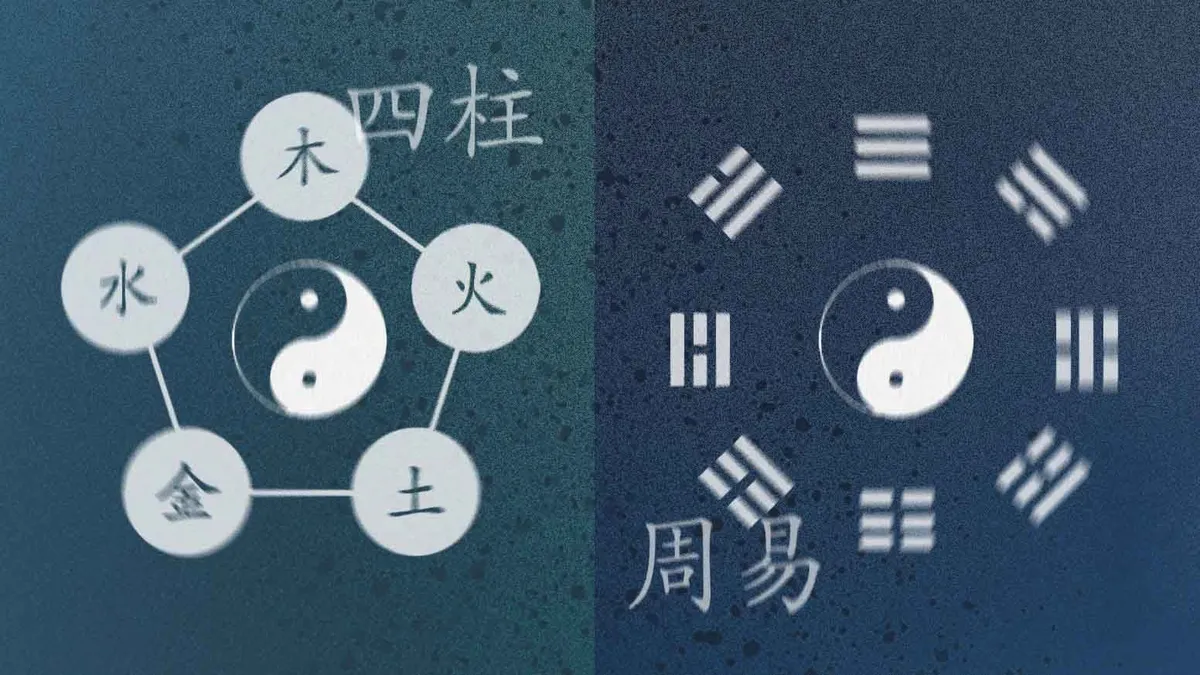
The *I Ching*, or *Book of Changes*, is an ancient Chinese divination text that has served as a source of wisdom for millennia. Its core consists of 64 hexagrams, each composed of six lines, and 384 individual line statements (or “judgments”). These hexagrams represent a vast array of possible situations and outcomes. The 64 hexagrams are formed from combinations of yin (broken) and yang (solid) lines, creating a comprehensive symbolic system.
The messages within the *I Ching* can be seen as a distillation of ancient Chinese observations and prophecies. While later scholars added commentaries, the fundamental text offers insights that transcend time. The 64 hexagrams and 384 lines are records of events and pronouncements that are timeless, in that they represent future events as pronouncements. Thus, one could extend Wittgenstein’s idea to the *I Ching*: “The *I Ching* is everything that has happened and everything that will happen.” The text’s numerous messages, compiled over centuries, can be viewed as a collection of ‘blind corners’—situations and states that encapsulate the unpredictable flow of life.
For example, the first hexagram, Qian (乾), composed entirely of yang lines, describes a progression from a hidden dragon to a dragon that flies in the heavens, ultimately ending with a dragon that has flown too high and faces regret. This hexagram encapsulates the cyclical nature of rise and fall, cautioning that even in ascent, there is a time for warning. The *I Ching* itself, as its name suggests, emphasizes constant change and transformation, serving not as a fixed map of destiny, but as a guide for navigating evolving circumstances.
Navigating Life’s Blind Corners
Like Caesar at the Rubicon, Hannibal crossing the Alps, or individuals consulting the *I Ching*, we all face moments of profound uncertainty. Our daily lives are a continuous series of events, some constructive, others destructive. Though we may strive for a sense of control, unexpected occurrences are constant. The *I Ching*’s text suggests that when faced with the unknown, we should not be overwhelmed or disappointed by unforeseen events. The world, in its complexity and unpredictability, demands a courageous spirit, much like that of a seasoned traveler.
The metaphor of the ‘blind corner’ is universal. It applies to historical figures making monumental decisions and to ordinary individuals navigating the complexities of everyday life. The uncertainty we face is not a sign of failure, but an inherent part of the human experience. Embracing this uncertainty with courage and a willingness to adapt is key to moving forward, just as Caesar and Hannibal did when they stepped into their respective ‘blind corners,’ forever changing the course of history.
