

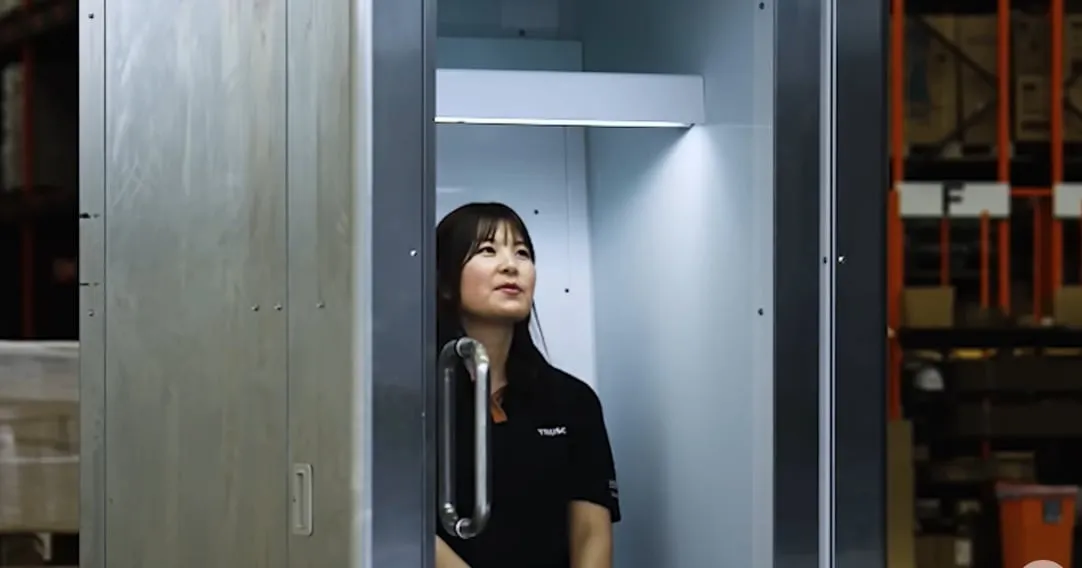
As Japan grapples with relentless heatwaves, a novel solution has emerged: the ‘human refrigerator.’ Developed by Japanese machinery manufacturer Trusco Nakayama, this innovative device, dubbed the ‘Do-Hiemon Box,’ offers a personal sanctuary from soaring temperatures. The portable cooling unit is designed to rapidly lower body temperature, providing relief to individuals working or spending time in environments where conventional air conditioning is impractical.
Innovative Cooling Technology for Extreme Heat
The Do-Hiemon Box is engineered to accommodate one adult, creating a cool retreat with an internal temperature maintained at approximately 15 degrees Celsius (59 degrees Fahrenheit). Upon entry, the unit circulates a cool breeze, primarily directed at the neck area, to quickly reduce the body’s core temperature. This targeted cooling is crucial for preventing heat-related illnesses during periods of intense heat.
Inside the unit, a bench-style seat allows users to sit comfortably while their bodies cool down. The design prioritizes functionality and portability. Equipped with casters, the Do-Hiemon Box can be easily moved to different locations. It connects to a standard electrical outlet, making it a versatile cooling solution for various settings.
Designed for Challenging Work Environments
The primary development impetus for the Do-Hiemon Box came from the need for effective cooling solutions in environments where installing traditional air conditioning systems is difficult or impossible. Construction sites, for instance, often present such challenges due to their temporary nature and open-air conditions. The device offers a practical alternative to mitigate the risks associated with prolonged exposure to high temperatures in these demanding workplaces.
Trusco Nakayama emphasizes that the Do-Hiemon Box is not intended for extended rest periods. Instead, its purpose is to provide rapid cooling to individuals experiencing symptoms of heatstroke or heat exhaustion, or those at risk of developing such conditions, before their health deteriorates further. This focus on immediate relief underscores the device’s role as a safety measure against the dangers of extreme heat.
Market Reception and Future Outlook
Since its introduction earlier this year, the Do-Hiemon Box has seen significant adoption in various sectors. Reports indicate that approximately 200 units have been sold, finding applications in construction sites, processing plants, golf courses, universities, and leisure facilities. This widespread use highlights the growing demand for effective personal cooling solutions in Japan.
While the operational cost, estimated at around 15.8 yen per hour for electricity, is relatively modest, the initial purchase price of the Do-Hiemon Box is substantial, costing about 1.5 million yen (approximately $13,550 USD). This price point positions the device as a significant investment, likely targeted towards businesses and organizations prioritizing worker safety and comfort in high-temperature conditions.
With daytime temperatures in Japan frequently exceeding 35 degrees Celsius (95 degrees Fahrenheit) during the summer months, the company anticipates a surge in demand for its ‘human refrigerator’ technology. Trusco Nakayama foresees potential growth in sales for use at shopping malls, summer festivals, and other crowded public spaces where large numbers of people gather and heat exposure is a concern. The increasing frequency of extreme heat events globally suggests that such innovative cooling solutions may become increasingly relevant in diverse geographical locations facing similar climatic challenges.
Understanding Heat-Related Illnesses
Extreme heat poses serious health risks, including heat exhaustion and heatstroke. Heat exhaustion is characterized by heavy sweating, weakness, dizziness, nausea, and a rapid pulse. If left untreated, it can progress to heatstroke, a life-threatening condition where the body’s temperature regulation system fails. Symptoms of heatstroke include a high body temperature (above 103°F or 39.4°C), hot, red, dry skin (or sometimes moist skin), a rapid, strong pulse, and confusion or loss of consciousness. Prompt cooling is critical in both cases, with heatstroke requiring immediate medical attention.
The Do-Hiemon Box addresses the need for rapid cooling by providing a controlled environment that can quickly bring down elevated body temperatures. Its targeted airflow and consistent low temperature are designed to be more effective than simply seeking shade or drinking cool liquids in severe heat conditions. The portability of the unit further enhances its utility, allowing for deployment directly where the risk is highest.
The Broader Context of Climate Change
The development and adoption of technologies like the Do-Hiemon Box are occurring against the backdrop of global climate change. Rising average temperatures and an increase in the frequency and intensity of heatwaves are becoming a defining characteristic of modern summers in many parts of the world. This trend necessitates adaptation strategies across various sectors, from urban planning and infrastructure development to personal safety and public health initiatives.
As heatwaves become more common and severe, the demand for solutions that protect individuals from extreme heat is likely to grow. The ‘human refrigerator’ represents one such innovative approach, offering a tangible way to mitigate the immediate physical dangers posed by high temperatures. Its success in Japan may pave the way for similar technologies to be developed and deployed in other regions facing similar climatic pressures.
Conclusion: A Response to a Warming World
The Do-Hiemon Box stands as a testament to human ingenuity in adapting to environmental challenges. As heatwaves continue to affect populations worldwide, this ‘human refrigerator’ offers a practical and immediate solution for preventing heat-related illnesses, particularly in demanding work environments. While its initial cost is significant, the potential to safeguard health and well-being in the face of extreme temperatures makes it a noteworthy innovation in the ongoing effort to cope with a warming planet.
