

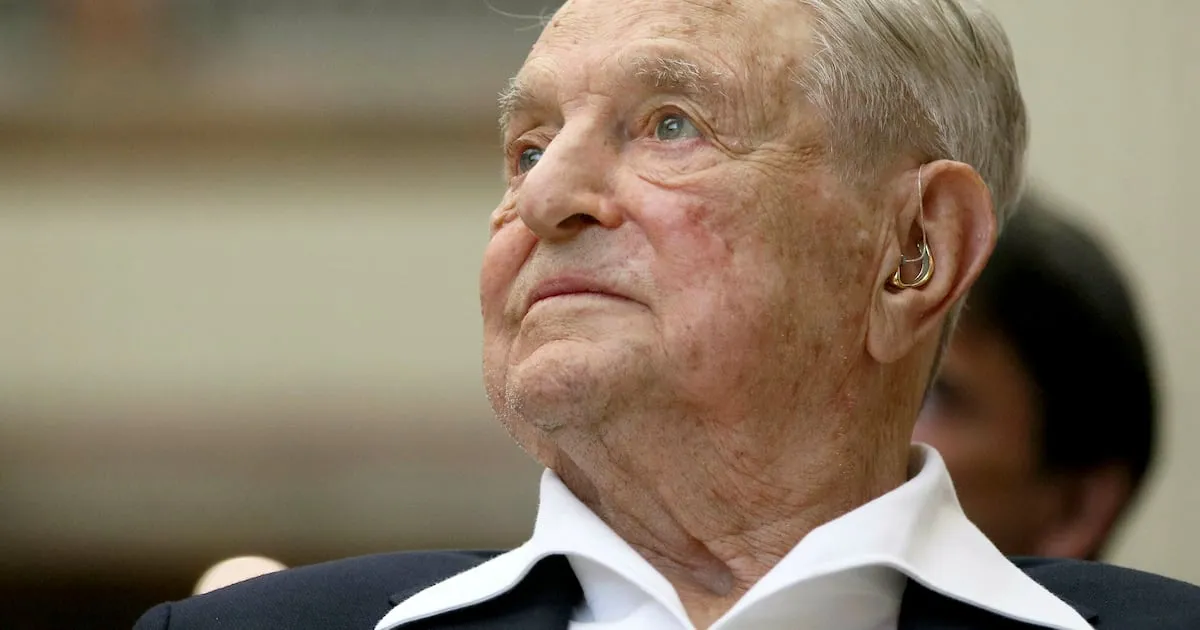
As the United States approaches the crucial November midterm elections, prominent Democratic donors, including billionaire investor George Soros, have yet to open their wallets, a notable shift from previous election cycles. This apparent hesitancy among major financial backers is contributing to a significant funding shortfall for the Democratic Party, which lags far behind Republican fundraising efforts.
Key Democratic Donors Remain on the Sidelines
According to reports from The Wall Street Journal, George Soros and his son, Alexander Soros, have not made any contributions to the Democratic National Committee (DNC) this year. This contrasts sharply with their past engagement; in the 2018 midterm election cycle, they collectively donated $400,000 to the DNC, and in the 2022 midterms, their contributions exceeded $1 million. The absence of such substantial financial backing is a significant concern for the party as it gears up for the upcoming elections.
Soros is not the only major figure whose financial support has been notably absent. Other significant ‘mega-donors,’ such as LinkedIn co-founder Reid Hoffman, have also not yet contributed. This collective pause in funding has reportedly put the Democratic Party in a difficult financial position.
The Funding Gap
As of June 30, the DNC had reportedly raised $16.3 million for the current election cycle. This figure stands in stark contrast to the Republican National Committee’s (RNC) fundraising, which has reached $128.5 million, representing a more than seven-fold advantage for the GOP. This considerable disparity in campaign funds could have significant implications for the Democrats’ ability to compete effectively in key races across the country.
Reasons Behind Donor Hesitancy
The Wall Street Journal suggests that the reluctance of these major donors stems from lingering dissatisfaction regarding how their funds were utilized in the 2024 presidential election. Specifically, donors reportedly harbor concerns about the outcome of the last presidential election, even after Vice President Kamala Harris, who assumed the presumptive nominee role after President Joe Biden’s decision not to seek re-election, managed to raise over $1 billion in a short period but ultimately lost.
This accumulated dissatisfaction among donors is reportedly exacerbated by several divisive issues. These include the ongoing conflict in the Gaza Strip, a rise in anti-Semitic incidents within the United States, and the perceived radicalization of progressive movements, which have created internal party divisions.
Contrast with Republican Fundraising: Elon Musk’s Super PAC
In a striking contrast to the Democratic donor landscape, Tesla CEO Elon Musk has taken a different approach. Musk recently authorized his newly established Super PAC, known as ‘The Great Opportunity,’ to accept contributions of at least $100 million from various states. This Super PAC is designed to support Republican candidates and is expected to fund digital advertising and voter mobilization efforts, particularly targeting swing voters in competitive districts.
Musk’s involvement in political funding is not new. In the 2024 election cycle, he reportedly poured approximately $370 million into six swing states, a contribution widely seen as having aided Donald Trump’s victory. Musk holds the record for the largest individual contribution in a U.S. election cycle. Although he had previously signaled a potential break from the Republican Party and considered forming a ‘third party’ after a public disagreement with Trump last year, recent actions suggest a renewed commitment to supporting the Republican Party’s electoral goals.
Implications for the Midterm Elections
The significant financial advantage held by Republicans, bolstered by substantial contributions from figures like Elon Musk, combined with the apparent slowdown in funding for Democrats from traditional major donors, sets a challenging stage for the upcoming midterm elections. The ability of political campaigns to reach voters through advertising, ground operations, and get-out-the-vote initiatives is heavily reliant on financial resources. The current funding dynamics suggest that the Republican Party may have a considerable edge in these critical areas as the election approaches.
The upcoming midterms will be a key test of whether the Democratic Party can overcome its funding challenges and mobilize its base effectively, even with a more cautious approach from its traditional major financial backers. Conversely, the Republican Party appears poised to leverage its financial strength, driven by significant contributions and strategic Super PAC involvement, to influence the electoral landscape.
