

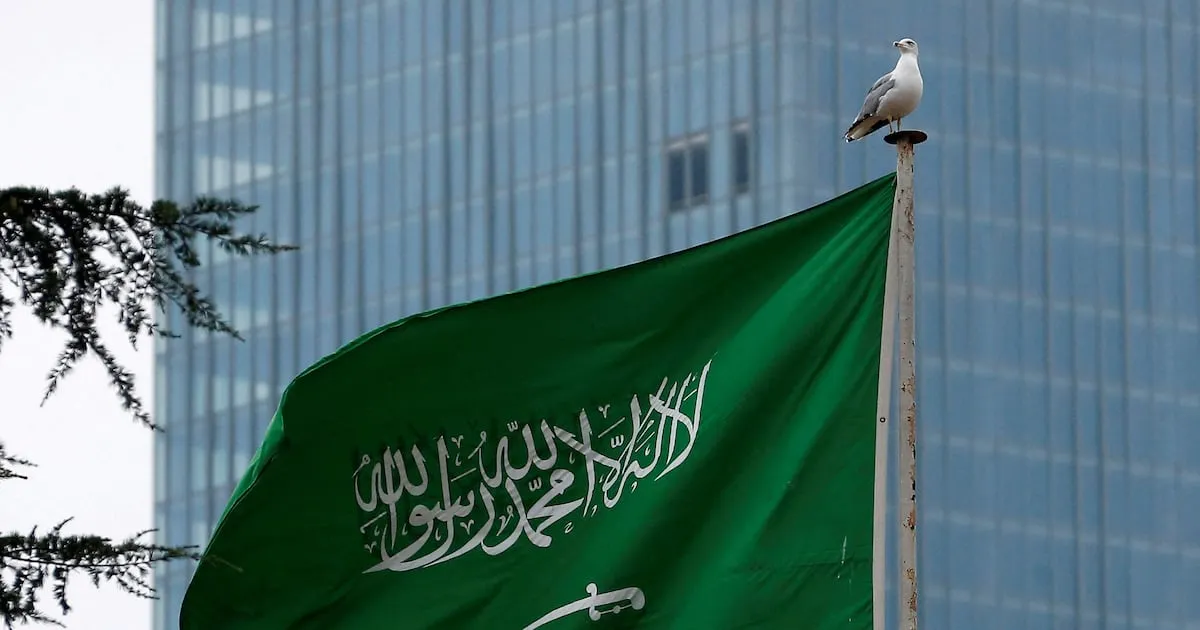
Saudi Arabia, a leading oil-producing nation, experienced a significant economic downturn in the second quarter of this year, with its Gross Domestic Product (GDP) contracting by 4.8% compared to the same period in the previous year. This marks the steepest quarterly decline since the COVID-19 pandemic and is largely attributed to disruptions in oil exports, a critical component of the kingdom’s economy, stemming from escalating regional conflicts.
Economic Contraction Driven by Oil Sector Decline
Official preliminary data released by Saudi Arabia’s Central Statistics Office revealed the stark drop in GDP for the period between April and June. This contrasts sharply with the first quarter, which saw a 3% year-on-year growth. The oil sector, the bedrock of Saudi Arabia’s economy, bore the brunt of this downturn. After registering a 2.9% growth in the first quarter, it plummeted by 24.7% in the second quarter, dragging down the overall economic performance.
The non-oil sector, which the Saudi government has been actively promoting as a cornerstone of its economic diversification strategy, also showed signs of slowing growth. While it grew by 2.9% in the first quarter, its expansion moderated to just 0.6% in the second quarter. This slowdown in both oil and non-oil sectors underscores the broader economic challenges facing the kingdom.
Regional Conflicts Impacting Trade Routes and Exports
International news outlets have pointed to the ongoing military actions in the Middle East, particularly the prolonged tensions between the United States and Iran, as a primary driver of Saudi Arabia’s economic woes. These geopolitical developments have directly impacted the kingdom’s vital oil export routes. The Strait of Hormuz, a critical chokepoint for global oil supplies, has faced blockades, affecting Saudi Arabia’s ability to export its crude oil. Despite utilizing alternative routes, such as the pipeline connecting the Red Sea ports of Yanbu, the overall export volumes have seen a considerable reduction compared to pre-conflict levels.
Furthermore, the Houthi rebels in Yemen, who receive support from Iran, have declared a maritime blockade on Saudi Arabia in the Red Sea. This escalation raises concerns about a potentially steeper decline in GDP growth for the third quarter. The situation is compounded by the unresolved peace talks between the United States and Iran, and Saudi Arabia’s direct involvement in military actions against Iran-aligned militias in Iraq alongside the U.S.
Expert Analysis on Economic Outlook
Jadouard Daoud, Senior Economist for Emerging Markets at Bloomberg Economics, commented on the situation, suggesting that a gradual reopening of maritime transport routes could help Saudi Arabia avoid a recession this year. However, he cautioned that the possibility remains slim given the potential for renewed tensions between the U.S. and Iran, and continued attacks by Houthi rebels and Iraqi militias.
“If maritime transport routes are gradually reopened, it might be possible to avoid a recession for Saudi Arabia this year,” Daoud stated. “However, considering the possibility of renewed tensions between the U.S. and Iran, and continued attacks by Houthi rebels and Iraqi militias, that possibility is not high.”
Resilience and Diversification Efforts
Despite the current economic headwinds, some analysts believe Saudi Arabia’s economy possesses resilience. The International Monetary Fund (IMF) has previously noted that the kingdom’s “robust macroeconomic fundamentals and diversified oil and non-oil infrastructure” provide a buffer against the disruptions caused by regional conflicts. The IMF has projected Saudi Arabia’s economic growth to slow significantly to 1.7% this year, down from 4.6% in the previous year, indicating a moderation rather than a complete collapse.
Saudi Arabia’s economy is heavily reliant on oil, which is estimated to account for around 40% of its GDP. The government’s Vision 2030 plan aims to reduce this dependence by developing non-oil sectors such as tourism, entertainment, and technology. However, the current geopolitical climate presents significant challenges to these diversification efforts, highlighting the delicate balance between economic stability and regional security.
Conclusion
The contraction in Saudi Arabia’s GDP in the second quarter serves as a clear indicator of the economic pressures exerted by the ongoing Middle East conflicts. While the kingdom has demonstrated resilience in the past, the sustained geopolitical instability and its impact on oil exports pose a significant threat to its economic outlook. The success of its long-term diversification strategy will be crucial in navigating these challenges and ensuring future economic stability.
