

Japan’s football leadership has reportedly undertaken an extensive global search for its next national team manager, examining over 200 potential candidates. This meticulous process has culminated in a strategic decision to appoint a coach who will foster a distinct ‘Japanese style’ of football, emphasizing continuity and development from the youth ranks upwards.
Strategic Coaching Appointments for Future Success
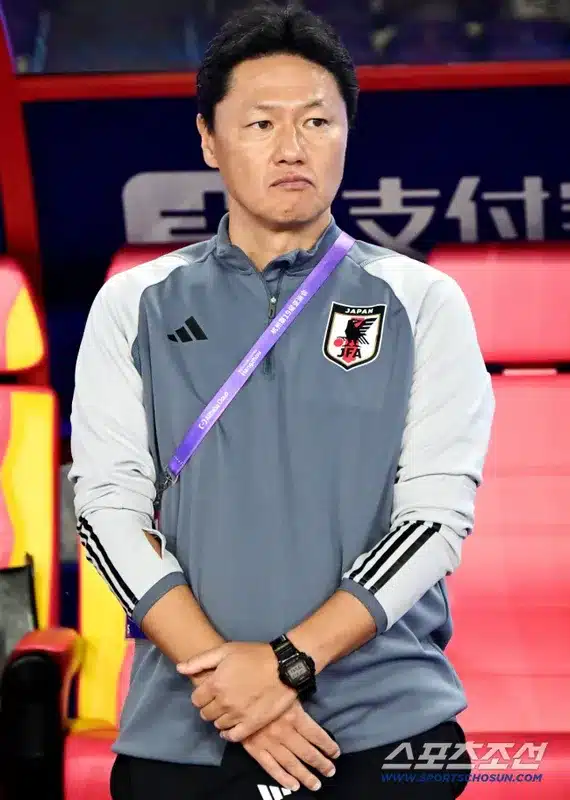
The Japan Football Association (JFA) has made key decisions regarding its coaching structure, aiming to build a sustainable program leading up to and beyond the 2028 Los Angeles Olympics. Hajime Moriyasu, who guided the national team through the 2026 World Cup qualifiers, will continue in his role until the 2027 Saudi Arabia Asian Cup. Following this, the reins are set to be handed over to Go Oiwa, the current coach of the U-21 national team, who will also manage the senior squad with an eye on Olympic qualification.
This succession plan reflects a deliberate strategy to ensure a consistent philosophy and approach across Japan’s national football programs. The JFA’s technical committee, led by Masakuni Yamamoto, has reportedly conducted thorough investigations into a wide pool of domestic and international contenders. Their review encompassed every facet of coaching, from tactical styles to the specific environmental needs for success.
Focus on Youth Development and Japanese Football Identity
The selection process for the post-Moriyasu era, specifically for Oiwa’s tenure, prioritized the continuous strengthening of the team. Yamamoto highlighted the importance of selecting a coach who deeply understands Japanese players and their strengths. He cited examples of successful youth team coaches like Luis de la Fuente of Spain, Lionel Scaloni of Argentina, and Walid Regragui of Morocco, who have all transitioned to lead senior national teams effectively.
The underlying philosophy appears to be the cultivation of a coaching model that leverages the unique attributes of Japanese players through close collaboration. This approach aims to build upon the existing concepts that have been nurtured since the players’ youth league days. Go Oiwa, who has achieved significant success by leading the U-21 Japanese team to two consecutive U-23 Asian Cup victories, is seen as a prime candidate to embody this philosophy.
Hajime Moriyasu’s Tenure and Transition
Hajime Moriyasu, who has been at the helm of the senior national team since 2018, has had his contract extended through June. This short-term extension allows for a smooth transition, with Oiwa expected to take over after the Asian Cup in March next year. Moriyasu’s tenure has been marked by success, including leading Japan to three consecutive World Cup appearances, a historic achievement for the national team.
However, the analysis suggests that while Moriyasu has achieved considerable success, his role might be viewed with a degree of pragmatism. The upcoming Asian Cup presents a significant challenge, with the expectation of victory being paramount in a tournament often seen as a stepping stone rather than a definitive measure of progress. The JFA’s long-term vision appears to be focused on building a stable and evolving football identity, rather than solely on immediate tournament outcomes.
The ‘Japanese Style’ of Football: A Deeper Look
The emphasis on appointing a coach who understands and can cultivate the ‘Japanese style’ of football is a critical element of this strategy. This style is often characterized by high-intensity pressing, intricate passing, disciplined teamwork, and a strong emphasis on technical proficiency. The JFA’s decision to look within its established development pathways, particularly to coaches like Oiwa who have excelled at nurturing young talent, underscores a commitment to this long-term vision.
By selecting a coach with a proven track record in youth development and a deep understanding of the Japanese footballing ethos, the JFA aims to create a seamless progression for players from junior levels to the senior squad. This integrated approach is expected to maximize the potential of Japanese players and foster a cohesive national team identity that can compete consistently on the international stage.
Future Outlook and Challenges
The appointment of Go Oiwa signifies a potential shift towards a more internally developed coaching lineage, focusing on the specific strengths and characteristics of Japanese football. This strategy aims to build a sustainable legacy, ensuring that the national team’s performance is underpinned by a consistent philosophy and a deep pool of talent nurtured through a unified system.
While Moriyasu’s contributions have been significant, the JFA’s forward-looking approach suggests a desire to evolve and adapt. The upcoming challenges, particularly in the demanding Asian Cup, will test the team’s current capabilities and provide a crucial benchmark for the transition to Oiwa’s leadership. The success of this long-term strategy will ultimately be measured by Japan’s sustained competitiveness and development in global football.
The extensive search and the subsequent appointment of Go Oiwa indicate a well-thought-out plan by the JFA to solidify its footballing future. The focus on continuity, youth development, and the cultivation of a distinct ‘Japanese style’ of play positions the national team for sustained success in the years to come.
