

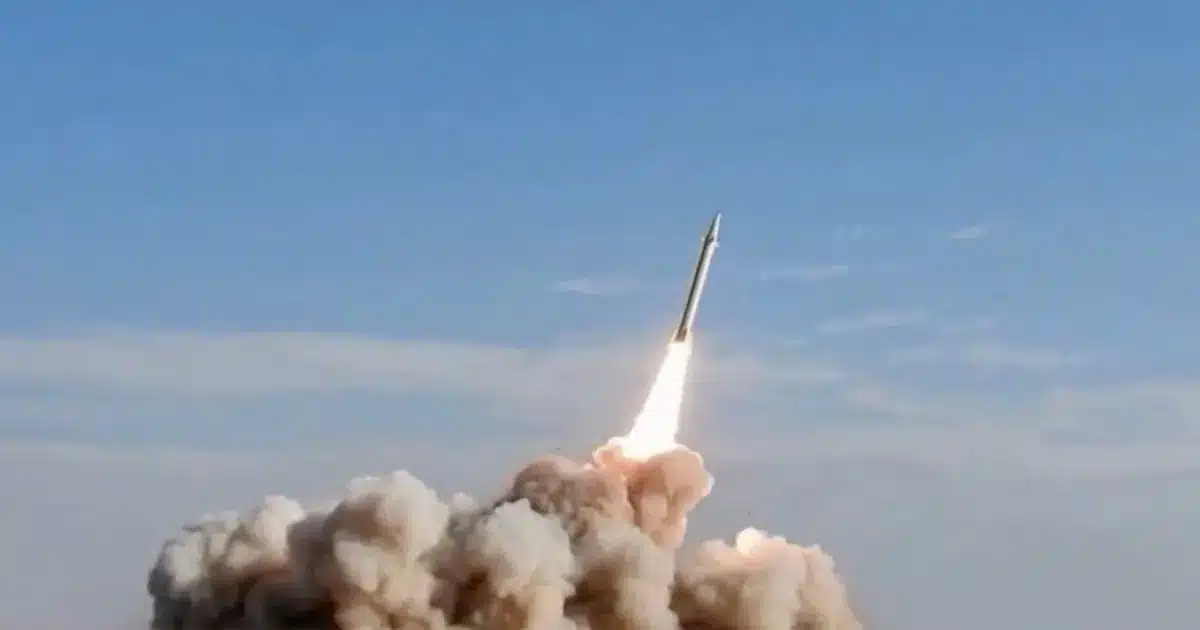
The Islamic Revolutionary Guard Corps (IRGC) of Iran has claimed responsibility for an attack on a U.S. military base located in Jordan, asserting that the strike resulted in American casualties. The announcement was made on March 22nd, according to local time.
IRGC Alleges Successful Strike on King Faisal Air Base
In a statement released on the same day, the IRGC declared that its forces targeted the King Faisal Air Base in Jordan, which is situated near the cities of Zarqa and Amman. The base, identified as one of the operational sites for the ‘Nasr2’ operation, was allegedly attacked using drones and missiles. The IRGC’s statement claimed that a significant number of U.S. military personnel stationed at the base were either killed or wounded in the assault.
The Iranian military organization further detailed the alleged damage sustained by U.S. military assets during the operation. According to their claims, the attack led to the disruption of preparations for U.S. F-15 fighter jet sorties. Additionally, the IRGC asserted that two large helicopters and eight new MQ-9 Reaper drones were directly impacted and damaged.
Iran Frames Attack as Retaliation and Warning
The IRGC characterized the strike as a “legitimate act of retaliation” in response to what they described as “U.S. aggression.” They further stated that the attack was a direct consequence of repeated U.S. strikes that did not differentiate between military and civilian facilities. The group warned that the U.S. would face “overwhelming” retribution if such actions continued.
“The cycle of war and negotiation will only be prolonged if invaders are not confronted,” the IRGC statement read. The organization issued a stern warning, suggesting that if U.S. “aggression” persists, Iran is prepared to launch operations that could bring “national mourning” to the United States. This veiled threat implies potential strikes on targets that would inflict significant loss and grief upon the U.S.
Context of Regional Tensions and U.S. Response
This alleged attack occurs amidst a backdrop of heightened regional tensions. U.S. forces have been engaged in operations in the Middle East, and Iran has consistently voiced opposition to U.S. military presence in the region. The IRGC’s statement appears to be an attempt to assert Iran’s capability and willingness to respond forcefully to perceived provocations.
The U.S. has not yet officially confirmed or denied the IRGC’s claims regarding the attack on the King Faisal Air Base or the reported casualties. However, the U.S. military maintains a presence in Jordan, primarily for training and counter-terrorism operations, and the King Faisal Air Base is known to host U.S. aircraft and personnel.
U.S. President’s Prior Warnings to Iran
In parallel to these developments, U.S. President Donald Trump had previously issued a strong warning to Iran. On the same day as the IRGC’s announcement, President Trump stated that if Iran were to attack any U.S. military facilities, particularly those located in the Strait of Hormuz region, the U.S. would respond with overwhelming force. He specified that such retaliation would involve the “destruction” of Iran’s development sites and its “oil” infrastructure.
President Trump elaborated on the potential targets of this U.S. response, indicating that they would include “development sites” located in or near the Iranian capital, Tehran, as well as other significant infrastructure in the vicinity. This declaration underscores the volatile nature of the relationship between the U.S. and Iran and the potential for escalation.
Broader Implications and Geopolitical Landscape
The situation highlights the complex geopolitical dynamics at play in the Middle East. Iran’s actions, whether confirmed or claimed, often serve to challenge U.S. influence and project power within the region. The IRGC’s rhetoric suggests a strategy of deterrence through the threat of asymmetric warfare and retaliatory strikes.
The U.S. military presence in Jordan is part of a broader strategy to maintain stability and counter threats from extremist groups and state actors in the region. Any successful attack on these bases would represent a significant security breach and could lead to a substantial escalation of conflict.
International observers are closely monitoring the situation for any official statements from the U.S. Department of Defense or the White House. The response from the U.S. will be critical in determining the trajectory of U.S.-Iran relations and the overall security landscape in the Middle East. The potential for miscalculation or unintended escalation remains a significant concern given the charged atmosphere and the history of direct and indirect confrontations between the two nations.
Conclusion
The IRGC’s claim of attacking a U.S. base in Jordan and causing casualties marks a serious development in the ongoing tensions between Iran and the United States. While Iran frames the action as a justified retaliation, the U.S. has previously warned of severe consequences for any attacks on its interests. The lack of immediate U.S. confirmation leaves the situation uncertain, but the rhetoric from both sides indicates a high level of alert and the potential for further escalation in the volatile Middle East region.
