

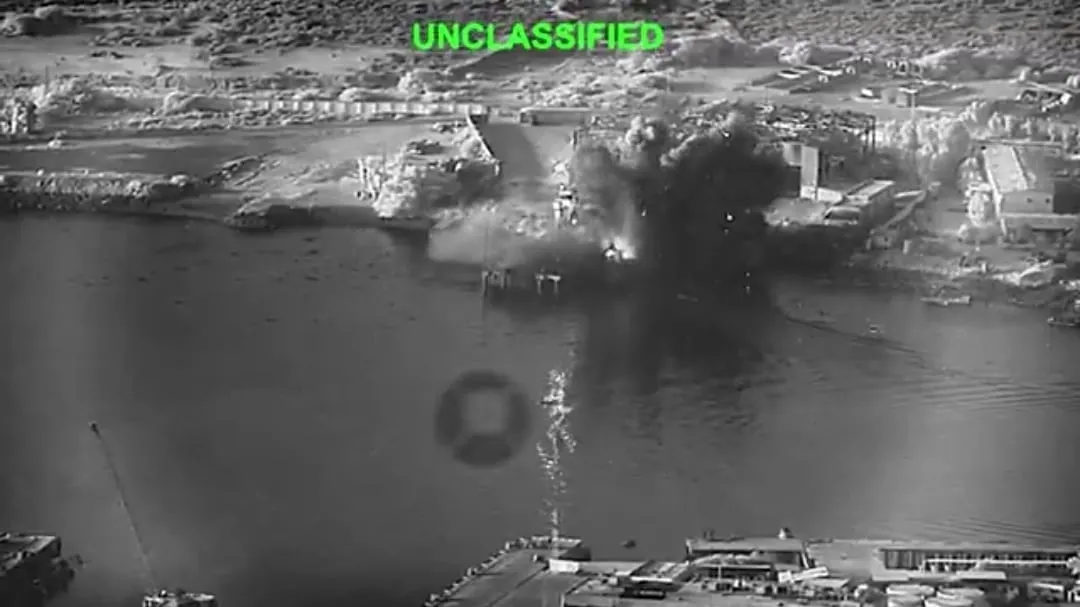
Two oil tankers have reportedly exploded in the Strait of Hormuz, a critical waterway for global energy transit, amidst escalating tensions in the region. The incident occurred early on June 18th, according to Iran’s state-run IRNA news agency.
Incident Details Emerge
The Islamic Revolutionary Guard Corps (IRGC) announced that two oil tankers caught fire following explosions. The IRGC stated that the vessels were transiting a route in the southern part of the Strait of Hormuz when the incident happened, alleging they were attempting to pass through a “restricted area” and were “deceived by U.S. reconnaissance agencies.” The explosions are believed to have occurred around midnight local time on June 18th. Details regarding casualties or the specific vessels involved have not yet been confirmed.
This event follows a period of heightened naval confrontations in the Strait of Hormuz, occurring seven days after the United States and Iran reportedly withdrew from a Memorandum of Understanding (MOU) regarding maritime safety. The UK Maritime Trade Operations (UKMTO) reported on June 16th that an oil tanker in the Strait, near the Omani city of Sohar, was struck by an unidentified projectile.
IRGC’s Strong Accusations and Warnings
The IRGC issued a strong statement, declaring that the Strait of Hormuz has been “completely destroyed” due to “U.S. actions.” They further asserted that as long as U.S. “aggression” continues, “it will be impossible to export chemical fertilizers or even a single drop of oil and gas through this region.” The IRGC urged vessels to protect their assets and, more importantly, their lives, by refraining from entering the “restricted areas.”
In a related development, the IRNA news agency also reported that the IRGC navy had intercepted and shot down a U.S. MQ-9 drone over the southern port city of Bushehr.
Strait of Hormuz: A Vital Global Chokepoint
The Strait of Hormuz is an internationally significant maritime chokepoint, serving as the sole sea passage for crude oil exported from the Persian Gulf. Approximately 30% of the world’s seaborne oil trade passes through this narrow waterway, making any disruption a matter of global economic concern. Its strategic importance means that incidents within the strait often have far-reaching implications for international energy markets and geopolitical stability.
Historical Context of Tensions
Tensions between Iran and the United States have been a recurring feature in the Strait of Hormuz. In recent years, the region has witnessed several incidents involving commercial shipping, including attacks on tankers, seizures of vessels, and the downing of drones. These events are often attributed to broader geopolitical rivalries and disputes over regional influence and maritime security.
The U.S. has historically maintained a significant naval presence in the Persian Gulf and the Strait of Hormuz to ensure freedom of navigation and protect its allies’ interests. Iran, conversely, views this presence as a threat and has frequently conducted naval exercises and made assertive statements regarding its control over the waterway.
International Response and Concerns
The international community closely monitors developments in the Strait of Hormuz due to its critical role in global energy supply. Major oil-consuming nations and international organizations often call for de-escalation and adherence to international maritime laws. The potential for conflict in such a vital area raises concerns about oil price volatility, supply chain disruptions, and broader regional instability.
Maritime security organizations like the UKMTO play a crucial role in disseminating information and coordinating responses to incidents at sea. Their reports are vital for providing timely and accurate updates to shipping companies and international navies operating in the area.
The Role of Reconnaissance and Deception Allegations
The IRGC’s specific accusation that U.S. reconnaissance agencies deceived the oil tankers highlights a potential layer of complexity in the incident. Such claims, if substantiated, could suggest a deliberate attempt to provoke or misdirect vessels, further inflaming regional tensions. U.S. military activities in the vicinity, including the operation of drones like the MQ-9, are often part of surveillance and reconnaissance missions aimed at monitoring maritime traffic and potential threats.
The downing of a U.S. drone by the IRGC navy, as reported by IRNA, underscores the heightened state of alert and the potential for miscalculation in the region. Such events can rapidly escalate tensions and complicate diplomatic efforts to resolve underlying disputes.
Conclusion: A Volatile Situation
The reported explosions on two oil tankers in the Strait of Hormuz represent a significant escalation in a region already fraught with geopolitical friction. The IRGC’s accusations against the U.S. and its warnings about transit through the strait paint a picture of a highly volatile situation. With the Strait of Hormuz being indispensable to global energy security, any disruption carries substantial economic and political ramifications. The international community will be watching closely for further developments and seeking avenues for de-escalation to prevent a wider conflict.
