

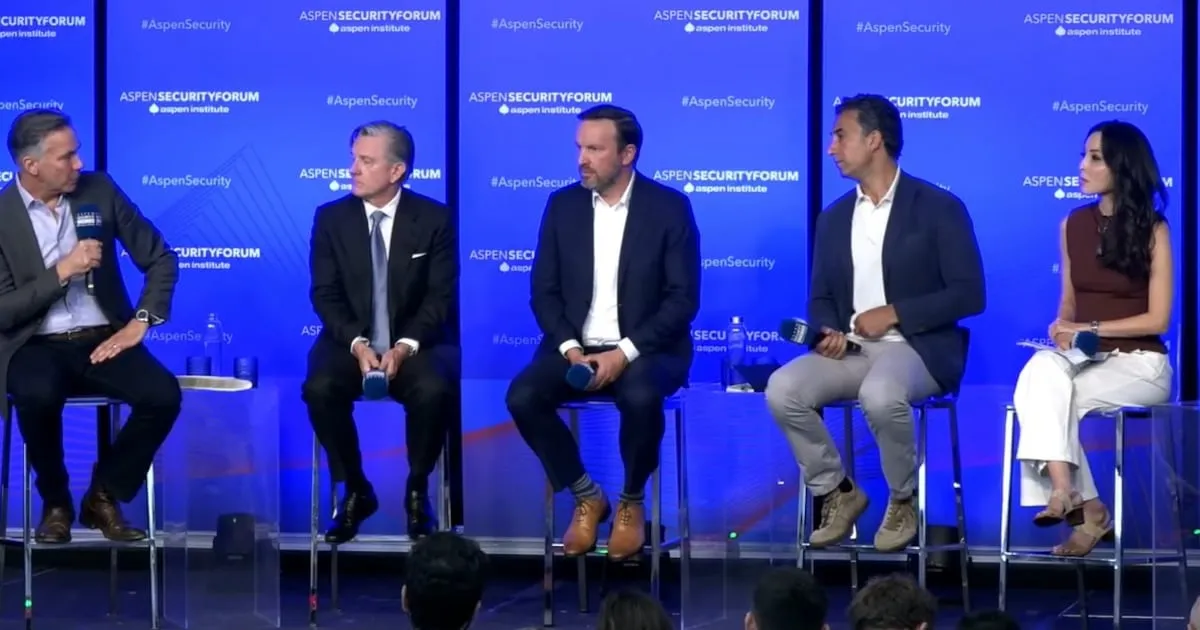
A prominent U.S. Senator has sharply criticized the current approach to Iran, labeling it the “biggest diplomatic disaster” of the last two decades and a significant presidential mistake. Speaking at the Aspen Security Forum in Colorado, Senator Chris Murphy, a Democrat, argued that the ongoing military actions initiated by the Trump administration, which have now extended for nearly five months, are creating political pressure as the November elections approach. Recent polling data released by The Washington Post and Ipsos indicates that President Trump’s approval rating for his handling of foreign policy stands at a mere 37%.
Iran Policy Under Scrutiny
The forum, which convened from October 14th to 17th, placed significant focus on the complex situation surrounding Iran. Despite a preliminary agreement signed last month between the U.S. and Iran, the continuation of military confrontations has led many to believe the ceasefire is effectively defunct. This assessment highlights the precariousness of the diplomatic efforts and the escalating tensions in the region.
Calls for Increased Pressure
Former Secretary of Defense under the Trump administration, Mark Esper, advocated for a prolonged strategy of attrition, stating, “It will be a long war of attrition, seeing who will blink first.” He proposed withdrawing from the preliminary agreement and intensifying sanctions against Iran, including measures related to its nuclear program and support for groups like Hezbollah. Esper emphasized that achieving these objectives requires “patience, perseverance, and discipline,” acknowledging that the U.S. might have to bear significant costs, such as higher energy prices, in the interim.
Steve Hadley, former National Security Advisor during the George W. Bush administration, echoed the sentiment for sustained pressure. He argued that continued sanctions are necessary to compel Iran to abandon its pursuit of nuclear weapons, cease supporting militant groups, and ultimately build a more stable and secure future. Hadley’s perspective underscores a belief that economic and diplomatic isolation can be powerful tools in reshaping Iran’s foreign policy and internal priorities.
Divergent Views on Sanctions and Diplomacy
Condoleezza Rice, former Secretary of State and often referred to as the “Iron Lady of Diplomacy,” also urged for a strengthening of economic sanctions against Iran. Representing a more hawkish stance within the Republican establishment, Rice expressed skepticism about the feasibility of any agreement with Iran. “I would not, under any circumstances, accept a nuclear deal,” she stated, adding, “They should be left to stew in their own dire economic circumstances. I believe there are deep divisions within the Iranian government.” Her remarks suggest a belief that internal pressures within Iran, exacerbated by sanctions, could lead to significant policy shifts.
Robert Greenway, a former senior director at the National Security Council during the Trump administration who was involved in drafting the Abraham Accords, offered a more optimistic view of recent military actions. He asserted that these operations have “decimated” Iran’s capabilities, including its nuclear program, missile systems, and drone technology. Greenway believes that significant progress has been made and that little remains to be done to neutralize the threat posed by Iran.
Criticism of U.S. Concessions
Conversely, Senator Murphy’s office has raised concerns about concessions made by the U.S. in pursuit of de-escalation. They pointed to reports that the U.S. has eased sanctions on Iranian oil imports to facilitate the reopening of the Strait of Hormuz. Furthermore, they noted that Iran’s government has demonstrated its ability to withstand U.S. military strikes. “We have lost two major negotiating points in our talks with Iran,” a spokesperson for Murphy’s office stated, highlighting a perceived weakening of the U.S. diplomatic position.
Long-Term Regional Stability
Karim Sadjadpour, a senior fellow at the Carnegie Endowment for International Peace and an expert on Iran based in Washington D.C., offered a broader perspective on the conflict’s implications for the Middle East. He suggested that sustained stability in the Middle East is unlikely until a government comes to power in Tehran that prioritizes the economic and security interests of the Iranian people over nationalistic ambitions, and that embraces Iran’s national interests. He believes the current conflict may have limited long-term impact on the regional dynamics.
Ayman H. Al-Zoghby, former Foreign Minister of Jordan, emphasized the importance of a “Two-State Solution”—the establishment of an independent Palestinian state alongside Israel, with mutual recognition from regional nations—as the genuine path toward regional peace. His statement points to a broader diplomatic framework that could address underlying issues contributing to instability in the Middle East, suggesting that a focus solely on Iran might not be sufficient to achieve lasting peace.
Conclusion
The differing perspectives highlight a complex and contentious debate within U.S. foreign policy circles regarding the most effective strategy for dealing with Iran. While some advocate for intensified pressure and sanctions, others express concern over concessions and the potential for prolonged conflict. The ultimate impact of these policies on regional stability and Iran’s future trajectory remains a subject of ongoing debate and international concern.
