

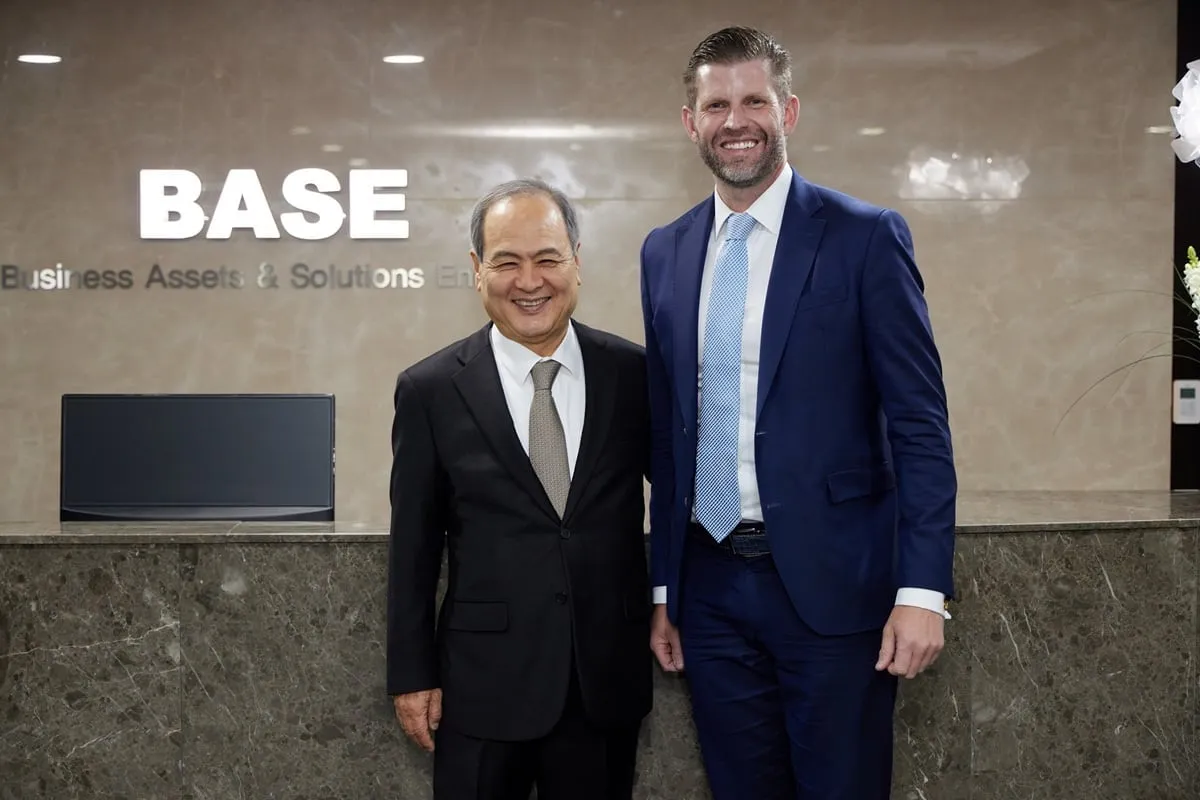
A South Korean conglomerate, the Baesang Group, has come under scrutiny for a $2 million payment made to an organization linked to former U.S. President Donald Trump. The payment, disclosed in financial filings, has ignited debate about potential conflicts of interest, particularly as one of the conglomerate’s subsidiaries is currently facing significant U.S. tariffs.
Baesang Group’s Payment to Trump Organization Revealed
The disclosure emerged in late June, detailed in President Trump’s financial disclosure report. The Baesang Group, a South Korean business group with interests in construction and wine importation, made the substantial payment to the Trump Organization in the previous year. The filing offered a brief explanation: “fees related to development and non-refundable purchase deposit.”
Representatives for both the Baesang Group and the Trump Organization stated that the funds were connected to an undisclosed golf course development project. However, the timing and nature of the payment have raised questions, especially given the ongoing trade dispute involving a Baesang Group subsidiary.
Trade Dispute and Tariff Concerns
The controversy gained traction due to the situation surrounding Korea Aluminum, a subsidiary of Baesang Group’s construction arm, KCC & C. The U.S. Department of Commerce recently imposed tariffs on Korea Aluminum, alleging that the company had circumvented U.S. trade laws by processing Chinese aluminum in South Korea before exporting it to the United States. The tariffs, set to take effect in 2025, could significantly impact the company’s operations.
Korea Aluminum has vehemently denied these allegations, asserting that its products are manufactured using proprietary technology and are legitimate. The company is actively contesting the U.S. government’s decision. This trade dispute has led to speculation that the $2 million payment to the Trump Organization might have been an attempt to influence U.S. trade policy or secure favorable treatment, particularly for Korea Aluminum, whose export channels have been threatened by the tariffs.
Denials and Ethical Questions
Despite the suspicions, reporting from The New York Times indicated that no direct evidence was found to suggest that President Trump or his family had improperly lobbied the U.S. government on behalf of the Baesang Group or Korea Aluminum. Both entities have maintained that their business dealings are entirely separate from the trade dispute.
Alan Garten, Chief Legal Officer for the Trump Organization, stated that the organization has decades of experience in various sectors, including golf, hotels, and real estate, and has conducted business with numerous companies globally. He dismissed the notion that the recent transaction was influenced by factors other than legitimate business considerations, calling such suggestions “baseless.” Kushner Companies spokesperson, in turn, affirmed that there was “no conflict of interest.”
However, critics argue that any financial entanglement between a sitting president’s business and foreign entities can create the appearance of impropriety and pose potential risks to national interests. Barry Appleton, an international trade lawyer, commented on the constitutional principle that presidents should recuse themselves from situations where they might perceive a conflict of interest. He noted that the current situation leaves room for doubt about whether personal financial gain influenced official actions, a concern that the U.S. public should not have to entertain.
Baesang Group’s Business and Ties to the Trump Family
The Baesang Group is a significant South Korean conglomerate with core businesses in steel and construction through its subsidiary KCC & C. It also holds a substantial stake in Kumyang International, a major domestic liquor importer. Group Chairman Kim Sung-jip has cultivated a close relationship with the Trump family over the past decade.
Since 2017, Kumyang International has held the exclusive rights to import and distribute Trump Winery products in South Korea. Chairman Kim also attended President Trump’s inauguration in Washington D.C. the same year. In February of the current year, he invited Donald Trump Jr. to South Korea, hosting meetings with political and business figures to discuss ventures such as golf course development.
The confluence of a major trade dispute and a significant payment to the former president’s business has placed the Baesang Group and its dealings under intense public and media scrutiny, prompting discussions about transparency and ethical conduct in international business.
