

The United States government has declassified a significant trove of documents, military footage, and photographs related to Unidentified Anomalous Phenomena (UAP), commonly known as UFOs. This latest release includes previously undisclosed accounts of unidentified flying objects sighted in East Asian airspace and a diamond-shaped object observed near nuclear weapons facilities, sparking renewed public interest.
Pentagon Discloses Fourth Batch of UAP Data
The Department of Defense (DoD) officially unveiled the fourth installment of its UAP-related classified materials on its public website, as reported by international news outlets. A spokesperson for the DoD stated that the government believes it is time for the public to directly access and review the data held by the nation. This move is presented as part of a broader strategy to enhance government transparency regarding UAP.
Notable Sightings in the Declassified Files
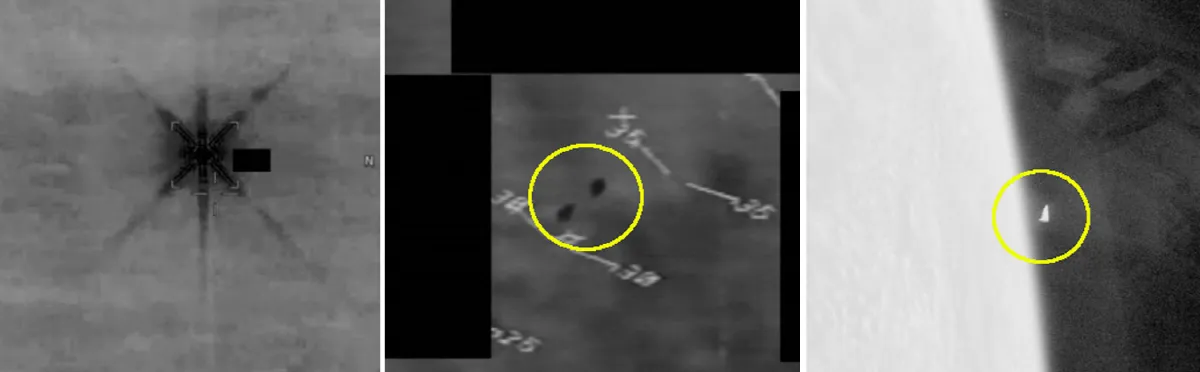
Among the most compelling items in the newly released data is an 18-second video captured in 2025 by U.S. forces using extraterrestrial sensors in the skies over East Asia. The footage depicts a star-shaped object, characterized by numerous protrusions, hovering or moving slowly in the atmosphere. This video was submitted by the U.S. Indo-Pacific Command, though the military has not offered a definitive conclusion regarding the object’s nature.
To safeguard sensitive information, such as the identities of witnesses and the precise locations of military installations, certain frames within the video have been redacted. This practice underscores the delicate balance between transparency and national security concerns inherent in such disclosures.
Additional Visual Evidence of Anomalous Objects
Further visual evidence includes a video filmed in 2024 within the United States. This footage, when magnified, reveals an elongated object that appears to break apart into multiple bright points, subsequently moving in a divergent direction. Another video, recorded in 2023, shows two unidentified objects rapidly traversing the sky in opposite directions, a maneuver that has captured significant attention.
A separate video, originating from an extraterrestrial recording taken in 2020 and lasting 32 seconds, features a dark, jellyfish-like object drifting in the skies over the Atlantic Ocean. The U.S. Third Fleet estimated the object’s length to be approximately 3.6 to 4.5 meters (12 to 15 feet). Observers described it as resembling a large, distorted kite being carried by the wind. However, like many other cases, the precise identity of this object remains undetermined.
Historical Footage and Official Statements
The release also includes approximately three minutes of U.S. Navy footage filmed in 1996 over the northwestern United States. This video shows a circular aircraft with wing-like protrusions on its sides navigating over mountainous terrain. The U.S. Navy, too, was unable to reach a definitive conclusion about the object, leaving the recording as an unresolved record.
In response to these disclosures, U.S. Secretary of Defense, Pete Hegseth, issued a statement acknowledging the long-standing speculation fueled by materials previously classified as secret. He emphasized that the current release demonstrates the government’s commitment to providing an unprecedented level of transparency regarding UAP investigations.
Implications and Future Transparency
The Pentagon’s initiative to declassify these materials is seen by many as a significant step towards demystifying UAP. By making such data publicly accessible, the government aims to foster a more informed public discourse and potentially encourage further scientific inquiry into these phenomena. The variety of shapes and behaviors documented—from star-like objects to elongated forms and jellyfish-resembling entities—highlights the diverse and often perplexing nature of the UAP reports.
While the released documents and videos offer compelling visual evidence, they often stop short of definitive identification. The military and intelligence agencies continue to analyze these events, balancing the need for public information with the imperative of protecting sensitive operational details and sources. The ongoing process suggests a long-term commitment to addressing the UAP issue with greater openness than in previous decades.
The public’s fascination with UAP remains strong, and this latest release is expected to fuel further discussion and analysis within both official circles and the broader community. The government’s stated goal of increasing transparency suggests that more information may be forthcoming as investigations continue and historical records are further reviewed.
