

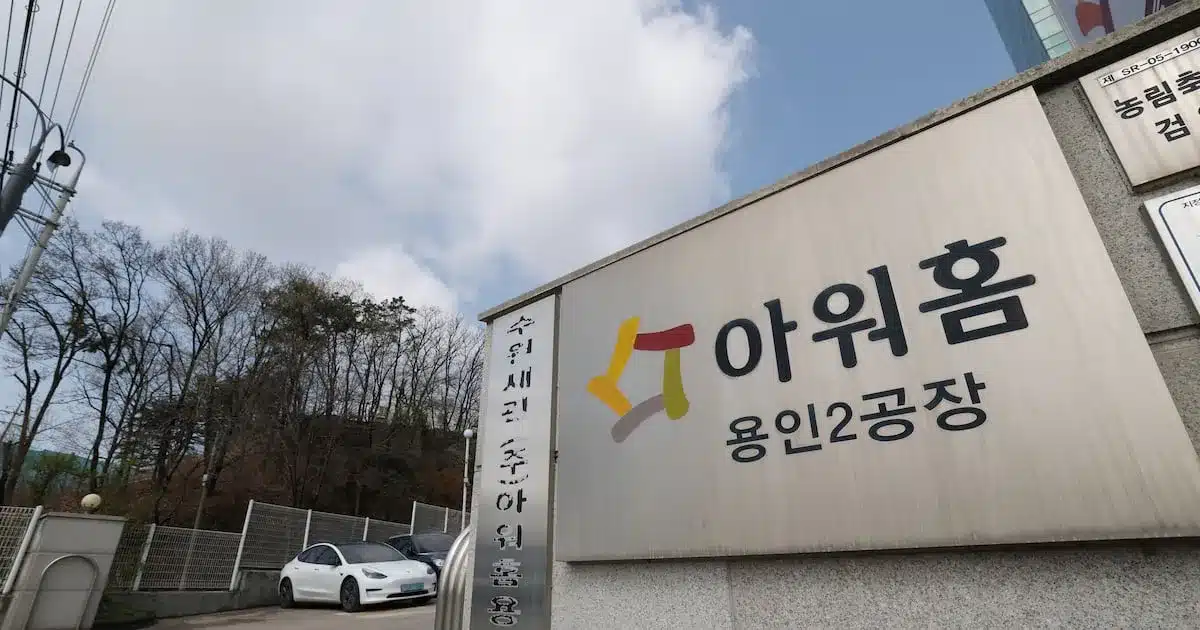
A serious workplace accident at the OurHome Yongin 2 plant, where a worker was critically injured in a similar entanglement incident just over a year ago, has reignited debate about the effectiveness of the company’s safety protocols. The incident raises questions about whether the safety investments and enhanced management systems implemented after the previous fatality have been adequately translated into tangible improvements on the factory floor.
Repeat Entanglement Accident at OurHome Facility
The latest incident occurred around May 8th at the OurHome Yongin 2 plant in Cheoin-gu, Gyeonggi Province. A worker in their 50s, employed by a subcontractor, suffered a severe entanglement injury to their neck while working near the rotating parts of a conveyor belt used for packaging kimchi. The employee was transported to a hospital in critical condition and has reportedly not yet regained consciousness.
In response to the accident, the Gyeonggi Nambu Provincial Police Agency and the Ministry of Employment and Labor conducted a search and seizure at the plant on May 23rd. Investigators secured work plans, safety management documents, and materials related to the company’s measures to prevent recurrence. A formal investigation is underway to determine any violations of the Occupational Safety and Health Act.
An OurHome representative stated that the analysis of the seized materials is ongoing and that the results from the Ministry of Employment and Labor’s preliminary investigation are also expected. The company is awaiting the official findings.
Previous Fatality and Implemented Safety Measures
This recent accident bears a striking resemblance to a fatal incident that occurred at the same facility in April of the previous year. In that case, a worker in their 30s died after their neck became caught in the rotating parts of a refrigerator unit while conducting an internal inspection. Following this tragedy, OurHome announced a series of preventive measures. These included detailed safety inspections and risk assessments for all manufacturing and logistics sites, increased investment in safety infrastructure, and the implementation of measures such as:
- Emergency stop devices (auto-stop when a gate is opened during operation).
- Installation of barriers to prevent entry into refrigerator units.
- Erection of safety railings.
- Formalizing safety management principles with the CEO.
- Adherence to a ‘7 Absolute Safety Rules’ policy.
Company officials indicated that OurHome had nearly doubled its safety budget in the first half of the current year compared to the previous year’s investment. They acknowledged the company’s commitment to improvement but expressed dismay at the recurrence of a similar accident, stating, “The company has been pursuing improvements, but we are in a situation where we have no face to show after another accident occurred.”
Scrutiny of Safety Management Systems
Despite the company’s stated efforts and increased investment, the repetition of a similar accident within a little over a year has cast doubt on the actual effectiveness of the safety management system on the production floor. A key point of concern is that basic safety covers for the conveyor belt’s rotating parts were reportedly not installed at the site of the recent accident.
Police have taken custody of OurHome and its subcontractor’s safety managers. Investigations are focusing on the presence of emergency stop mechanisms and protective measures. The effectiveness of the reinforced safety measures announced last year in preventing this specific accident is a critical aspect of the ongoing inquiry.
The Ministry of Employment and Labor is also conducting a thorough review to ascertain whether the improvement measures mandated after last year’s incident were actually implemented at the site. A ministry official emphasized that given the repeated nature of the accident at the same facility, a rigorous inspection of whether the previously ordered improvements were carried out is mandatory. The investigation will encompass the circumstances and causes of the accident, as well as the implementation status of corrective measures following last year’s fatality.
Government Emphasis on Preventing Recurrent Industrial Accidents
This incident aligns with the new government’s focus on eradicating recurrent industrial accidents. President Lee Jae-myung has repeatedly stressed the seriousness of similar accidents occurring at the same workplace during national security meetings on April 2nd and 23rd. Minister of Employment and Labor, Kim Young-hoon, also held an emergency meeting with representatives from major manufacturing companies, including OurHome, on May 3rd, urging them to expand the installation of automatic safety devices and increase safety investments.
The Ministry of Employment and Labor is currently conducting urgent, parallel inspections targeting approximately 1,000 workplaces, primarily in the manufacturing sector, to prevent entanglement accidents.
Expert Perspectives on Workplace Safety
Experts suggest that preventing recurring industrial accidents requires not only corporate investment in safety but also the establishment of a strong organizational culture that fosters a keen awareness of risks. Professor Jeong Jin-woo of the Department of Safety Engineering at Seoul National University of Science and Technology noted that companies often prioritize immediate measures to minimize production losses following an accident, which can lead to the development of procedural or documentation-focused solutions rather than addressing fundamental workplace hazards.
He further explained, “Unless a system is established for continuous monitoring of whether the safety management system is actually functioning in line with the actual working environment, the same type of accident can be repeated even with increased safety budgets.” Professor Jeong stressed the importance of a management system that evaluates the practical effectiveness of recurrence prevention measures on-site, rather than merely their compilation.
<p
