

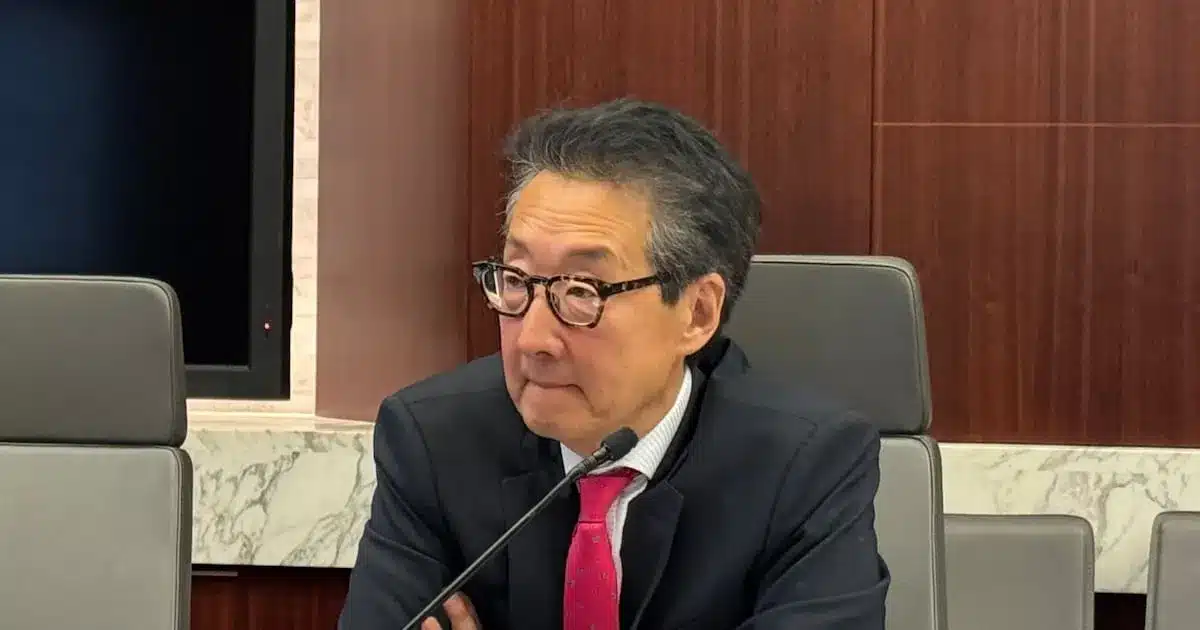
Victor Cha, a senior advisor at the Center for Strategic and International Studies (CSIS), has suggested that South Korea’s level of support for Ukraine could be influenced by Russia’s relationship with North Korea. Cha posited that if Russia is seeking ways to weaken its ties with Pyongyang, one potential demand could be for South Korea to cease its provision of artillery shells to Ukraine.
Shifting Dynamics in International Aid
Speaking at a podcast hosted by the Carnegie Endowment for International Peace (CEIP) in Washington D.C. on July 1st, Cha stated, “I am reluctant to say this, but in some sense, it is possible.” He emphasized the need to weaken the alliance between North Korea and Russia, noting that such a scenario is plausible.
While South Korea has not directly supplied lethal weapons to Ukraine, it has been providing indirect support by supplying hundreds of thousands of artillery shells to the United States, which then transfers them to Ukraine. This indirect assistance has been a significant contribution to Ukraine’s defense efforts.
North Korea’s Economic Boost from War
Cha observed that the war in Ukraine has been a significant boon for North Korea’s economy, providing much-needed supplies and fostering new infrastructure development. He speculated that Russian businesses operating in North Korea, having lost everything, might be interested in returning. This could lead to Russia offering South Korea concessions, such as the reopening of manufacturing facilities in St. Petersburg, in exchange for reduced support for Ukraine.
While acknowledging that this would be an unfortunate development from Ukraine’s perspective, Cha described it as a “reality of the situation.” He added, “From Ukraine’s point of view, it is an undesirable policy, but it is also part of reality.”
North Korea’s Nuclear Ambitions and Strategic Realities
Cha, known for his hawkish stance on North Korea, recently argued in Foreign Affairs that denuclearization in the short term is unlikely and that a strategy of “cold peace” with North Korea should be pursued.
According to CSIS, North Korea’s explicit goal is to achieve nuclear capabilities comparable to those of the United Kingdom and France. Cha estimated that North Korea currently possesses approximately 50 nuclear warheads and has sufficient fissile material to produce an additional 50, potentially bringing its total to around 100 warheads.
A Pragmatic Approach to Denuclearization
Cha asserted that while North Korea’s nuclear program is often described as opaque, its actions in this domain have been remarkably transparent. He stated that the development of intercontinental ballistic missiles (ICBMs) capable of striking the U.S. mainland is a widely accepted fact among intelligence agencies and experts.
Given the current trajectory, Cha believes that denuclearization is not achievable in the immediate future. He advocates for a more pragmatic approach in negotiations with North Korea, suggesting that past agreements focusing on “risk reduction” measures, such as establishing hotlines or halting fissile material production, were perceived as concessions by the other party. He argued that these should be viewed as practical steps rather than failures.
