

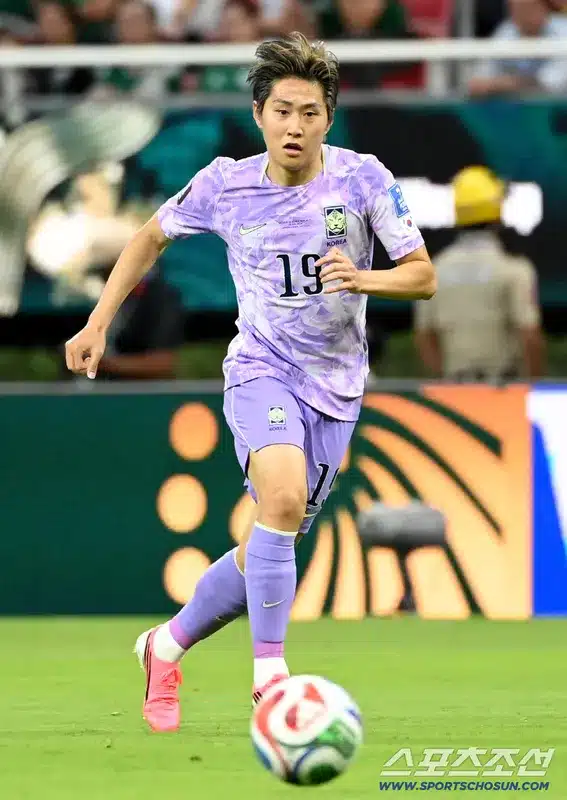
The landscape of South Korean football is undergoing a significant transition, with a new era dawning centered around the dynamic talents of Lee Kang-in. Following a period dominated by iconic figures like Park Ji-sung and the emergence of Son Heung-min, attention is now firmly fixed on the 25-year-old midfielder, who showcased exceptional skill and leadership during the recent World Cup.
The Legacy of Son Heung-min
For years, Son Heung-min has been the undisputed centerpiece of the South Korean national team. His illustrious career, spanning 15 years in Europe, saw him achieve historic milestones, including becoming the first Asian player to win the Premier League Golden Boot. Within the national team, Son also set records, serving as captain for an extended period and scoring 56 goals, the second-highest tally in South Korean football history. His ability to consistently find the back of the net made maximizing his scoring potential a primary tactical focus for previous national team management.
Coaches deployed Son in various attacking roles—winger, shadow striker, and lone forward—with team formations and lineups often dictated by his position and responsibilities. While Son’s contributions were vital to the team’s attack, his performance in the most recent World Cup, the fourth of his career, was notably subdued. He was unable to register a single goal or assist, a fact that, despite debates about his utilization, has been difficult to dispute. Following the tournament, Son announced his intention to step away from the national team, citing a desire to ‘run again with all my might,’ though his departure signals a shift in the team’s dynamics.
While Son’s experience and presence remain a valuable asset, the absolute aura he once commanded may diminish. This transition period calls for a new leader, and the answer appears to be Lee Kang-in.
Lee Kang-in: The New ‘Ace’ and ‘Character’ of Korean Football
Lee Kang-in shone brightly during the recent World Cup, transforming from a ‘game-changer’ in the Qatar tournament four years prior to a full-fledged ‘ace’ in the current campaign. He started and played full-time in all three group stage matches, spearheading South Korea’s attack with his dominant play. His performance statistics were remarkable; he led all players in the group stage with 11 successful dribbles, a testament to his individual brilliance.
Beyond dribbling, Lee consistently ranked high in other key metrics, including successful passes and key passes, showcasing his all-around offensive capabilities. This stellar form earned him a spot in the World Cup’s Best XI, as selected by the Spanish sports newspaper Marca. Being the sole player from a qualified nation to receive this honor underscores the significant impact Lee had on the tournament.
Leadership on and off the Pitch
Lee has firmly established himself as a leader within the squad. He was not afraid to voice his opinions and provide clear direction on the field when necessary. Rather than being a ‘youngest sibling’ type who merely follows, he has become a true ‘older brother’ figure, dedicated to the team’s success. His visible frustration after the loss to Mexico and his action of striking the ground with his fist after the defeat to Jordan demonstrated his deep commitment to the national team.
The praise for Lee’s ‘character’ is another facet of his growing reputation. He is known within the team for his sincerity and lack of personal agenda. His ability to move his teammates with genuine care and authenticity is not accidental. Previously, Lee often played a supporting role for the national team, primarily on the right wing, due to the established presence of stars like Son Heung-min, Lee Jae-sung, and Hwang Hee-chan. However, playing on the right wing did not allow Lee to showcase his full potential.
Building the Future Around Lee Kang-in
The time has come to build the team around Lee Kang-in. Strategic considerations should now focus on positions and roles that allow him to excel further. This includes developing midfielders who can provide him with greater freedom of movement and identifying attacking partners who can best receive his passes. Regardless of how the team is structured or who is involved in the planning, Lee Kang-in is the central figure for this new era of South Korean football.
His journey from a promising young talent to a leading figure exemplifies the evolving nature of the sport and the emergence of new stars ready to carry the torch. The focus now shifts to how the national team will leverage his unique skills and leadership to achieve future success.
This transition marks a pivotal moment for South Korean football, signaling a new direction and renewed hope for the future, with Lee Kang-in at its very heart.
