

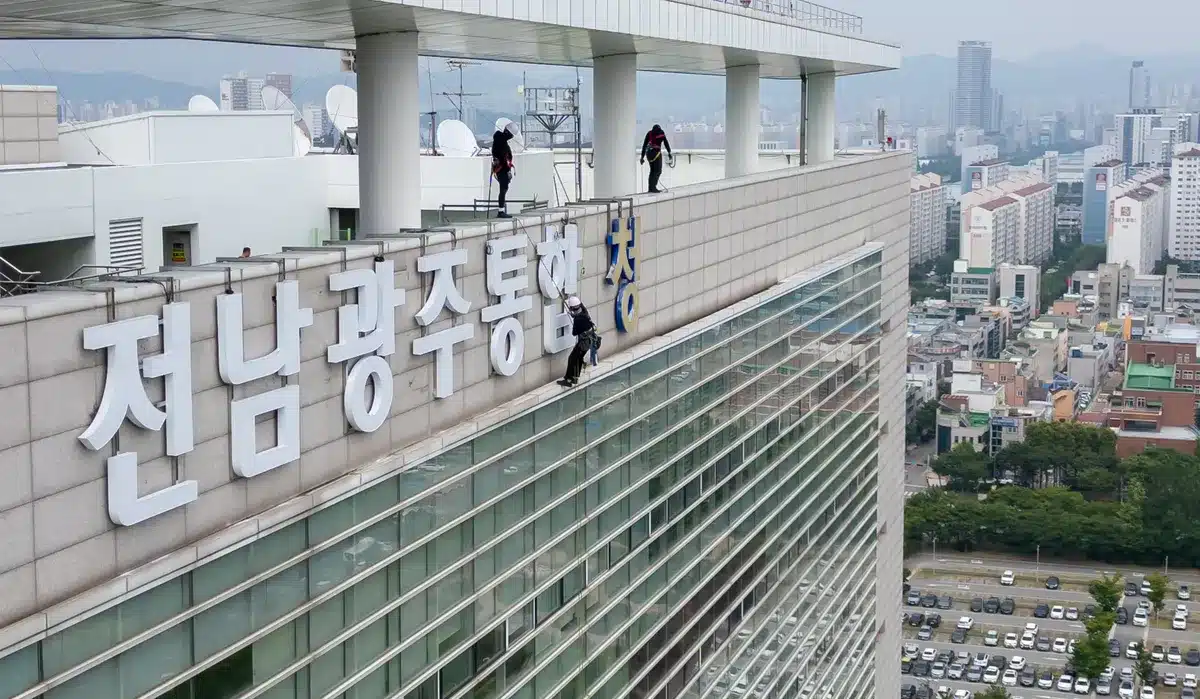
A significant administrative change has taken effect in South Korea as the city of Gwangju and the province of Jeonnam officially merge to form the new Gwangju-Jeonnam Special City. This unification marks the end of a 40-year separation, with Gwangju having been elevated to a directly governed city in 1986, thus separating from Jeonnam province.
This merger is unprecedented, as it is the first time two metropolitan cities in South Korea have combined. The new entity boasts a population of 3.2 million, making it the fourth-largest metropolitan area in the country, following Gyeonggi, Seoul, and Busan. Economically, the region is also a powerhouse, ranking third nationally in Gross Regional Domestic Product (GRDP) at 159 trillion won and third in annual budget at 25 trillion won.
Government Support and Incentives
The South Korean government is backing this ambitious merger with substantial financial incentives. Over the next four years, the central government will provide 5 trillion won annually, totaling 20 trillion won, to support the development and integration of the new special city.
This initiative is expected to catalyze significant growth, particularly in advanced industries. Min Hyung-bae, the mayor of the newly formed Gwangju-Jeonnam Special City, stated that 80% of the government incentives will be invested in cutting-edge sectors such as semiconductors. This strategic investment aligns with the region’s ambition to become a hub for technological innovation.
The merger also brings enhanced administrative status and authority. The mayors of Gwangju and Jeonnam previously held a vice-ministerial rank, but the mayor of the new Gwangju-Jeonnam Special City will now receive the same treatment as the Mayor of Seoul, a ministerial-level position. This includes the ability to participate in cabinet meetings. Furthermore, the new special city will gain expanded authority, including the power to approve major development projects and designate economic free zones.
Operational Integration and Infrastructure Changes
The administrative transition involves a multi-pronged approach to governance. The new special city will operate with three main administrative centers: one in Muan (housing the former Jeonnam Provincial Office), one in Suncheon (the former South Jeonnam Provincial Office), and one in Gwangju (the former Gwangju City Hall). This decentralized structure aims to ensure continued accessibility for residents across the expanded region.
Significant infrastructure changes are underway to reflect the new administrative reality. Road signs and official publications are being updated to include the new designation, “Jeonnam-Gwangju Special City.” The former Jeonnam Province has already allocated 375 million won for replacing road and boundary signs. Gwangju is set to spend 20 billion won on similar updates in the coming period, with the Ministry of Land, Infrastructure, and Transport handling the replacement of highway and national road signs by August.
Residents will also notice changes in their official documentation. For example, addresses in Yeosu City, formerly part of Jeonnam Province, will now be updated to reflect its status within the Jeonnam-Gwangju Special City. A spokesperson for the integrated support division assured citizens that these changes would be implemented smoothly starting July 1st, requiring no immediate action from residents.
Future Outlook and Industrial Development
The merger is poised to attract significant investment, particularly in the high-tech sector. Industry leaders have expressed optimism about the region’s potential. Lee Jae-yong, Chairman of Samsung Electronics, indicated that Gwangju is being considered as a candidate site for future semiconductor complexes. Similarly, SK Group Chairman Chey Tae-won announced plans to invest approximately 400 trillion won in the southwestern region to establish new semiconductor clusters.
The integration of educational and welfare systems between Gwangju and Jeonnam is also planned for next year. The Gwangju-Jeonnam Education and Administrative Integration Promotion Team aims to unify these systems in a manner that benefits all citizens. While current budgets for this year are finalized, the focus will be on creating a more equitable and advantageous system moving forward.
Concerns among Gwangju city employees regarding potential reassignment to more rural areas within Jeonnam have been addressed. Officials have stated that no reassignments will occur without the individual’s consent, ensuring a smooth transition for the workforce.
The establishment of the Gwangju-Jeonnam Special City represents a bold step towards regional development and economic revitalization, leveraging the combined strengths and resources of two distinct but complementary areas. The focus on advanced industries, particularly semiconductors, signals a clear strategy for future growth and competitiveness on the national and global stage.
