

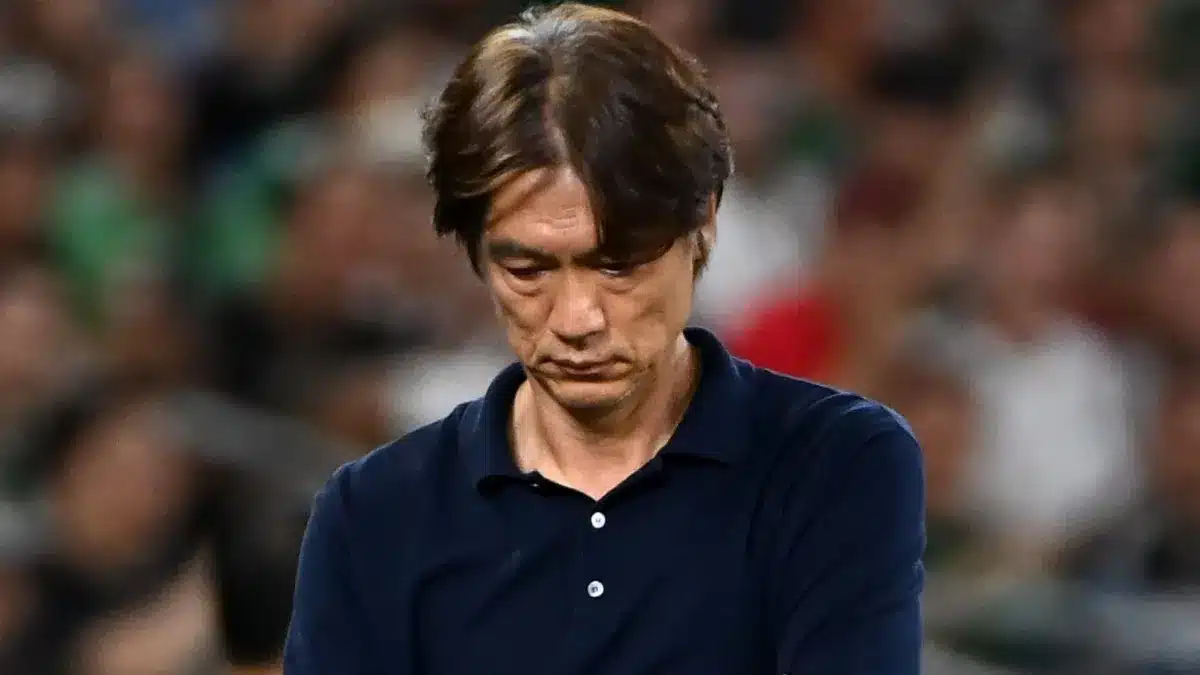
President Lee Myung-bak expressed profound disappointment following the South Korean national football team’s failure to advance to the Round of 32 in the recent World Cup. In a statement posted on X (formerly Twitter) on June 28th, the President conveyed a sense of shock and frustration, stating, “I feel beyond dismay, I feel devastated.” He attributed the team’s underperformance directly to organizational and personnel failures.
Blame Placed on Incompetent Leadership
The President’s remarks were sharp, directly criticizing the leadership that selected the team. “When individuals who prioritize personal connections over competence are appointed as leaders, the outcome is predictable,” he stated. He elaborated that such appointments, where personal gain is favored over public interest, are possible due to a lack of accountability or difficulty in enforcing such measures for those in charge of personnel decisions.
Call for Thorough Investigation and Reform
President Lee emphasized the significant national resources, including taxpayer money and state support, invested in the World Cup campaign. He urged the relevant ministries to conduct a meticulous analysis of the situation, identify the root causes of the failure, and propose concrete measures for prevention and improvement.
“I sincerely apologize to the citizens for causing such deep disappointment,” the President continued. “We will swiftly pursue reforms in the sports administration to ensure such a failure never happens again.” This strong stance indicates a commitment to restructuring the sports governance to prevent future disappointments.
Team’s Return and Lack of Formal Reception
The South Korean national football team is scheduled to return on June 30th without any formal reception ceremony. Following the confirmation of their group stage elimination, the Korea Football Association announced that eight players, including captain Son Heung-min and key figures like Lee Kang-in and Kim Min-jae, would depart from Mexico on June 28th (local time), transit through the United States, and arrive at Incheon International Airport on the morning of June 30th (Korean time).
This marks the first time since the 2002 World Cup that the national team will not have an official homecoming event at the airport after a World Cup appearance. Even after the disappointing performance in the 2014 Brazil World Cup, where the team was eliminated in the group stage with one win and two losses, a reception was held, albeit one marred by some fans throwing eggs at the players in protest.
The remaining players will arrange their own flights home, with the Football Association stating that all players are expected to return by July 1st. The decision to forgo a formal reception underscores the gravity of the team’s performance and the public’s dissatisfaction.
Context of the World Cup Campaign
The team’s exit from the 2026 World Cup was particularly stinging, given the high expectations and the presence of star players. The expanded 32-team format this year offered a greater chance for qualification, making South Korea’s failure to advance even more surprising to many observers.
The team’s performance in the group stage was characterized by a lack of goals, scoring only two in three matches, leading to one win and two losses. This resulted in a third-place finish in Group K, falling short of the required ranking among third-placed teams to qualify for the knockout stage.
The controversy surrounding the appointment of coach Hong Myung-bo, who also led the team during their disappointing 2014 World Cup campaign, has been reignited. Critics had pointed to questionable player selections and tactical issues throughout the tournament, leading many to predict a “predictable disaster” that ultimately came to pass.
Match Summaries
In the decisive final group match, South Korea lost to Uruguay. Earlier, the Democratic Republic of Congo secured a 3-1 victory over Uzbekistan, which confirmed South Korea’s elimination regardless of their own result.
The match between Congo and Uzbekistan saw Congo secure their advancement to the next round. Uzbekistan took an early lead through a penalty, but Congo fought back, scoring a penalty of their own in the second half and adding two more goals to seal the victory. This result meant that South Korea, despite any potential favorable outcomes in other matches, could not secure a spot among the best third-placed teams needed for advancement.
In the other Group J match, Portugal drew 0-0 with Colombia. This result saw Colombia finish first in the group, with Portugal securing second place and advancing to the Round of 32. The final standings left South Korea in third place, ending their World Cup journey.
President’s Vision for Future Development
Looking ahead, President Lee is set to unveil a significant national development plan on June 29th, focusing on major infrastructure projects in the southern regions of the country. The initiative, dubbed the “3 Big Mega Projects for Korea’s Future,” aims to foster growth in areas outside the capital region.
The plan reportedly involves substantial investments in semiconductor clusters in the Honam region, AI data centers in the Chungcheong region, and physical AI infrastructure in the Yeongnam region. The total investment is projected to exceed 1,000 trillion Korean won. The announcement is expected to be attended by key figures from major corporations, including the heads of Samsung Electronics and SK Group, signaling strong private sector involvement.
This ambitious plan reflects the administration’s commitment to balanced national development and technological advancement, aiming to create new economic hubs and drive innovation across the country.
