

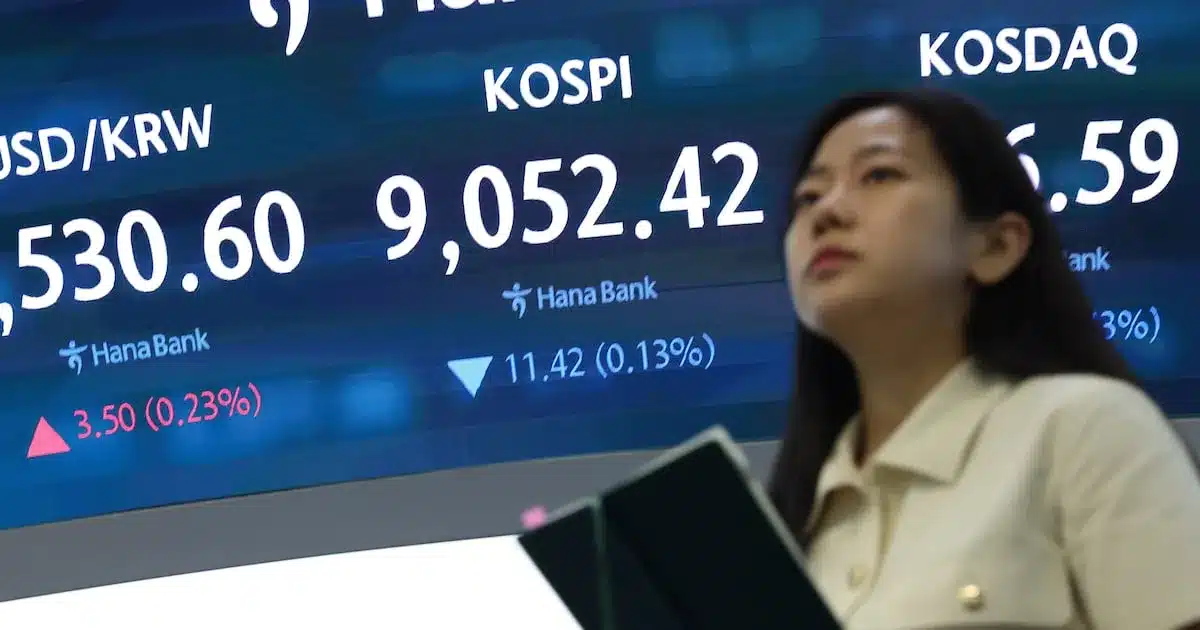
Korean Won Experiences Significant Depreciation
The average exchange rate for the Korean Won against the U.S. Dollar has surpassed 1,520 Won this month, marking the highest level in 28 years since the foreign exchange crisis. Data from the Bank of Korea’s Economic Statistics System, based on closing prices at 3:30 PM, indicates the average Won-Dollar exchange rate from June 1st to June 19th reached 1,521.4 Won.
This figure represents a substantial increase compared to historical monthly averages. It is the highest point since February 1998, when the rate was recorded at 1,626.7 Won. The current average is approximately 70 Won higher than during the global financial crisis in March 2009 (1,453.3 Won). Even following the outbreak of the Middle East conflict in March, which saw a rapid surge in the exchange rate, the monthly average remained at 1,492.5 Won, never exceeding 1,500 Won.
Sustained Period Above 1,500 Won
Notably, the exchange rate has consistently remained above the 1,500 Won mark for 23 consecutive trading days, starting from May 15th when it hit 1,500.8 Won, up to June 19th. This prolonged period above 1,500 Won is the longest since the 49 consecutive trading days experienced during the foreign exchange crisis.
Real Value of Korean Won Declines
The continuous rise in the Won-Dollar exchange rate is directly impacting the real value of the Korean currency. According to the Bank for International Settlements (BIS), the real effective exchange rate index for the Korean Won stood at 84.75 in May, a decrease of 0.32 points from the previous month. This is the lowest level recorded in 17 years and 2 months, since the financial crisis in March 2009 (79.31).
The real effective exchange rate is an indicator of the purchasing power of the Korean Won in international trade. A decline in this index signifies that the real value of the Won has weakened relative to other countries’ currencies.
Factors Contributing to the Depreciation
A combination of factors is believed to be contributing to the surge in the Won-Dollar exchange rate. The U.S. Federal Reserve’s Federal Open Market Committee (FOMC) hinted at the possibility of raising interest rates on June 18th, citing concerns about inflation. This announcement bolstered the strength of the U.S. Dollar.
The U.S. Dollar Index reached a high of 101.123 intra-day on June 19th, the highest point in 13 months since May 16th of last year (101.256). Additionally, the stalemate in the indirect negotiations between the United States and Iran regarding a nuclear deal is also exerting upward pressure on the exchange rate.
The outflow of foreign capital from the stock market is another identified factor exacerbating the weakness of the Korean Won. As of June 19th this year, foreign investors have sold a net total of 12.02123 trillion Won worth of domestic stocks. The net selling in June alone has exceeded 20 trillion Won.
