

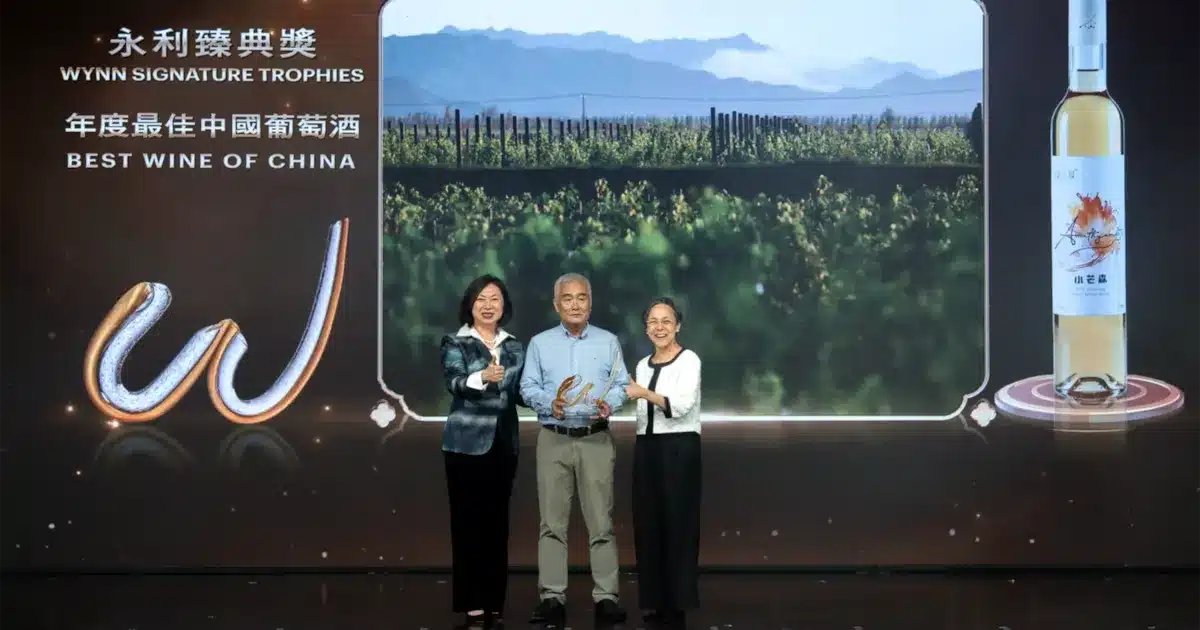
Chinese winemakers secured the highest honors at the 2026 Wynn Signature China Wine Awards (WSCWA) held in Macau. Sommelier Kim Min-ju evaluated entries and awarded gold, silver, and bronze medals to standout Chinese wines, declaring one the nation’s top performer.
Top Chinese Wine Claims Supreme Title
During the third annual event, the ‘Amethysts Pretty Mango Sweet White Wine’ earned selection as China’s best in the sweet white category. Kim Min-ju remarked, “Typically, Chinese wines evoke images of strong flavors, but this one delivers complete perfection.”
“Chinese wines are gaining proper direction and momentum. While past perceptions linked them to low-quality products or ok wines, regions like Shandong, Ningxia, Hebei, and Yunnan now produce exceptional varieties,” Kim Min-ju stated.
Organized by Wynn Resorts, the competition drew 23 entries from 13 countries, including 11 from Master of Wine recipients and two from Master Sommeliers. Macau’s Wynn Palace hosted the blind tasting that crowned Chinese selections.
China’s Booming Wine Industry
China evaluates around 800 wines annually from 180 distilleries, selecting top performers across categories like location and aroma. Among 74 gold medals awarded, 35 went to mainland China—more than twice the nearest competitor.
Despite baijiu’s dominance as China’s staple spirit—with annual output exceeding 500 million liters valued at 6 trillion won—wine production surges forward. Even premium baijiu producers invest in vineyards.
Shandong Leads Production
Shandong province dominates Chinese winemaking. Its coastal climate near the Yellow Sea and Bohai Gulf fosters acidic soils ideal for reds (Cabernet Sauvignon) and whites (Riesling). Other key areas include Ningxia, Hebei, and Yunnan.
At WSCWA, Hebei’s wine claimed best sweet white, Yunnan’s Shangri-La Seacrest Land Red Wine won best red (2019 vintage), and Ningxia produced multiple category leaders.
Ningxia: China’s Bordeaux
Ningxia’s Helan Mountains east of Yellow River earn ‘China’s Bordeaux’ status. High-altitude vineyards at 1,200 meters yield fresh, strong wines through optimal sunlight exposure.
Kim Min-ju highlighted Ningxia and Yunnan: “Premium wines increasingly hail from a single valley in Ningxia. Yunnan’s high-altitude sites produce blend-style red leaders with accurate sensations. Shangri-La’s best red excels in balance, aroma, and lingering finish—core elements elevating Chinese premium wines.”
Marselan Emerges as Signature Grape
China’s vast terrain and climate suit international varieties like Cabernet Sauvignon, Pinot Noir, Chardonnay, and Riesling. Yet Marselan stands out as the signature red.
James Suckling dubs Marselan China’s “representative red” for its prominence. Developed in 1960s France from Cabernet Sauvignon and Grenache, it thrives 2,500 km from Shandong’s coast. Over 150 producers cultivate 4,000 hectares—double France’s output.
Marselan’s appeal lies in adaptability: robust yet balanced, with bold flavors suiting Chinese palates. Even top reds like Long Dai incorporate it.
Overcoming Global Prejudice
Can Chinese wines conquer international markets? Kim Min-ju asserts, “Current quality ensures no need for concern.” Strong domestic prejudice and misconceptions persist, but education spreads.
Consumers prioritize oktoong pairings or cork scents over wine merits. Government full support boosts premium growth, yet mass counterfeits hinder trust.
WSCWA judges note, “People reject unfamiliar wines despite cultural gaps. Urging more tastings will expand appreciation.” Trends favor whites, naturals, and orange wines domestically, with sparkling varieties emerging.
Kim Min-ju concludes, “Even Korea’s high-end centers favor high-end wines; Chinese ones offer greater value at mainstream prices.”
