

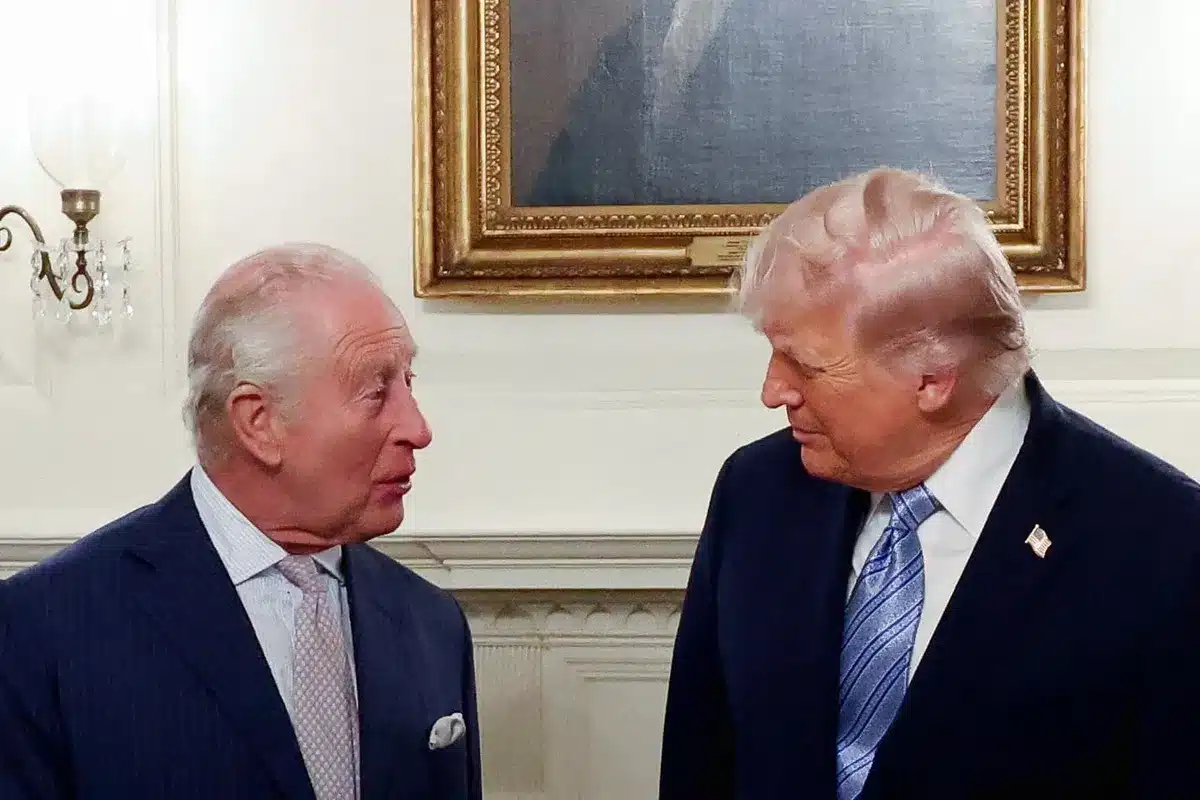
Three senior UK officials representing King Charles III visited the White House on April 27, local time, to voice strong objections over the United States hosting an envoy from the Iranian president amid escalating tensions.
Diplomatic Showdown at the White House
The delegation, comprising representatives from key UK ministries, arrived in Washington, D.C., and met with Melania Trump’s spokesperson on the South Lawn. They toured a newly installed beehive exhibit while delivering pointed criticism of U.S. policies. Officials described the U.S. actions as a ‘public crime that has imprisoned 250 U.S. citizens for years,’ reflecting deep-seated frustration even as the visit remained relatively subdued.
The protest unfolded on two fronts: public exchanges of opinion, including a regular briefing and a citizen banquet. U.S. analysts interpret the timing as a signal of the current administration’s precarious position, with approval ratings near historic lows.
Trump’s Public Rebuke and Broader Implications
U.S. President Donald Trump responded sharply, stating, ‘We do not need help from allies but sought unity. There was anxiety throughout the situation.’ He publicly criticized the UK, highlighting strained transatlantic ties.
The UK Foreign Secretary emphasized the need to maintain diplomatic relations despite the envoy’s visit. Observers note potential risks, including impacts on joint operations with allies like France and Poland, where the U.S. plans major addresses. Security experts predict this event could shift the UK’s calculations on collaborative actions.
Historical Context of UK-US Friction
This marks the first such high-level UK protest visit in nearly 70 years, evoking memories of the 1957 Suez Crisis when the UK rebuked the U.S. for blocking its foreign policy moves. Critics argue the action underscores cultural and image concerns, urging a balanced approach to preserve ‘special relationship’ dynamics.
The encounter highlights ongoing rifts over Iran, with sources confirming the U.S. views it as a calculated response to internal political pressures and public unease.
