

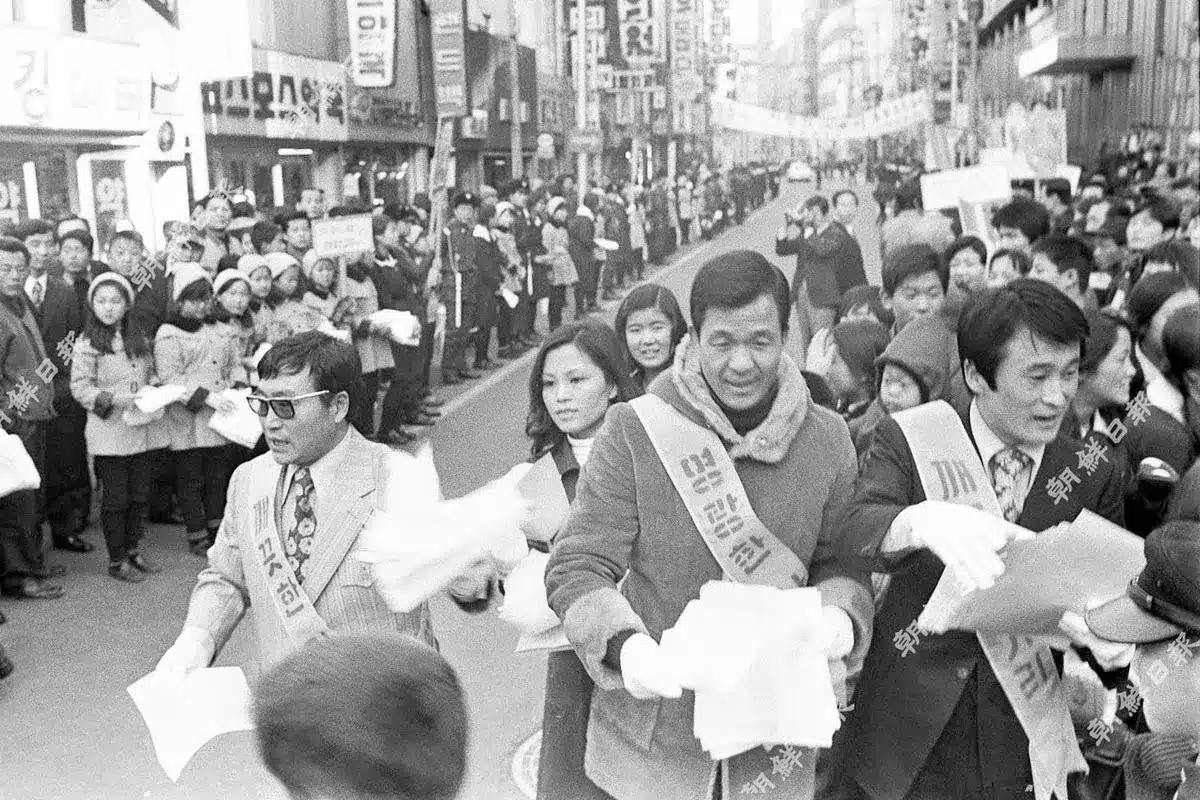
Legendary lines like “quick quick, catch it quick” and “hey, be gentle” defined an era of Korean comedy, captivating audiences with spontaneous humor that still resonates today.
Radio Comedy’s Golden Age
In the 1950s, a film viewed by over 12 million people—nearly half the population—highlighted everyday life through comedy. Digitized archives now preserve these moments, allowing modern viewers to relive the era’s charm.
Comedians delivered unscripted ad-libs that became household phrases. Seo Yeongchun popularized “quick quick, catch it quick,” while students in the 1970s recall teachers mimicking “hey, be gentle” during scoldings.
Even lines not originally funny gained traction through repetition. Public figures noted that performers like those yelling “did you catch it?” or “look, it’s rolling away” turned ordinary phrases into comedy staples.
Key Figures and Controversial Humor
Seo Yeongchun, Im Huichun, and Igidong performed at events like the 1973 Myeongdong alley experience. In 1972, Seo teamed up with Im for signature routines.
Critics in 1976 slammed comedy broadcasts for vulgarity, with one review stating it lacked artistry and relied on obscenity rather than wit. Park Yoon countered that comedy mirrors citizens’ daily lives, provoking reflection through exaggeration.
Poet Kubongsa, active since 1958’s ‘Obuja,’ argued in a 1967 Dong-A Ilbo interview that comedy mocks folly, originating from social satire where liquid turns solid.
Broadcast Milestones
On January 1, 1962, a New Year’s radio special featured Kim Huigap, Yang Hoon, Hurai Boi Kwak Gyuseok, and Park Okcho, settling performance fees and gaining public acclaim.
Kwak Gyuseok shared: “Even four-letter words carry deep meaning in context; exaggeration isn’t right unless it’s satire… ultimately, it’s about intent.”
Hurai Boi Kwak Gyuseok, an Ewha Womans University graduate, starred in radio hits like ‘Utggey Boseyo’ on November 22, 1962.
Television Takes Over
Comedy shifted to TV amid the late 1960s boom. MBC’s 1969 cultural broadcasts launched ‘If Not Ugly, It’s a Sin,’ while 1964 Kyung Hyang Shinmun profiled top comedians.
Private talents like Kim Huigap, Baek Geumnyeo, Yang Seokcheon, Go Chunja, and Jang Sopal commanded 20,000 won monthly, outpacing salaried staff.
Lasting Legacy
By the 1980s, shows like KBS’s ‘Humor One’ and MBC’s ‘Sunday Sunday Night Fever’ starred Kim Hyeonggon, Choi Yangrak, Sim Hyeongrae, Jang Duseok, and others.
Nam Bowon, honored in 2022, earned accolades including 1992 and 2013 cultural awards. Kubongsa received similar recognition for pioneering satire.
These trailblazers shaped Korean comedy, blending ad-libs with social commentary for enduring appeal.
