

Islands near Incheon, including Baekryeongdo, Yeonpyeongdo, and Uldo, record elevated fine dust levels despite minimal local pollution sources, according to recent air quality analysis.
Unexpected High Fine Dust Concentrations
Monitoring data from March 2021 to April 2023 reveals average 24-hour PM2.5 concentrations exceeding 70μg/m³ at these remote sites. These locations host national background monitoring stations and major power facilities, yet local emissions remain low.
In contrast, urban areas like Seoul and Gyeonggi maintain baseline levels of 15-20μg/m³ post-2020. Peak incidents underscore the disparity: January 2023 saw Baekryeongdo and Uldo spike to 260μg/m³.
Transboundary Pollution from China Identified
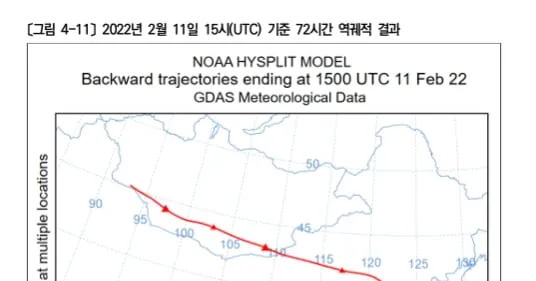
Trajectory analysis traces the fine dust to emissions originating in China’s Neimenggu, Hebei, Shandong, and Liaoning regions. Prevailing winds carry these particles across borders, with sources dating back 1-3 months contributing significantly during winter.
Park Hyun-young, deputy director at an Incheon air research institute, states, “Emissions from China exert a major influence on Incheon’s air quality.” She adds, “Incheon endures substantial cross-border impacts from winds; enhanced joint monitoring and cooperative platforms with neighboring countries are essential.”
