

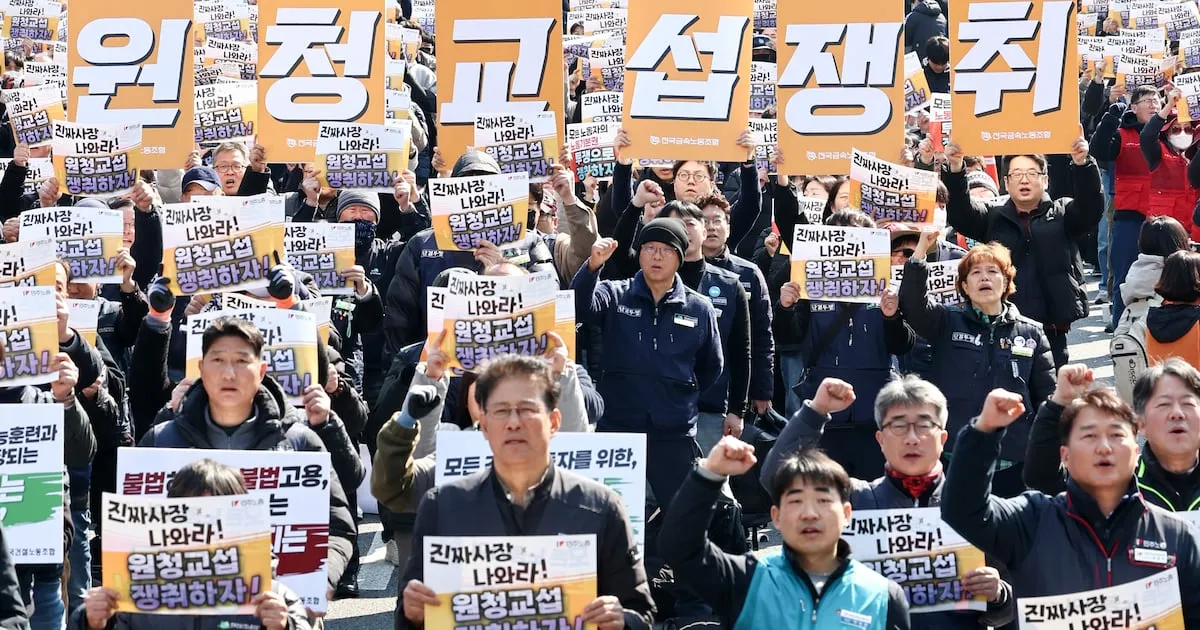
Following the enforcement of the Yellow Envelope Law, which curbs excessive subcontracting and related labor practices, authorities have issued the first official acknowledgments of companies improperly designating their own employees as subcontractors.
Central Labor Committee Ruling
On April 2, the Central Labor Committee ruled that key public entities—including the Korea Employment Information Service, Korea Employment Agency, Korea Workers’ Compensation and Welfare Service, and Korea Vocational Training Promotion Agency—engaged in wrongful hiring for education business operations. Officials emphasized that these institutions must shift to direct hiring within seven days of public notice.
Labor representatives from the Chungnam Regional Labor Committee explained that safety protocols in youth programs and internal affairs necessitate original company involvement. “Youth sector safety and internal operations require direct oversight from original firm staff,” a committee head stated.
Worker Claims and Union Pushback
Employees handling personnel matters and local relations assert they represent genuine original company roles. However, the Central Labor Committee countered that such positions qualify as wrongful under the law’s criteria, prompting unions to demand full disclosure.
Experts view this as a major escalation. Park Ji-soon, a labor law professor at Goryeo University, noted, “Focusing wrongful hiring assessments on core original operations marks a significant policy shift.” From January 10 to 31, the Ministry of Employment and Labor received 267 education-related job postings, all managed by purported original company workers.
Broader Implications and Ministry Outlook
The Ministry of Employment and Labor’s February revisions to the law anticipated managers channeling small business leaders toward youth roles for compliance. Analysis suggests this structurally integrates original firms into hiring processes.
A senior HR executive at a major firm remarked, “Only a handful of cases exist, but education teams risk becoming mere packaging.” Unions warn that ambiguous criteria could inflate disputes, urging the Central Committee to review by the 10th. Failure to clarify may hinder smooth operations and foster ongoing labor tensions.
