

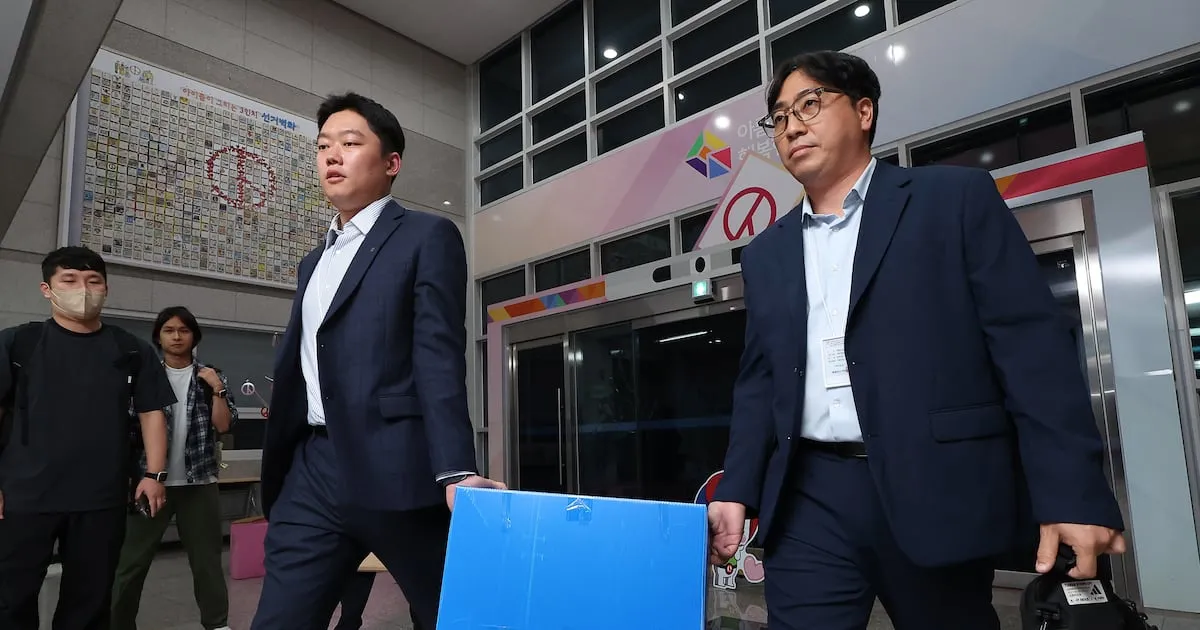
A special investigation team probing issues such as ballot paper shortages during the 9th National Simultaneous Local Elections on June 3rd has concluded its approximately 12-hour search and seizure operation at the Central Election Commission. This marks the first such raid since the special team’s official launch on the 7th.
The special team announced around 9 PM on the day of the raid that the operation at the Central Election Commission had concluded, with only the election commissions of Gyeonggi Province and Gimpo City remaining. They also stated that any locations where the search and seizure could not be completed that day would be addressed the following day. The Central Election Commission, specifically, may face further investigation.
Details of the Investigation
The special team deployed investigators, prosecutors, and search and seizure officials to a total of 10 locations, including the Central Election Commission and nine regional election commissions, starting around 9:10 AM. The operation aimed to secure internal server data and other relevant materials from the election commissions. A significant contingent of 75 personnel was involved, comprising one investigator, six prosecutors, 68 investigation officers, and 22 forensic specialists.
The targeted locations included the Central Election Commission, along with regional commissions in Gyeonggi Province (Gyeonggi Provincial Election Commission, Gimpo City, Uijeongbu City), Incheon City (Incheon Metropolitan Election Commission, Yeonsu District), Daegu City (Daegu Metropolitan Election Commission, Dong District), and Busan City (Busan Metropolitan Election Commission, Buk District).
Notably, Gimpo City, Yeonsu District, Dong District, and Buk District are areas where voting was initially suspended and later resumed across 26 polling stations. Uijeongbu City in Gyeonggi Province had five additional polling stations among the 140 newly dispatched due to anticipated ballot shortages on election day.
While initial reports suggested nine target locations, a representative from the special team clarified that the operation encompassed the Central Election Commission plus nine regional bodies, totaling ten sites.
Precedent and Ongoing Inquiry
This is not the first time election commissions have faced such scrutiny. Previously, the Supreme Prosecutors’ Office’s joint investigation unit had conducted searches and seizures on the Central Election Commission and regional commissions concerning alleged offenses including obstruction of business, dereliction of duty, and illegal record manipulation.
The current special team received the original investigation records and evidence materials from that prior investigation and has been reviewing the case. On the 8th, the team questioned the former secretary-general of the Citizens’ Livelihood Countermeasure Committee, who had filed a complaint against Noh Tae-ak, the former chairman of the Central Election Commission.
Following the analysis of the materials obtained from the recent search and seizure, the special team plans to determine whether further searches are necessary and to investigate the possibility of summoning former Chairman Noh Tae-ak and other related individuals for questioning regarding their involvement.
Focus on Ballot Shortages
The core issue driving this investigation appears to be the significant ballot paper shortages experienced in various regions during the recent local elections. The 9th National Simultaneous Local Elections, held on June 3rd, were marred by logistical challenges in several key areas. The special team was formed to thoroughly examine the circumstances surrounding these shortages and to identify any potential wrongdoing or systemic failures.
The operation at the Central Election Commission is a critical step in understanding how these shortages occurred. By examining server data and internal records, investigators hope to uncover whether the issues were isolated incidents or indicative of broader problems within the election management system. The involvement of forensic specialists suggests a detailed examination of digital evidence is underway.
Next Steps
The conclusion of the initial search and seizure operations does not signify the end of the investigation. The gathered evidence will undergo rigorous analysis. The special team’s next steps will likely involve:
- Analyzing the secured server data and physical documents.
- Interviewing election officials and other relevant personnel.
- Potentially issuing summons for further questioning of key figures, including former officials.
- Determining if additional search and seizure operations are required based on the findings.
The investigation aims to ensure accountability and to implement measures that will prevent similar issues from disrupting future elections. The public awaits clarity on the causes of the ballot shortages and the subsequent actions taken by the authorities.
