

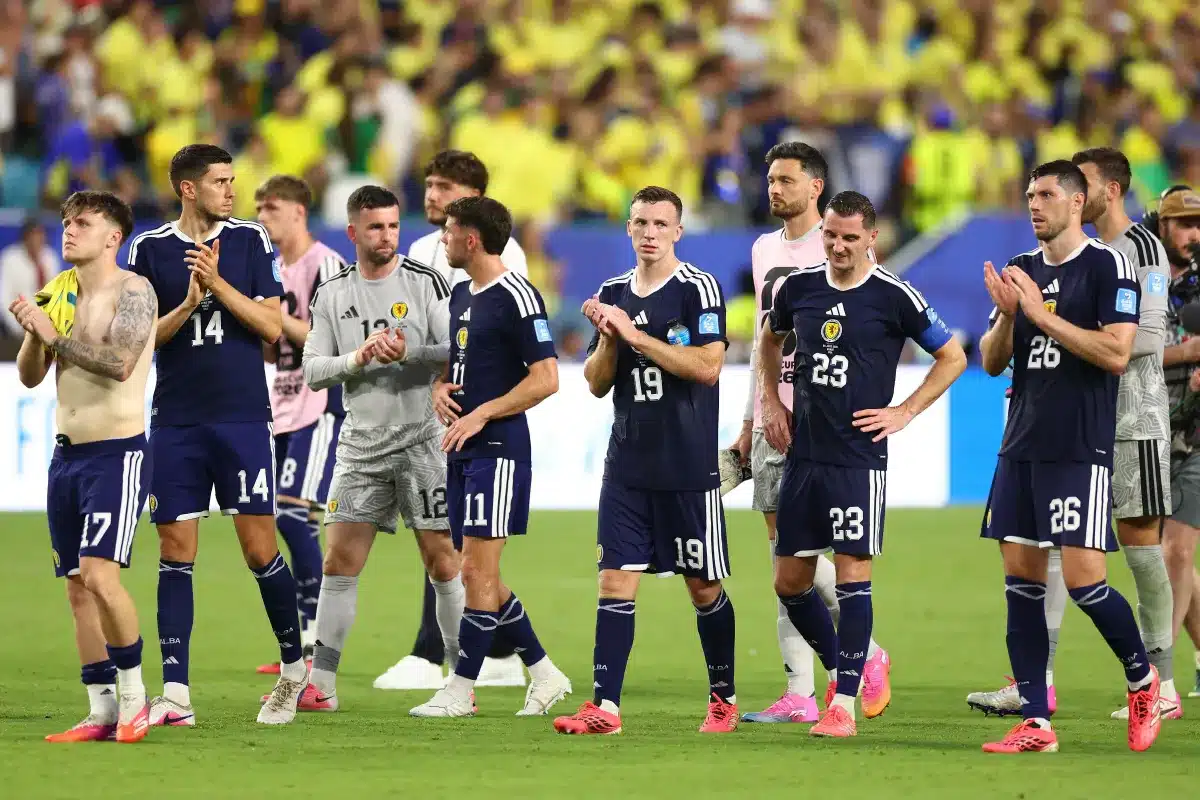
Scotland’s chances of advancing to the knockout stage of the 2026 FIFA World Cup have dwindled to a mere 0.07%, according to recent analyses. The team, managed by Steve Clarke, finished third in Group C with one win and two losses, accumulating three points and a -3 goal difference. Their sole victory came against Haiti (1-0), but subsequent defeats to Morocco (0-1) and Brazil (0-3) have placed their fate in the hands of the ‘third-place wildcard’ system.
This year’s tournament structure allows the top two teams from each group, along with the eight best third-placed teams, to advance to the Round of 32. Scotland’s elimination from contention appeared imminent after a promising start, especially given their return to the World Cup finals after a 28-year absence. The squad boasted prominent players from Europe’s ‘Big Six’ leagues, including Scott McTominay, Andy Robertson, and Kieran Tierney, raising expectations for a strong performance.
Scotland’s Group Stage Performance
Despite the high hopes, the reality of the competition proved challenging for the Scottish team. Their group stage campaign saw them fall short against formidable opponents. The initial victory against Haiti offered a glimmer of hope, but the losses to Morocco and Brazil significantly hampered their progress. Finishing third in Group C meant they were reliant on other results and the complex third-place ranking system to secure a spot in the next round.
The situation became increasingly precarious as other group matches concluded. Scotland found themselves ranked 10th among the potential third-place qualifiers, a position that offered little comfort. The final determination of their fate was set to be decided by the outcomes of the final matches in Groups J, K, and L on the 28th of the month.
Analysis of Advancement Probability
The dramatic shift in Scotland’s qualification probability was highlighted by reports from the British Broadcasting Corporation (BBC). Just 48 hours prior, their chances of reaching the Round of 32 stood at a respectable 42%. However, following a series of results, this figure plummeted to an astonishingly low 0.07%.
A crucial development that impacted Scotland’s standing was South Korea’s 1-0 victory over Portugal in Group A. This win propelled South Korea into second place in their group, pushing them ahead of Scotland in the third-place rankings due to goal difference. Simultaneously, Uruguay’s defeat to Spain in another match provided a less impactful but still relevant outcome for the overall qualification picture.
The BBC’s analysis detailed the specific scenarios that could still see Scotland advance, however improbable. These scenarios required a confluence of specific results in other groups. For instance, Austria would need to defeat Algeria by at least two goals, or Algeria would need to win by a margin of four or more goals. Ghana would have to beat Croatia by a minimum of three goals. Additionally, the match between Congo and Uzbekistan presented further conditional pathways: either a draw or a victory for Uzbekistan by a maximum of three goals.
South Korea’s Position and Prospects
Meanwhile, South Korea, managed by Jurgen Klinsmann, concluded their Group A campaign in third place with three points from one win and two losses. Their initial qualification probability, as calculated by statistical analysis firm Opta, was estimated at 87.76% after the group matches concluded. However, this figure saw a significant downward revision over the following day, dropping to 53.24% and subsequently to 31.51%.
The shift in probabilities for both Scotland and South Korea underscores the intense competition and the intricate calculations involved in determining the final standings in a World Cup group stage. The narrow margins and the dependence on results from other matches create a high degree of uncertainty until the very last games are played.
Key Takeaways
- Scotland’s probability of advancing to the 2026 World Cup knockout stage has fallen to 0.07%.
- The team finished third in Group C with one win and two losses.
- Their advancement now depends on a complex series of results in other groups.
- South Korea’s situation also saw a significant revision in their qualification chances.
- The tournament’s third-place wildcard system creates dramatic shifts in probabilities.
Frequently Asked Questions
What is the third-place wildcard system?
The third-place wildcard system in the 2026 World Cup allows the eight best third-placed teams across all groups to advance to the Round of 32, in addition to the top two teams from each group. Teams are ranked based on points, goal difference, goals scored, and other tie-breaking criteria.
How did South Korea’s win affect Scotland’s chances?
South Korea’s 1-0 victory over Portugal in Group A allowed them to finish second in their group, surpassing Scotland in the third-place rankings due to a superior goal difference. This result significantly reduced Scotland’s already slim chances of qualifying as a best third-placed team.
What specific results does Scotland need to advance?
Scotland’s advancement requires highly specific outcomes in other groups, such as Austria winning by at least two goals against Algeria, or Ghana beating Croatia by three or more goals. Other complex scenarios involving the Congo vs. Uzbekistan match also exist.
Conclusion
The 2026 World Cup group stage has once again demonstrated the unpredictable nature of international football. Scotland, despite entering the tournament with considerable expectations, now faces an almost insurmountable challenge to progress. Their fate rests on a razor-thin 0.07% probability, contingent on a series of unlikely results across various groups. As the final matches conclude, fans and analysts alike will be closely watching to see if any of the remaining ‘what-ifs’ materialize, though the overwhelming statistical likelihood points towards an early exit for the Scottish side.
