

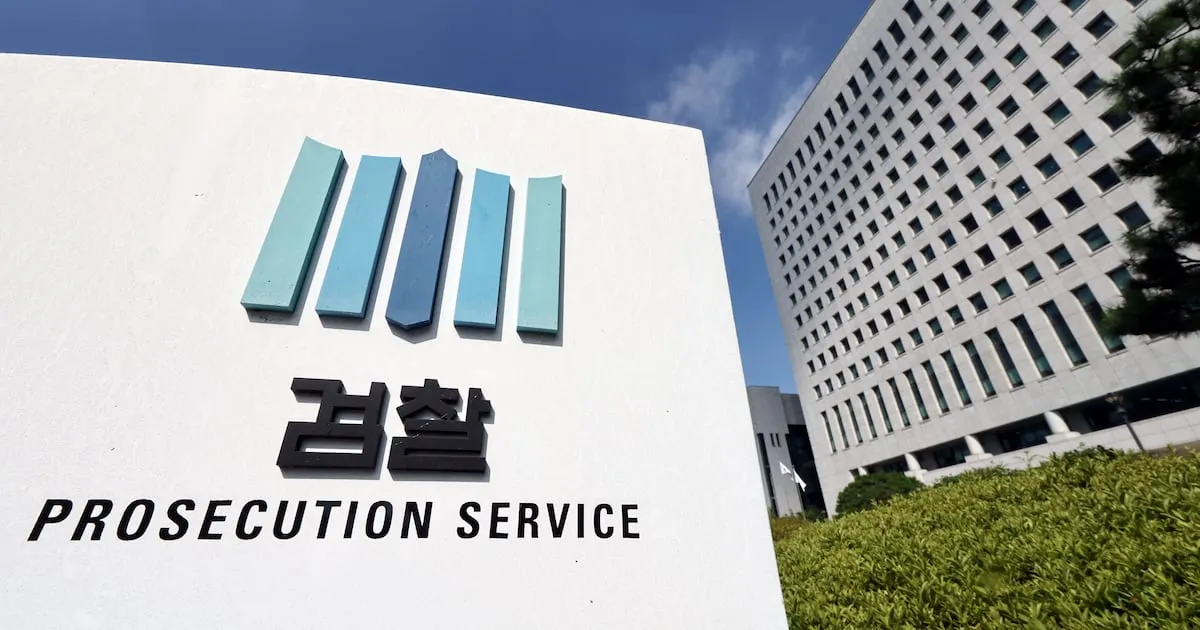
Prosecutors are set to deliver their final operational briefing to the President on October 5th. This marks the first such meeting between the President and the Supreme Prosecutors’ Office since the National Assembly passed amendments to the Criminal Procedure Act, which abolish the prosecution’s direct investigative powers. However, the resignations of the Prosecutor General and the Minister of Justice have cast a shadow over the proceedings, leading to a sense of pessimism within the prosecution regarding its future.
Prosecution Faces Internal Turmoil Ahead of Presidential Briefing
According to legal sources, the prosecution is scheduled to present its briefing to the President on the afternoon of October 5th. The presentation was expected to cover significant investigative achievements from the current year, including major fraud cases involving approximately 10 trillion won and investigations into drug trafficking.
Despite the scheduled briefing, there is a high probability that the Prosecutor General, who submitted his resignation on September 31st, will not attend. The former Prosecutor General effectively stepped down from his duties after attending the inauguration ceremony for the new Commissioner of the National Police Agency on October 3rd.
Senior prosecutors, including the Deputy Prosecutor General for Planning and Coordination, the Deputy Prosecutor General for Anti-Corruption and Public Interest, and the Head of the Criminal Affairs Department, are expected to participate in the briefing. Notably, officials who were initially considered for participation, such as the Chief Prosecutor of the Seoul Central District Prosecutors’ Office and personnel involved in initial investigations, have reportedly been excluded from the final list.
Internally, the prosecution is experiencing a mood of skepticism and uncertainty as the briefing approaches. This sentiment is amplified by the impending abolition of the prosecution’s direct investigative authority under the revised Criminal Procedure Act and the subsequent resignation of the Prosecutor General, creating a vacancy in leadership.
One legal expert with a background in prosecution stated, “This presidential briefing is essentially no different from a farewell report for the prosecution.” He added, “In a situation where the organization is being dismantled, reporting past investigative successes holds little meaning.”
A deputy prosecutor from the Seoul Metropolitan Area Prosecutors’ Office commented, “With the passage of the bill to abolish direct investigative powers and the subsequent resignations from the top leadership, a sense of self-surrender has permeated the internal atmosphere.” He further noted, “It is becoming difficult for prosecutors to find the motivation to work.”
Minister of Justice Also Resigns; Preparations for New Agency Face Challenges
The Ministry of Justice is also in a state of disarray, mirroring the situation within the prosecution. Minister of Justice Jeong Sung-ho has also submitted his resignation. While the stated reason is health issues, legal circles interpret this as a loss of will to continue in the role after the passage of the Criminal Procedure Act amendments.
Minister Jeong has reportedly expressed sentiments on multiple occasions, both publicly and privately, that he has “nothing left to do and no will to continue” in his position as Minister.
The prosecution is expected to accelerate preparations for the launch of the Corruption Investigation Office for High-ranking Officials (CIO) in October. However, with the departure of the former Prosecutor General, who was leading the preparatory committee, concerns are rising that the transition process may face delays.
A source within the prosecution expressed concern, stating, “Although the Deputy Prosecutor General for Planning and Coordination will likely take over the practical tasks, the absence of a central command figure to make crucial decisions creates a leadership vacuum.” The source added, “This could significantly impact the preparations for the CIO’s launch, including organizational structure and personnel deployment, potentially leading to disruptions.”
Background of the Legal Reforms
The recent legislative changes stem from a long-standing debate in South Korea regarding the balance of power between the prosecution and other law enforcement agencies, particularly the police. Proponents of the reforms argue that concentrating significant investigative and prosecutorial power within a single entity, the prosecution service, can lead to abuses of power and hinder thorough investigations by other agencies.
The amendments aim to decentralize investigative authority, allowing the police to conduct primary investigations in most criminal cases, while the prosecution’s role would shift towards overseeing investigations and focusing on indictments and trials. The establishment of the CIO is a further step in this reform process, intended to specifically investigate corruption among high-ranking public officials, thereby reducing the prosecution’s influence in this sensitive area.
Implications for Future Investigations
The transition period following these reforms is expected to be complex. The prosecution, accustomed to its extensive investigative powers, must adapt to a new role. Similarly, the police and the newly formed CIO will need to develop their investigative capabilities and establish new working relationships with the prosecution.
The current uncertainty surrounding leadership within the prosecution and the Ministry of Justice could potentially slow down the effective implementation of these changes. The successful launch and operation of the CIO, in particular, will be closely watched as a key indicator of the reforms’ effectiveness.
The upcoming briefing to the President, despite the somber mood, will serve as a formal occasion to report on past achievements and potentially outline the path forward amidst these significant institutional shifts. The focus will likely be on how the remaining leadership intends to navigate the challenges and ensure a smooth transition, even in the face of internal dissent and external pressures.
Conclusion
As the prosecution prepares for its final briefing to the President, the mood is one of introspection and concern. The abolition of direct investigative powers, coupled with key leadership resignations, has created a period of profound uncertainty for the institution. The coming months will be critical in determining how these reforms are implemented and how the South Korean legal system adapts to a new distribution of investigative and prosecutorial authority.
