

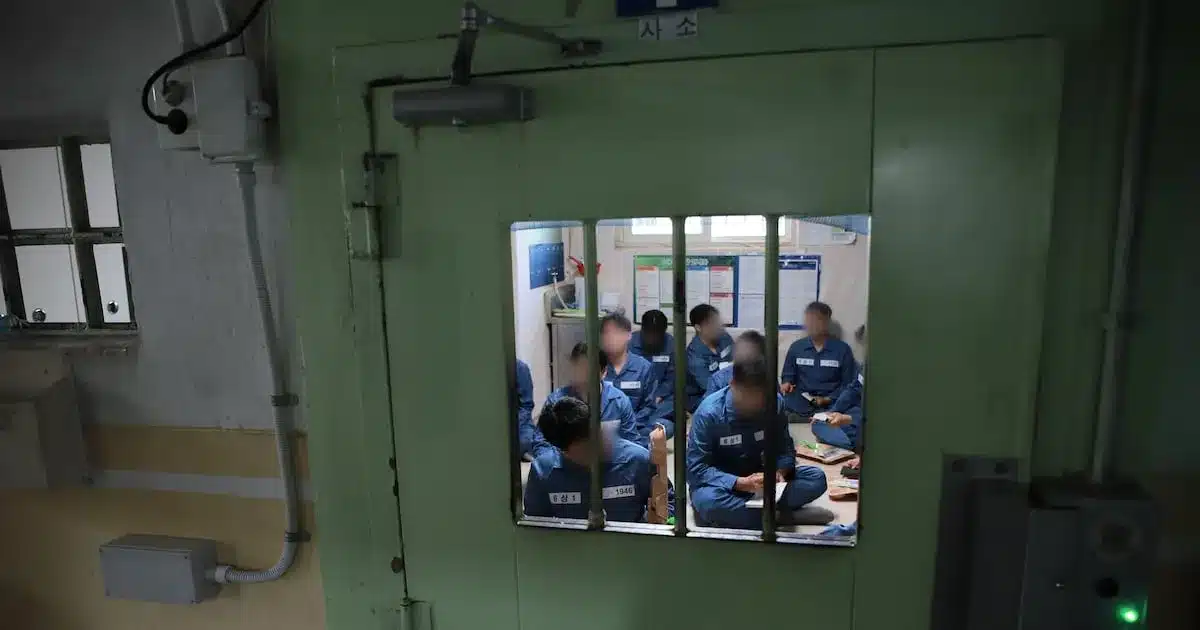
Prisoners May Miss Live World Cup Action
As the 2026 North, Central America and Caribbean World Cup kicks off, the nation is abuzz with excitement and anticipation. However, a question arises regarding the accessibility of the tournament for those in correctional facilities and detention centers: will inmates be able to watch the matches?
The outlook is challenging. Officials have stated that live broadcasts of the World Cup for inmates are not currently scheduled. This means that for the first match of the South Korean national team against the Czech Republic, citizens behind bars will likely be unable to view the game.
According to broadcast schedules released, while terrestrial channels are set to air various programs, the World Cup match is not included. This applies uniformly to correctional facilities nationwide, including those in Seoul where former President Yoon Suk-yeol was incarcerated.
Potential for Broadcasts if Interest Surges
There is a possibility of broadcast arrangements being considered if public interest in the national team’s progress, such as advancing to the round of 16, escalates significantly. Ministry of Justice officials have indicated that such a scenario could lead to a review of broadcast inclusion.
Historical Precedent for Live Broadcasts
Under current regulations, inmates can watch television for their emotional stability and rehabilitation. Article 48 of the Act on the Execution of Penal Sentences and the Treatment of Prisoners allows inmates to listen to the radio or watch television for these purposes. However, the choice of channel is not unrestricted.
Enforcement decrees stipulate that correctional facility directors can determine broadcast viewing times, not exceeding six hours per day. Both recorded and live broadcasts are permissible during these times, provided the content falls under educational, cultural, rehabilitation, or recreational categories. Live sports commentary, like that of the World Cup, is considered recreational content.
Ultimately, whether correctional facility inmates can watch the World Cup hinges on whether the Ministry of Justice and the facilities themselves arrange for separate broadcasts of the matches. Historically, there have been instances of special broadcasts for the World Cup.
The 2002 Korea-Japan World Cup is a notable example. Given it was a co-hosted event, inmates were permitted to watch key matches live. This was feasible as many games were scheduled during daytime or early evening hours.
During the 2006 Germany World Cup, the Ministry of Justice even permitted live broadcasts of all matches to foster national unity. Televisions were installed in cells, and separate viewing areas were provided for inmates who did not wish to watch soccer.
In subsequent World Cups, operations have varied, with some facilities showing only select matches live or recording late-night games for broadcast the following day.
Legal Challenges Regarding TV Access
The issue of TV access in correctional facilities is a concern not only for inmates but also for their families. Online communities for families and partners of inmates, often referred to as ‘Anjjok-i’ (a nickname for correctional facility inmates), frequently share edited weekly broadcast schedules for easy viewing.
Some service providers even include broadcast schedules free of charge with delivered packages. There have been instances where TV viewing restrictions have led to legal action.
Jang Dae-ho, known for a previous incident involving a hunger strike, filed an administrative lawsuit arguing that TV viewing was restricted in correctional facilities. Jang was subsequently sentenced to six years for assaulting and verbally abusing correctional facility staff after his arrest. He was held in a correctional facility where TVs were not installed in his cell.
Jang argued that these measures were illegal and filed a lawsuit, but his case was not accepted by the court. The court reasoned that Jang’s history of altercations with other inmates and his unsuitability for communal living were acknowledged, making the preventative measures legally justifiable. The court concluded that the correctional facility’s actions did not excessively infringe upon Jang’s fundamental rights.
