

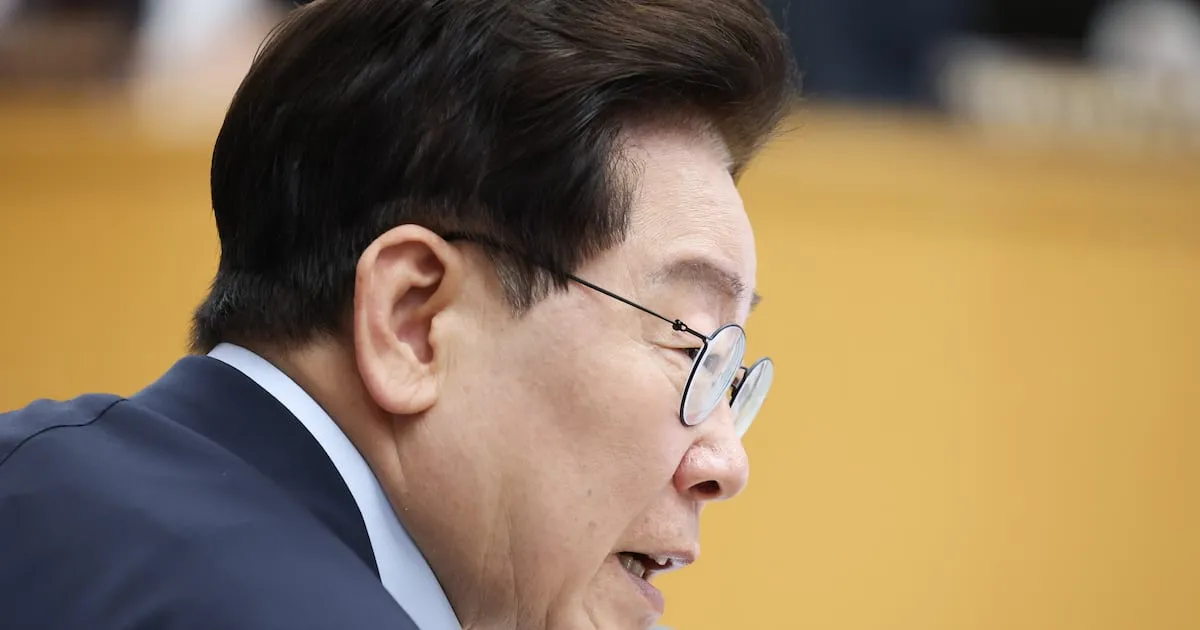
South Korean police have closed an investigation into allegations that a prominent political figure violated election laws by praising a former Seoul district mayor on social media. The Seoul Jongno Police Station determined there was insufficient evidence to proceed with charges against the individual, identified as a former mayor himself, concluding the case on November 13th.
Allegations of Election Law Infringement
The complaint stemmed from a social media post made in December of the previous year. Lee Jong-bae, a former Seoul City Councilor, filed the complaint, asserting that the post constituted a violation of the Public Official Election Act. This law prohibits public officials from engaging in promotional activities for candidates or parties outside of designated campaign periods.
The post in question, shared on the social media platform X (formerly Twitter), lauded the performance of Jung Won-oh, the former head of the Seongdong District Office in Seoul. The content of the post included a shared news article that highlighted a resident satisfaction survey conducted by the Seongdong District. This survey reportedly showed over 90% positive feedback for the district’s services under Jung’s leadership.
Details of the Social Media Post
The former mayor, whose name was not explicitly stated in the original report but is understood to be the subject of the investigation, had written in the post: “Former District Chief Jung Won-oh is doing a good job. My satisfaction rating as the mayor of Seongnam was quite high, but I don’t think I could even achieve that level of acclaim.” This statement was part of sharing an article detailing the positive survey results.
The complainant, Lee Jong-bae, argued that this post served as an endorsement of Jung Won-oh’s work, thereby promoting him as a potential candidate and violating the election law’s restrictions on pre-campaign publicity.
Police Findings and Conclusion
Investigators at the Seoul Jongno Police Station reviewed the social media post and the accompanying article. Their assessment concluded that the post did not primarily aim to promote Jung Won-oh’s individual achievements or candidacy. Instead, the police interpreted the post as a broader commentary on the effectiveness of the Seongdong District’s administrative performance.
The police reportedly reasoned that the shared news article focused more on the overall administrative success of the Seongdong District rather than solely on Jung Won-oh as an individual politician. Therefore, they determined that the post did not constitute a direct violation of the election law, which specifically targets the promotion of candidates or parties.
Consequently, the police decided not to press charges, finding insufficient grounds to believe an election law violation had occurred. The decision was made on November 13th, bringing the investigation to a close.
Background of Jung Won-oh
Jung Won-oh, the former district chief, had previously run as a candidate for Mayor of Seoul under the Democratic Party during the 9th National Simultaneous Local Elections, held on June 3rd. However, he was defeated in that election by Oh Se-hoon, the candidate from the People Power Party.
The investigation into the social media post, while concluded, highlights the sensitive nature of political endorsements and public commentary during non-election periods in South Korea. Election laws are designed to ensure a level playing field and prevent undue influence from individuals in positions of power outside of formal campaign activities.
The police’s decision to dismiss the complaint underscores the importance of intent and the primary purpose of a communication when determining violations of election regulations. In this instance, the police found that the intent behind the post was not to illegally promote a specific candidate but rather to share information about administrative performance, albeit in a context that could be misconstrued.
This case serves as an example of how political figures and public officials must navigate the complexities of public communication, particularly concerning potential election law implications. The ruling provides clarity on the interpretation of such posts, emphasizing that mere praise or sharing of positive performance data may not automatically equate to an election law violation if the primary intent is not seen as campaigning.
