

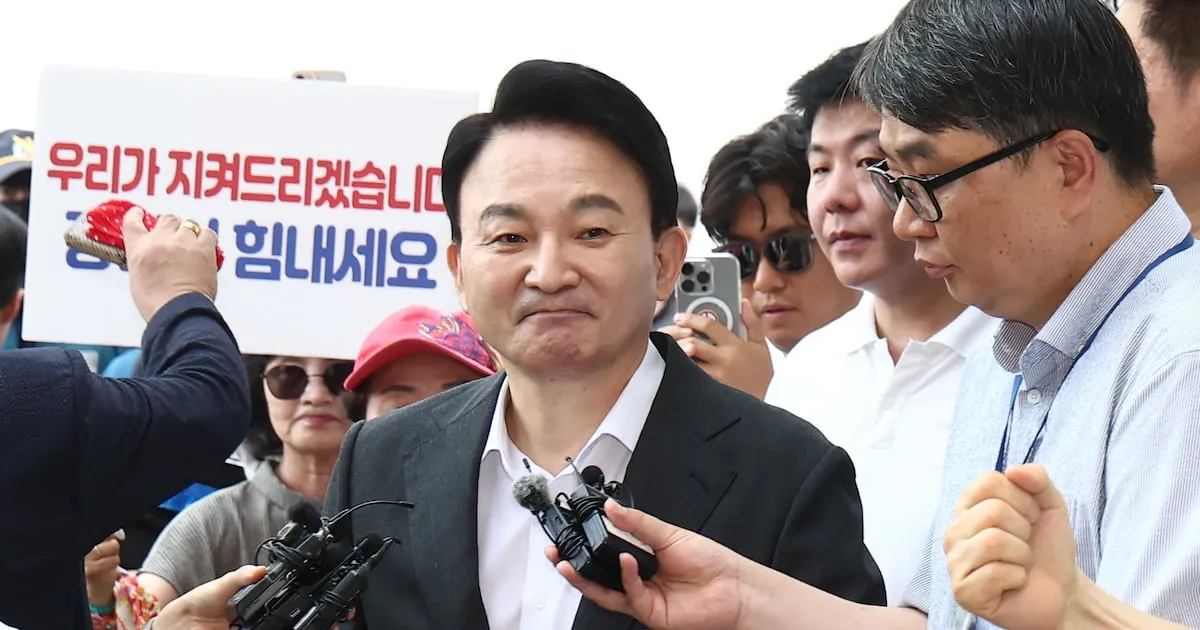
Former Minister of Land, Infrastructure, and Transport Won Hee-ryong has filed an administrative lawsuit challenging the special investigation team’s seizure of his mobile phone and its refusal to return the device. The legal action, filed on November 11th with the Seoul Central District Court, seeks to overturn the team’s decision regarding the return of the seized property.
Understanding the Legal Challenge
An administrative lawsuit, or junhanggo in Korean, is a legal recourse available when an individual disputes an action taken by an investigative body, such as a search and seizure. It allows individuals to petition the court for the annulment or modification of such actions.
The core of the dispute revolves around the investigation into alleged preferential treatment concerning the Seoul-Yangpyeong Expressway project’s route change. Won, who served as minister when the project was being considered, is accused of abusing his authority to benefit his family’s landholdings. The special investigation team seized Won’s mobile phone on October 15th and conducted a forensic analysis of the device on October 28th.
Arguments Over Seizure and Return Procedures
Won’s legal team contends that the forensic examination was conducted illegally because it exceeded the statutory period for returning seized items. Typically, seized items must be returned within 10 days of the seizure, unless there are specific, documented reasons for an extension. According to Won’s side, the seizure warrant stipulated that the seized property should be returned within 10 days, provided there were no exceptional circumstances.
They argue that seized items should be promptly returned after the owner’s participation in the inspection process. Even if exceptional circumstances exist, the return period should not extend beyond 10 days from the date of seizure. Therefore, they assert that the subsequent forensic examination was unlawful.
Special Prosecutor’s Defense
The special prosecutor’s office has refuted these claims, stating that the delay in the forensic examination schedule was due to requests from Won’s legal team and the need to coordinate schedules. Kim, a special prosecutor, explained during a press briefing on November 10th that Won had initially instructed his legal representative to arrange the specific investigation and forensic schedule. The investigation team subsequently attempted to contact the lawyer multiple times but did not receive prompt responses.
Kim further elaborated that the initial investigation date, originally set for October 20th, was postponed to October 23rd at the request of Won’s legal team, citing difficulties in attending on the original date. However, Won’s side did not agree to a forensic schedule during the October 23rd investigation.
The prosecution stated that Won’s side expressed willingness to participate in the investigation on October 28th, provided the investigation concluded without further procedures. However, by that date, more than 10 days had passed since the seizure of the mobile phone, leading Won’s legal team to argue the illegality of the subsequent forensic process.
Kim, the special prosecutor, added, “The legal representative of former Minister Won agreed to the forensic examination on October 28th, but then argued that the procedure was illegal because more than 10 days had passed since the seizure of the mobile phone.”
Background of the Expressway Controversy
The controversy surrounding the Seoul-Yangpyeong Expressway project centers on allegations that the Ministry of Land, Infrastructure, and Transport (MOLIT) altered the planned route in 2023 to favor land owned by the first lady, Kim Keon-hee, and her family. The original route, proposed in 2021 and passing through Yangpyeong, had reportedly passed feasibility studies.
However, in May 2023, MOLIT began considering an alternative route passing through Gangsan-myeon, an area where the first lady’s family holds significant land. This shift in plans ignited the controversy and led to accusations of undue influence. Former Minister Won announced the cancellation of the expressway project in July of the same year.
Conclusion
The administrative lawsuit filed by former Minister Won Hee-ryong highlights a critical legal battle over investigative procedures and the interpretation of seizure and return protocols. As the court deliberates on the legality of the mobile phone seizure and forensic analysis, the case underscores the complexities involved in high-profile corruption investigations and the legal safeguards intended to protect individuals’ rights.
