

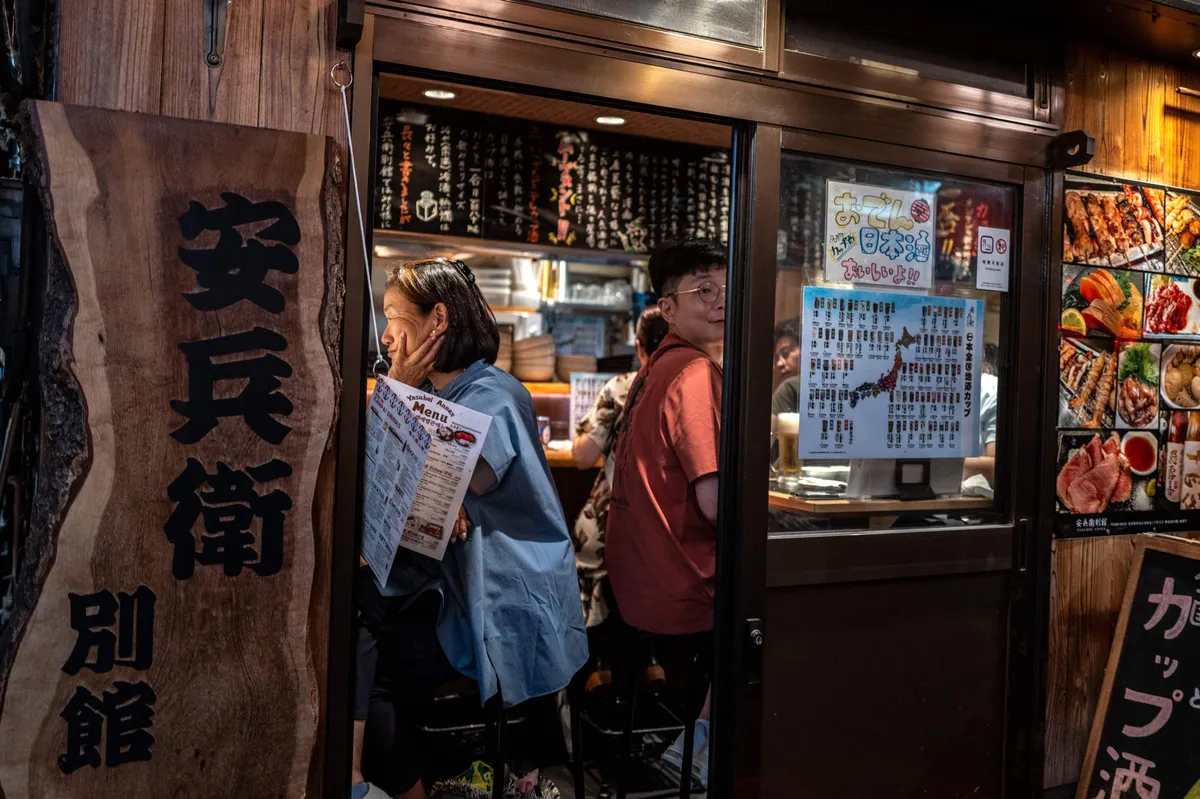
Japan’s beloved izakaya, traditional pubs that have long served as havens for weary office workers, are confronting an unprecedented crisis. The establishments are facing record-high closure rates, grappling with a dual assault of soaring ingredient and rent costs, coupled with a fundamental shift in drinking culture. This evolving social landscape, where post-work drinking sessions are no longer extending into multiple rounds, is leading to a widespread collapse, particularly among small, independently owned businesses.
Record Closures Signal Deepening Crisis
Data compiled by Tokyo Shoko Research, a Japanese credit research firm, reveals a stark reality: the first half of 2023 saw 118 izakaya closures. This figure represents the highest number recorded for the January-to-June period since comprehensive statistics began in 1989. The overwhelming majority of these shuttered establishments, over 90%, were small businesses employing fewer than ten people, underscoring the vulnerability of these traditional neighborhood spots.
Economic Pressures Mount
The primary driver behind this wave of closures is what analysts are calling “cost-push inflation.” While the prices of essential ingredients have climbed significantly, izakaya owners have been hesitant to pass these increases onto customers. This reluctance, stemming from a fear of alienating patrons and losing business, has severely eroded profit margins. The inability to adjust pricing in line with rising operational expenses is making it increasingly difficult for many izakayas to remain solvent.
Shifting Consumer Habits and Government Policy
Beyond economic headwinds, changes in government policy and consumer behavior are further exacerbating the situation. Starting in April of next year, Japan’s government plans to reduce the consumption tax on food and beverages from the current 8% to a mere 1% for a two-year period. While intended to stimulate the economy, this policy is expected to accelerate the trend of “home drinking” (honsu and jipsul), where consumers opt to purchase snacks and drinks from supermarkets to consume at home, rather than dining out.
This shift directly impacts the dining-out market, with projections indicating a significant contraction for the izakaya and horoyoi (lightly alcoholic beverage) sector. According to research by Fuji Keizai Group, the market is expected to shrink by 31% from its 2019 levels, reaching approximately 1.1 trillion yen by 2035. In stark contrast, the fast-food market, encompassing items like hamburgers and conveyor-belt sushi, is forecast to experience robust growth, expanding by 58% to reach an estimated 5.1 trillion yen within the same timeframe.
The End of an Era for Traditional Business Models?
Experts widely agree that the traditional business strategies that once sustained izakayas – characterized by late operating hours, affordable prices, and unlimited alcohol offerings – are no longer viable. The landscape of consumer demand has fundamentally changed.
Miwa Daisuke, a restaurant industry analyst, observed, “The form of demand has changed.” He elaborated, “A new era of differentiation has begun, where only establishments that can offer a truly unique experience, such as featuring local sake or distinctive, original menus, will be able to survive.” This suggests a future where izakayas must evolve beyond their traditional roles to offer compelling reasons for customers to venture out and spend.
Adapting to Survive: The Path Forward
The challenges facing izakayas are multifaceted, involving economic pressures, evolving consumer preferences, and potentially unfavorable policy shifts. To navigate this difficult period, many establishments are exploring innovative strategies. Some are focusing on enhancing their unique selling propositions, perhaps by curating a wider selection of craft beers, regional sakes, or developing signature dishes that cannot be replicated at home.
Others are experimenting with different service models, such as offering more refined, higher-end experiences or, conversely, focusing on value-driven, quick-service options. The emphasis is shifting from simply providing a place to drink to creating a memorable culinary and social experience. The ability of izakayas to adapt, innovate, and offer distinct value will be critical in determining their survival in this rapidly changing market.
The decline of the izakaya is more than just an economic story; it reflects a deeper societal shift in how people socialize, relax, and spend their leisure time. As Japan’s traditional pubs face their toughest challenge yet, their future hinges on their capacity to reinvent themselves and reconnect with a new generation of consumers.
