

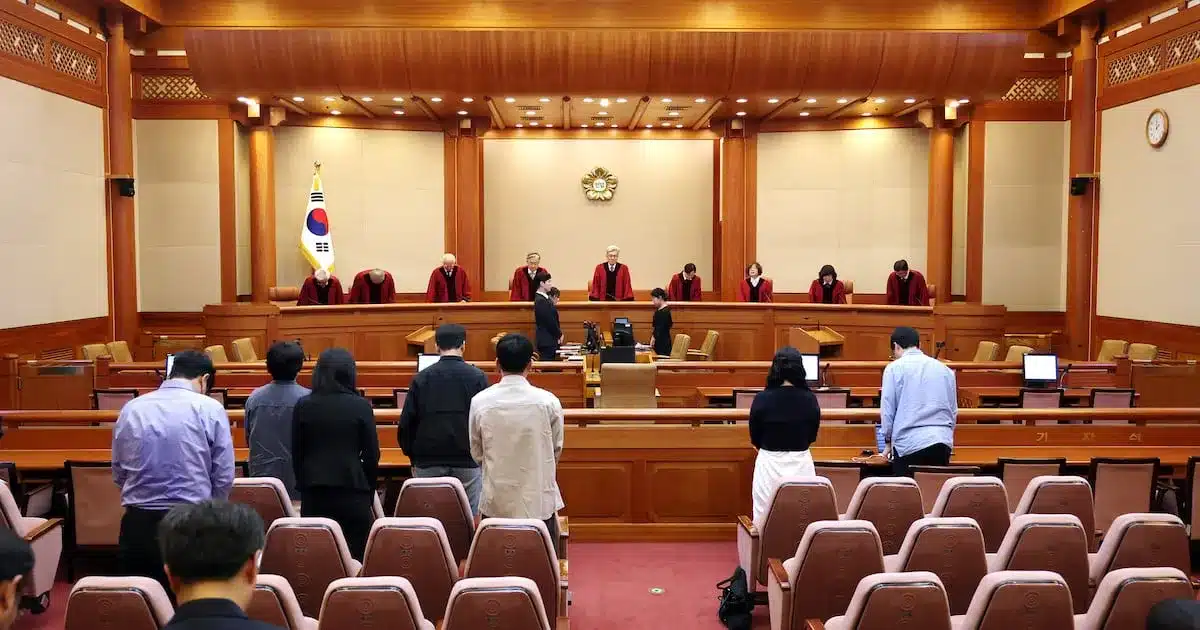
Constitutional Court Rules Against Extensions for Bar Exam Takers
The Constitutional Court has ruled to uphold existing regulations that limit the number of times individuals can take the bar examination. Specifically, the court determined that the five-year window following graduation from law school, during which candidates can attempt the exam up to five times, does not require an exception for pregnancy or childbirth.
The Case and the Ruling
The court reviewed seven consolidated cases brought by individuals who had failed the bar examination. Among them, Kim Nuri, who graduated from law school in 2016, failed her first bar exam attempt. She subsequently gave birth to two children and failed the exam again in 2020. Despite only attempting the exam twice due to pregnancy and childbirth, she has now exhausted her eligibility under the ‘five-failure’ rule.
Kim argued that the provision in the Bar Examination Act, Article 7, which grants extensions only for military service and not for childbirth, is unconstitutional. She stated, “The Bar Examination Act, Article 7, Paragraph 2, which only recognizes the period of military service as an exception to the bar exam application period, is unconstitutional.”
Arguments for Exception
Another petitioner, Yoon, graduated from law school in 2022 and has attempted the bar exam four times, with two attempts remaining before the 2026 deadline. Yoon also argued that the limitations on application period and number of attempts, along with the exclusion of pregnancy and childbirth as valid reasons for extension, violate constitutional principles.
Justices Kim Hyung-doo, Jeong Jeong-mi, Jeong Hyeong-sik, and Jo Han-chang maintained the existing precedent, stating that allowing exceptions for pregnancy and childbirth could lead to issues of fairness regarding exam opportunities and pass rates, potentially undermining the reliability of the examination system.
Dissenting Opinions Highlight Gender Equality Concerns
However, Justices Kim Sang-hwan, Kim Bok-hyun, Jeong Gye-seon, Ma Eun-hyuk, and Oh Young-jun dissented, arguing that the current rules infringe upon the freedom of occupational choice for aspiring lawyers who are unable to take the exam due to pregnancy and childbirth.
These justices pointed out that a significant majority of female bar exam takers are between 25 and 34 years old, a period often coinciding with decisions about marriage, pregnancy, and childbirth. They argued that requiring individuals to prepare for and take the bar exam during such a critical life stage, which involves significant physical and mental burdens like hormonal changes and the pain of childbirth, is unreasonable and creates extreme stress.
The dissenting justices also invoked the constitutional duty of the state to protect motherhood, emphasizing the importance of a proper birth rate and population for national existence and development.
Historical Context and Previous Challenges
The law school system was introduced in 2009, with the first bar examination held in 2012. Since then, several constitutional challenges have been filed regarding the ‘five-failure’ rule. In November 2020, four justices had previously argued that failing to consider unavoidable circumstances such as pregnancy and childbirth constitutes an infringement of equal rights.
Park Eun-seon, a lawyer representing Kim, questioned the inconsistency in legal interpretations, noting that the Constitutional Court has recently referenced the issue of ‘low birth rates’ multiple times in rulings related to parental leave, despite upholding the current bar exam regulations.
Recommendations for Change
In December of last year, the National Human Rights Commission recommended that the Ministry of Justice consider a system where one year of leave is granted for childbirth, which would not count towards the application period for the bar exam.
