

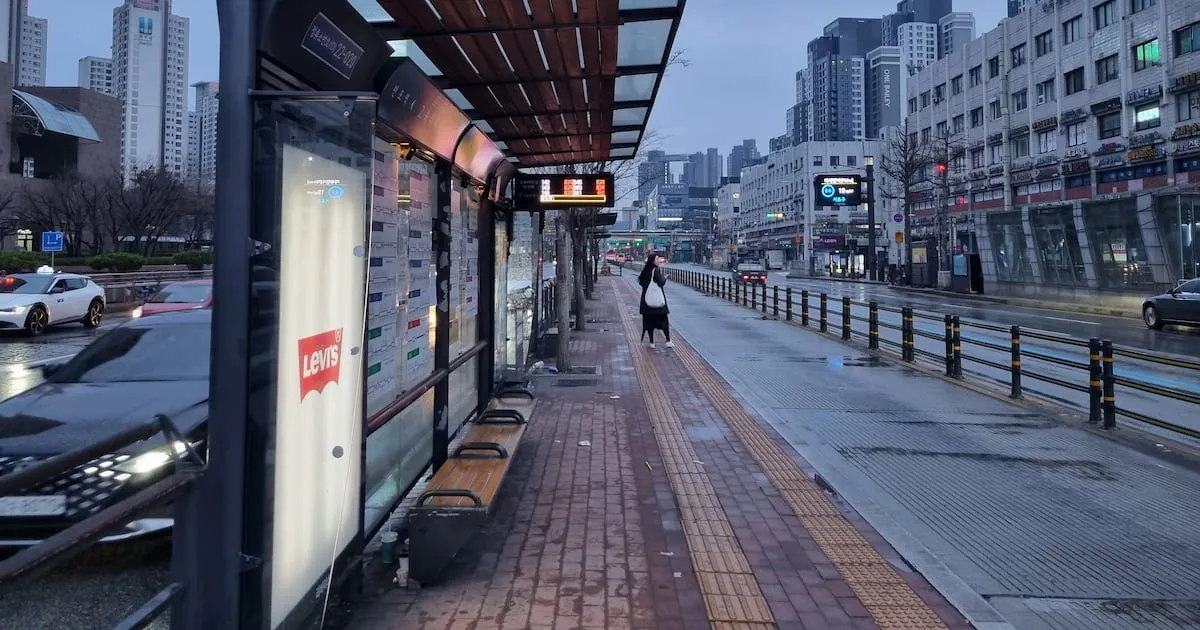
Seoul’s city buses face a potential shutdown on December 16th, as the bus labor union has voted against their current contract, raising the possibility of a strike. This follows a similar situation in January, where the first day of a bus strike saw only 6.8% of services operating, effectively halting over 90% of the city’s buses. The prospect of another “commute crisis” eight months later has intensified calls to designate city buses as an “essential public service,” akin to railways, subways, and airlines.
Proponents argue that designating buses as essential would mandate a minimum level of operation even during a strike, ensuring citizens’ basic mobility rights are protected. Seoul Metropolitan Government has recently reiterated its request to the central government for related policy revisions.
Seoul Seeks Policy Change Amidst Strike Threat
According to the Conference of Mayors of Metropolitan Cities, Seoul submitted a policy proposal to the central government seeking the inclusion of city buses in the list of essential public services. The core of the proposal is to establish a legal basis that would allow for a certain percentage of bus services to continue operating, even if a strike occurs.
Current labor laws define essential public services as those whose suspension could cause significant disruption to daily life or the national economy. Railways, urban railways, airlines, hospitals, and utilities like electricity, water, and gas are prime examples. For these designated services, labor and management negotiate “essential service maintenance agreements” that stipulate the minimum work and staffing levels required during a work stoppage. In some cases, substitute labor can be utilized within certain limits.
However, city buses are currently categorized only as “public services.” While they have a longer period for wage negotiations compared to general businesses, the mandatory maintenance of essential services does not apply if a strike begins. Furthermore, there are restrictions on deploying substitute labor. Seoul City explains that these factors inevitably lead to a sharp decline in operational rates when large-scale strikes occur.
This is the third time Seoul has formally requested that city buses be designated as essential public services. Similar proposals were submitted in 2024 to the central government’s policy review and the Conference of Mayors of Metropolitan Cities after the January strike. Last year, the same request was made through the Central Administrative Deliberation Committee of the Ministry of Interior and Safety.
Divergent Views Within Government: Mobility vs. Labor Rights
Opinions are divided within the central government regarding the designation. The Ministry of Employment and Labor maintains a cautious stance on adding city buses to the essential services list. They emphasize the need for strict application of the essential service scope, considering the constitutional protection of labor rights. There are concerns that mandating minimum operations during a strike could effectively limit the collective bargaining power of labor unions.
Conversely, the Ministry of Land, Infrastructure and Transport supports the designation. They point to the significant impact on citizens’ daily lives, including commutes and transportation, when bus strikes occur. Additionally, they highlight the public nature of “quasi-public” buses operated by local governments with subsidies, arguing they are comparable to subways in their public service role. This is particularly true in regions without subway access, where city buses often serve as the sole public transportation option, such as in Ulsan and Changwon, Gyeongsangnam-do.
The two ministries also expressed differing views on a proposed amendment to the Labor Union Act, put forth by Representative Shin Dong-wook of the People Power Party earlier this year. The amendment aims to include regular route passenger transport services within the scope of essential public services.
Substantial Subsidies and the Need for Minimum Operations
The fact that major local governments, including Seoul, operate city buses as “quasi-public” services also bolsters the argument for their essential service designation. This quasi-public model involves local governments managing routes and fares, and subsidizing operational costs that exceed revenue. This system has expanded from Seoul, adopted by major cities like Busan, Incheon, Daejeon, Daegu, Gwangju, and Changwon.
The financial burden on local governments is considerable. The average annual subsidy for Seoul’s city buses over the past five years has been approximately 603.3 billion KRW. For the current year, a deficit of 512.7 billion KRW is projected. Accumulated deficits from previous years reach 898.6 billion KRW. These figures do not yet account for additional personnel costs resulting from general wage increases.
The current wage negotiations are also marked by a dispute between labor and management over salary increases. The private Seoul Bus Transport Association claims that if the union’s demands for salary and general wage increases are met, annual incomes would reach approximately 85 million KRW. However, the labor union has refuted this, presenting income statements showing that the average annual salary for an employee with 20 years of service last year was around 55.55 million KRW, calling the association’s figures exaggerated.
A Seoul City official acknowledged the need to respect workers’ legitimate right to earnings but stressed that the recurring situation where bus operations fall to single digits, paralyzing citizens’ commutes and daily lives, must be prevented. “A systemic mechanism is needed to ensure minimum bus operations, striking a balance between labor rights and citizens’ mobility rights,” the official stated.
