

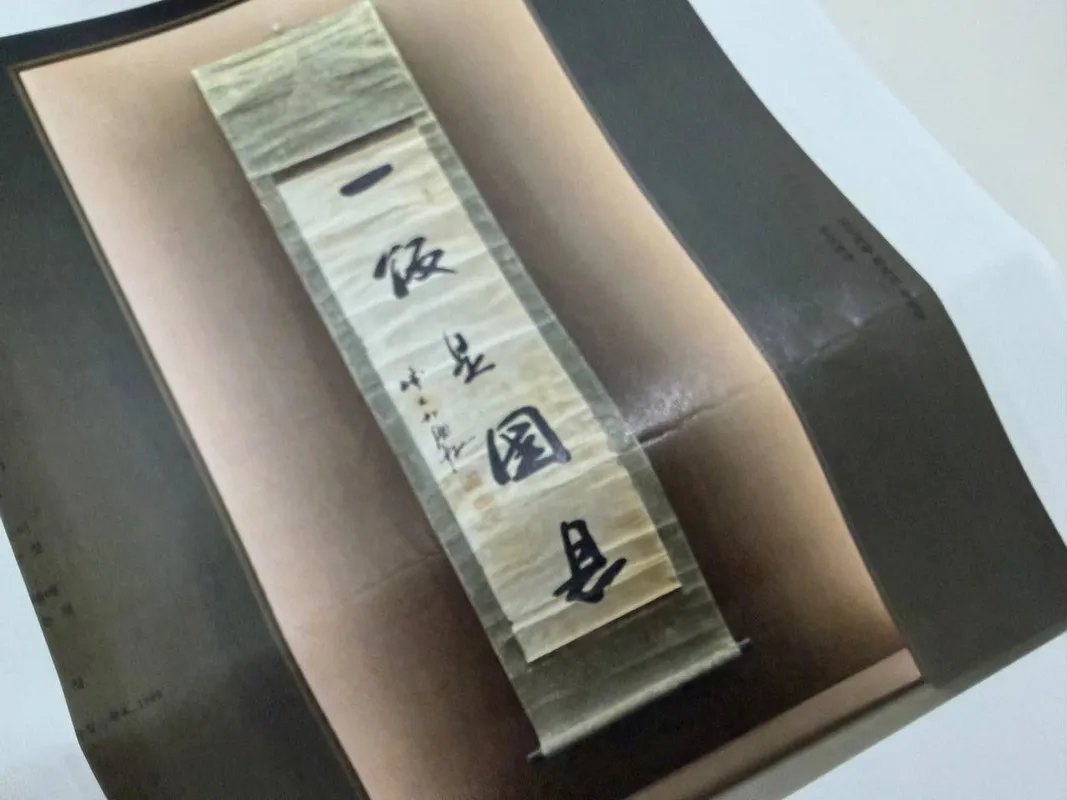
The National Museum of Korean History has issued an apology after a special exhibition mistakenly presented a calligraphy piece by Seo-ye as the work of patriotic independence activist Park Won-geun. Investigations revealed the calligraphy, titled ‘Ilbansiguk-eun (A Meal is a Nation’s Grace)’, was actually created by Park Joong-yang, a figure known for his pro-Japanese activities during the colonial era.
Museum Admits Oversight in Authentication Process
The museum acknowledged that its verification process for exhibition items was insufficient, leading to the misattribution. The issue came to light approximately one month after the exhibition opened, when external sources raised concerns about the artwork’s authenticity. Museum director Yoo Hong-joon stated, “Accurate verification of historical figures is the most basic duty the museum owes to the public, and we failed in this regard.” He expressed deep regret for the error.
The special exhibition, themed ‘Our Dining Table’, featured the Seo-ye artwork, which was initially presented as a relic of Park Won-geun. The misattribution gained significant public attention when a photograph of Park Won-geun’s family members kneeling and weeping in front of the display was shared. However, just over a month after the exhibition’s opening on July 10th, reports emerged suggesting that the signature ‘Park Won-geun’ on the artwork was, in fact, another name used by Park Joong-yang. This led to the immediate removal of the piece from display.
In-depth Investigation Confirms Park Joong-yang’s Authorship
Following the controversy, the museum established an expert advisory committee comprising seven specialists in fields such as Seo-ye, modern Korean history, ancient Korean documents, and conservation science. This committee conducted a comprehensive review of the artwork. Their consolidated findings concluded that the calligraphy was indeed written by Park Joong-yang during his time studying abroad in Japan.
The museum’s statement detailed the comparative analysis: “By comparing the ink and the writing style of the ‘Ilbansiguk-eun’ artwork with Park Joong-yang’s known writings, we found similar characteristics in the ink application and processing methods. This strongly suggests it is Park Joong-yang’s work.”
Analysis of Seals and Inscriptions Supports New Attribution
Further evidence supporting the re-attribution came from the seals inscribed on the artwork. The ‘Du-in’ (a type of seal placed on the head of a document) on the upper part of the piece contained characters that matched those of a seal created for Park Joong-yang in late 1932 by Kim Tae-seok (1874-1951). This seal was reportedly made by Kim Tae-seok for Park Joong-yang.
The museum also pointed to the use of the term ‘Han-in’ (Korean person) in the inscription on the relic. According to the museum, this expression was commonly used by Korean students or visitors in Japan during the Korean Empire period. While Park Won-geun was born during the Japanese colonial rule and there are no records of him staying in Japan, Park Joong-yang studied in Japan from 1896 to 1903, during the Korean Empire. This timeline aligns perfectly with the period when the term ‘Han-in’ was prevalent among Korean expatriates.
Wider Context Points to Park Joong-yang’s Pro-Japanese Stance
The investigation also examined Seo-ye artworks circulating on international auction sites, including those in Japan. Several pieces bearing the same writing style and seals as ‘Ilbansiguk-eun’ were found, and these were also attributed to Park Joong-yang. Significantly, some of these works were created for Japanese recipients.
The museum emphasized the disconnect between Park Won-geun’s life and the nature of the discovered works. “It is highly improbable that independence activist Park Won-geun, who endured imprisonment multiple times for his underground resistance activities and left behind numerous Seo-ye works, would have produced such a volume of calligraphy for distribution, especially for Japanese individuals,” the museum stated. “This strongly supports the conclusion that the works belong to Park Joong-yang, a collaborator who engaged in pro-Japanese activities.”
Museum Pledges Enhanced Verification and Apologizes to Family
The National Museum of Korean History plans to formally explain the investigation’s findings and results to the descendants of Park Won-geun and offer a formal apology. The museum also committed to strengthening its pre-exhibition verification procedures to prevent similar incidents from occurring in the future.
Director Yoo Hong-joon reiterated the apology, stating, “I once again convey our sincere apologies to the bereaved family and the public. We will further reinforce our exhibition item authentication process to ensure such an incident is never repeated.”
