

An investigation into alleged illicit funds has expanded, reportedly ensnaring the former wife of SK Group Chairman Chey Tae-won and the daughter of former President Roh Tae-woo, Roh So-young. The Seoul Central District Prosecutors’ Office is conducting a search and seizure operation related to a ’30 billion won memo’ allegedly authored by Kim Ok-sook, the widow of the late President Roh Tae-woo. This memo was reportedly submitted to the court during the ongoing divorce proceedings between Roh So-young and Chey Tae-won, concerning asset division.
Investigation Targets Alleged Embezzlement and Tax Evasion
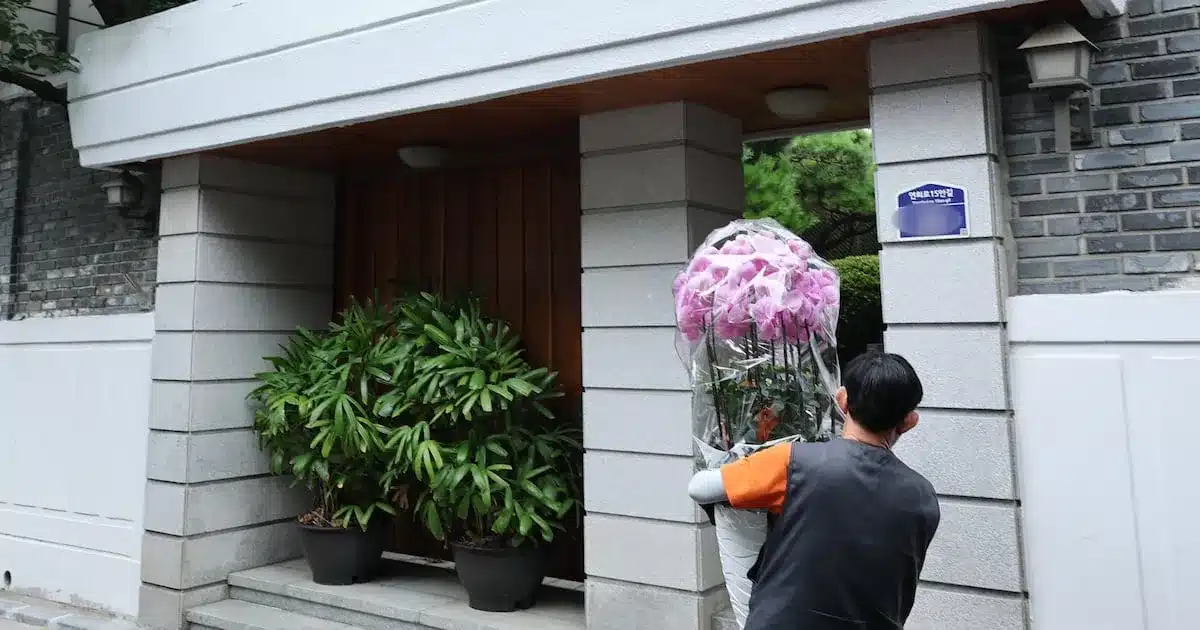
The prosecutors’ office is investigating potential embezzlement and tax evasion charges. On November 21st, authorities searched the Seoul Seodaemun-gu residence of Kim Ok-sook, along with other properties. The investigation also includes the residences of former aides to President Roh, who are suspected of providing account information used to manage the alleged slush funds. Roh Jae-heon, the son of the former president and brother of Roh So-young, who heads the Dong-A Cultural Foundation and the Roh Tae-woo Center, is also reportedly among those whose properties were searched.
Roh So-young’s Appeal and the ‘Kim Ok-sook Memo’
During the appeal phase of her divorce trial in May 2024, Roh So-young submitted the diary memo from Kim Ok-sook as evidence. The memo reportedly details alleged slush funds amounting to 90.4 billion won, including a specific mention of ‘Sunkyeong (SK) 30 billion won.’ Roh’s legal team argued that this money, allegedly transferred by former President Roh Tae-woo to the late Choi Seon-gyeong, former chairman of SK, in 1991, was used in SK Group’s business activities, such as the acquisition of Pacific Securities. The claim was that this constituted a contribution to Chairman Chey’s wealth, and therefore, Roh So-young’s contribution should be recognized in the asset division.
The appellate court acknowledged this claim, adding SK Inc. shares as divisible assets. Consequently, the estimated assets Chey Tae-won would owe Roh So-young significantly increased, from 1.665 trillion won to 1.3808 trillion won. However, the Supreme Court later ruled that even if the funds were transferred, they could not be considered divisible assets if they were illegally obtained. The court did, however, acknowledge the 30 billion won as potentially being received as a bribe by the former president.
The 5.18 Memorial Foundation’s Complaint
Following Roh So-young’s submission of the memo, the 5.18 Memorial Foundation filed a complaint in October 2024 against Kim Ok-sook, Roh So-young, and Roh Jae-heon. The complaint alleged violations of the Act on the Aggravated Punishment of Specific Crimes, including embezzlement. The foundation claims that the 90.4 billion won mentioned in the memo, an additional 21 billion won suspected to be held by Kim Ok-sook under a pseudonym, and 15.2 billion won deposited in accounts at the Dong-A Cultural Center and the Roh Tae-woo Center, totaling 126.6 billion won, were embezzled.
This marks the first coercive investigation in approximately four years since the complaint was filed. Lee Jin-soo, Deputy Prosecutor General, explained at a National Assembly judiciary committee meeting that the investigation was delayed due to the complexity and age of the alleged slush fund activities. He stated that confirming various criminal suspicions, tracing funds, and identifying the minimum scope of criminal acts required significant time.
Background on Roh Tae-woo’s Slush Funds
In 2013, the prosecution investigated former President Roh Tae-woo’s slush funds, concluding that he had amassed between 450 billion and 460 billion won. While the use of 369 billion won was confirmed, the whereabouts of the remaining 80 billion to 90 billion won remained unknown. In 1997, the Supreme Court sentenced Roh Tae-woo to 17 years in prison and ordered him to pay a fine of 262.896 billion won. His legal team fully paid the fine by 2013.
Legislative Changes and Future Implications
A recent amendment to the Act on the Aggravated Punishment of Specific Crimes, passed by the National Assembly, allows for the confiscation of illicit assets even if the perpetrator has died. This legislation provides a legal basis for the recovery of slush funds for the state. The amendment specifically targets crimes such as rebellion and the abuse of official power for bribery, extortion, and embezzlement. However, some experts suggest that tracing assets from the early 1990s, before the implementation of the real-name financial system in 1993, will be challenging.
It was also noted that Roh So-young is not currently considered a suspect in this ongoing investigation.
