

The National Human Rights Commission of Korea (NHRCK) has ruled that a specific police directive allowing junior officers to draft suspect statements violates legal procedures, urging a revision. The commission’s finding stems from a case where a suspect, identified as Jin, alleged mistreatment during questioning at an open police investigation room. Jin claimed to have felt humiliated by remarks made by a police officer, referred to as Sun-gyeong, who was acting as a team leader, concerning Jin’s alleged involvement in criminal activities.
NHRCK Ruling on Suspect Statement Drafting
While the NHRCK dismissed Jin’s complaint regarding the alleged humiliation, citing insufficient evidence and no indication of personal information leakage, the commission focused on the procedural irregularities. The core issue identified was the drafting of a suspect statement by a junior officer, Sun-gyeong, who allegedly overstepped their authority. This action was deemed to contravene Article 197 of the Criminal Procedure Act, which delineates the investigative powers of senior and junior police officers.
Understanding Police Roles in Investigations
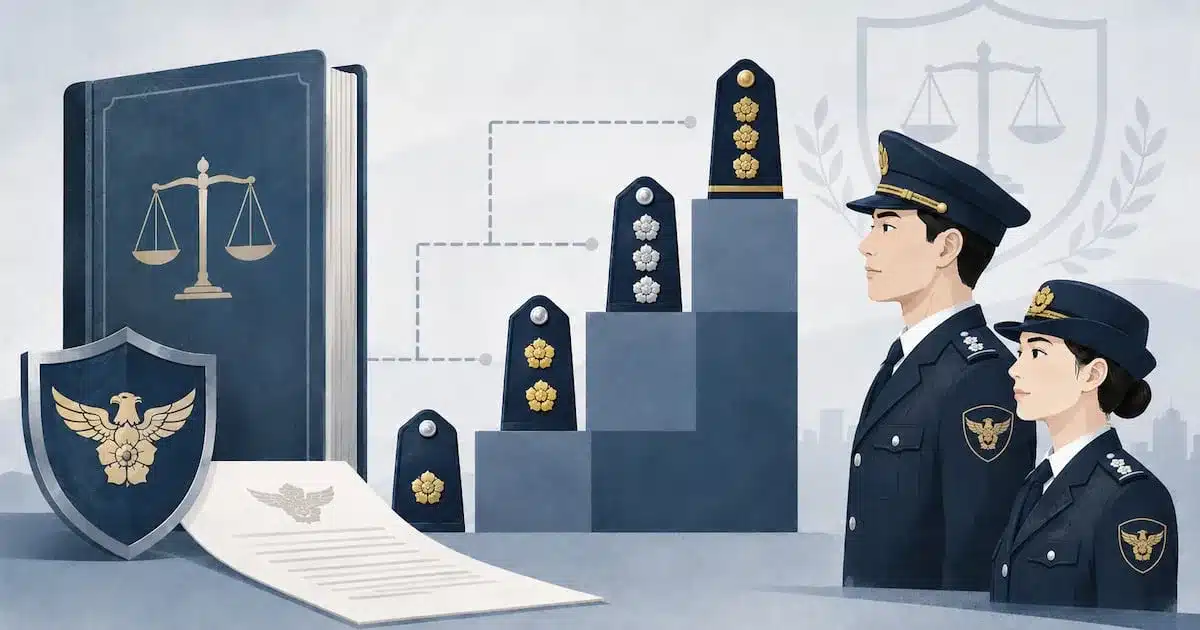
The Criminal Procedure Act clearly defines the roles within police investigations. Senior officers, such as police inspectors (경감), police sergeants (경위), and police corporals (경사), are vested with primary investigative authority. Junior officers, like police constables (순경), are designated to assist senior officers. Specifically, Article 197 outlines that when a senior officer determines there is suspicion of a crime, they are responsible for investigating the facts and collecting evidence. In such cases, junior officers are expected to provide support to the senior officer.
Conversely, Article 39 of the Police Investigation Guidelines permits junior officers to draft suspect statements according to prescribed formats. However, the NHRCK emphasized that Article 243 of the Criminal Procedure Act mandates the participation of a junior officer when a senior officer is questioning a suspect. This implies that the primary authority for drafting suspect statements rests with the senior officer, with the junior officer acting in a supportive capacity.
Procedural Violations and Authority
In the case brought before the commission, the junior officer, Sun-gyeong, allegedly drafted the suspect statement independently. The NHRCK stated that when a junior officer exercises the authority of a senior officer and drafts suspect statements on their own, the resulting document may be considered unlawfully created, potentially infringing upon the suspect’s rights. The commission highlighted that such actions, where a junior officer acts independently in drafting suspect statements, are difficult to justify and lack sufficient legal basis, especially in the current year of 2024.
This is not the first time the NHRCK has raised concerns about this issue. The commission had previously recommended a revision to the police investigation guidelines to prevent such procedural overreach. However, with no changes implemented, the NHRCK felt compelled to issue another recommendation.
Legal Basis for Suspect Statements
The NHRCK’s stance is rooted in the principle that investigations must adhere strictly to legal frameworks. The Criminal Procedure Act is the supreme law governing these processes, and any internal guidelines or directives must align with its provisions. Article 197 of the Act is crucial as it distinguishes between the roles and authorities of different ranks within the police force during criminal investigations.
The commission’s interpretation suggests that while police investigation guidelines can provide procedural details, they cannot supersede or contradict the fundamental principles laid out in the Criminal Procedure Act. The act of drafting a suspect statement is a critical part of the investigation, directly impacting the rights and legal standing of the individual being investigated. Therefore, ensuring that this task is performed by the officer with the legally recognized authority is paramount.
Implications for Future Investigations
The NHRCK’s repeated recommendations underscore a persistent issue within police investigative practices. By emphasizing the distinction between primary investigative roles and supportive functions, the commission aims to ensure that all actions taken during an investigation are legally sound and respect the rights of individuals. The ruling serves as a reminder to law enforcement agencies to regularly review and update their internal procedures to align with higher legal statutes.
The commission’s decision highlights the importance of procedural fidelity in maintaining the integrity of the justice system. Ensuring that investigations are conducted within the bounds of the law not only protects individual rights but also upholds public trust in law enforcement. The NHRCK’s continued advocacy for the revision of police investigation guidelines reflects a commitment to ensuring that all investigative steps are taken with the appropriate legal authority and adherence to established procedures.
Moving forward, it is expected that law enforcement agencies will give due consideration to the NHRCK’s recommendations. A clear delineation and adherence to the roles and responsibilities as defined by the Criminal Procedure Act will be crucial in preventing future procedural violations and ensuring fair and lawful investigations.
