

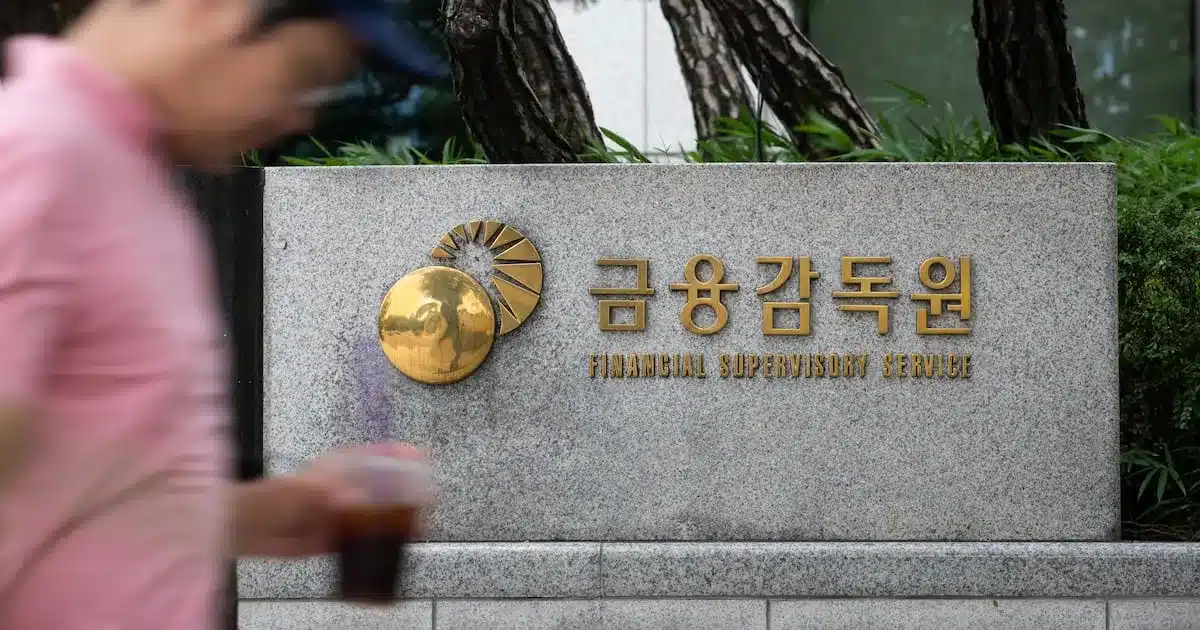
Bondholders of JoongAng Group affiliates, including broadcaster JTBC, have formally requested the Financial Services Commission (FSC) to review the accounting practices related to the issuance of convertible bonds. The bondholders’ representative body announced on the 26th that they submitted a petition to the FSC seeking an examination of the financial statements and audit reports for JTBC, JoongAng Holdings, Daebo Jungang, Contentree JoongAng, and Megabox JoongAng.
Bondholders’ Concerns Over Convertible Bond Issuance
The core of the bondholders’ request centers on the accounting treatment of approximately 226 billion won (roughly $165 million USD) in new convertible bonds issued by JTBC across nine separate instances since 2023. A significant portion of these bonds were reportedly underwritten by affiliated companies within the JoongAng Group or by special purpose entities whose credit was guaranteed by the group. This has raised questions about whether these issuances were appropriately classified as equity in the company’s financial statements.
The bondholders’ representative stated, “We are requesting an audit to confirm whether the company has artificially inflated its capital by accounting for capital as if it were equity, using funds circulating within the group. We need to verify if these bonds were genuinely sold to external investors or if they were merely an internal financial maneuver to mask a capital shortfall.” They are seeking clarity on the true nature of these financial instruments and their impact on the group’s reported financial health.
Allegations of Misclassification and Internal Funding
The bondholders’ petition specifically questions the classification of the 226 billion won in new equity bonds issued by JTBC as equity capital. They argue that a thorough accounting review is necessary to determine if this classification is accurate and compliant with accounting standards. The representative body expressed concern that the group might have manipulated its balance sheet by treating internal capital flows as equity, thereby presenting a potentially misleading picture of its financial stability to investors.
The group’s representative further elaborated on the request: “Through this audit, we aim to ascertain whether the company has been masking a capital deficit by booking book capital through funds that circulated internally within the group, and then selling bonds based on this misrepresented capital, rather than selling actual equity to individuals.” This suggests a suspicion that the bond issuances were not genuine capital-raising exercises in the traditional sense but rather an accounting technique to shore up reported equity levels.
JTBC’s Stance and Previous Default
JTBC, in response to these allegations, has maintained that it has accurately disclosed its financial situation in accordance with corporate accounting standards and has complied with the Capital Markets Act concerning the issuance of new equity bonds. The company asserts that its financial reporting has been transparent and in line with regulatory requirements.
However, this dispute arises in the wake of a significant financial event for JTBC. On the 12th of the previous month, JTBC failed to repay 20.6 billion won (approximately $15.7 million USD) in maturing liquidity funds, leading to a declared default on its debt obligations. This default triggered a series of restructuring procedures for several JoongAng Group affiliates.
Restructuring Procedures and Legal Filings
Following JTBC’s default, a number of its related companies, including JoongAng Holdings, Contentree JoongAng, JoongAng P&I, and Megabox JoongAng, have filed for receivership proceedings. The court has accepted JTBC’s application for the commencement of Autonomous Restructuring Support (ARS) program, and a decision regarding the initiation of receivership proceedings is pending. The court is currently reviewing JTBC’s filing for the ARS program.
The remaining four companies have already commenced their respective receivership processes. This wave of financial distress and subsequent legal filings underscores the precarious financial situation faced by several entities within the JoongAng Group, prompting the bondholders’ urgent call for regulatory scrutiny.
Implications for JoongAng Group’s Financial Health
The bondholders’ request for an FSC review highlights deep-seated concerns about the financial integrity and transparency of the JoongAng Group’s accounting practices. The alleged misclassification of convertible bonds and the use of internal funding mechanisms could have significant implications for the group’s overall financial health and its ability to meet future obligations.
The FSC’s investigation, if undertaken, will scrutinize whether the group’s financial reporting adheres to established accounting principles and regulations. The outcome of this review could impact investor confidence in the JoongAng Group and potentially lead to further regulatory actions or financial restatements. The situation also brings to the forefront the importance of robust corporate governance and transparent financial disclosures, especially for companies that rely on complex financial instruments like convertible bonds.
As the legal and financial processes unfold, stakeholders will be closely watching the FSC’s response and the subsequent actions taken by the JoongAng Group. The bondholders’ proactive stance reflects a growing demand for accountability and clarity in corporate financial dealings, particularly in instances where potential conflicts of interest or internal financial maneuvering are suspected.
