

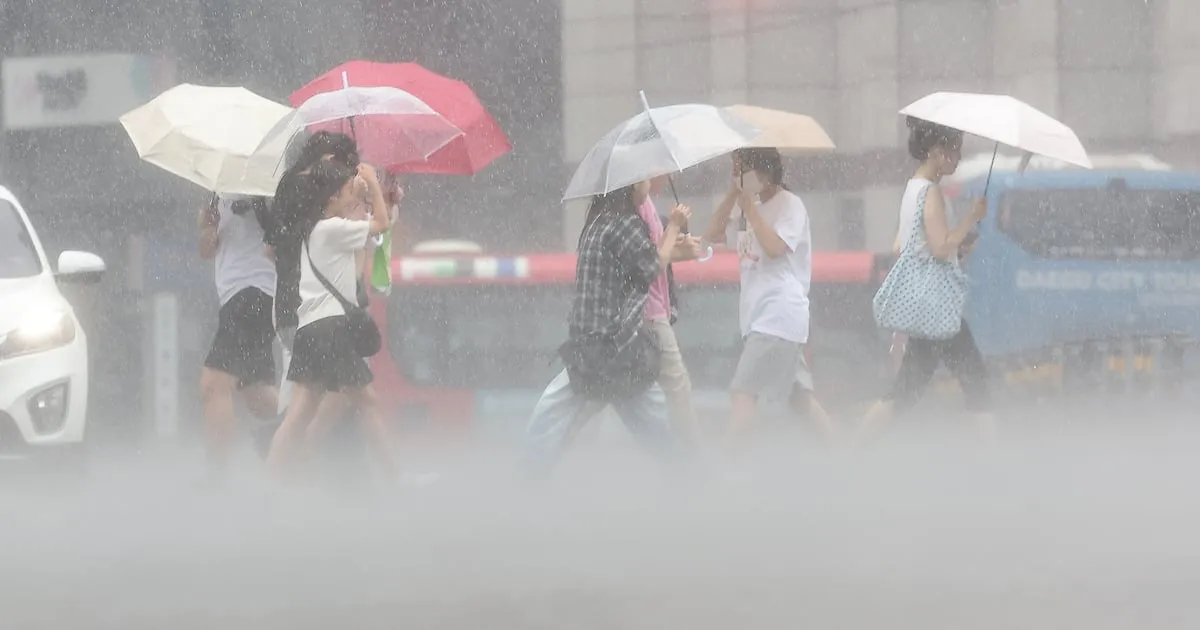
South Korea is bracing for the heaviest rainfall of the summer, with the Central Disaster and Safety Countermeasures Headquarters (CDSCHQ) activating an elevated emergency response level starting early Friday, August 18th. The Meteorological Administration forecasts intense downpours, thunderstorms, and lightning, particularly in central and northern regions, prompting urgent calls for public vigilance and preparedness.
Intense Rainfall Forecasted Across Regions
Beginning early on August 18th and continuing through the morning, the Seoul metropolitan area, Gangwon Province, and the Chungcheong region are expected to experience heavy rain, with hourly precipitation rates of 30 to 50 millimeters. These areas will also be subject to strong winds and thunder. The forecast indicates that the Seoul metropolitan area, inland Gangwon, southern Chungcheong, and northern North Chungcheong regions could see even more severe conditions, with hourly rainfall rates potentially reaching 50 to 80 millimeters.
From August 18th to 19th, total rainfall is projected to be substantial across the country:
- Seoul Metropolitan Area: 100 to 200 mm, with some areas potentially exceeding 300 mm.
- Gangwon Province: 100 to 200 mm, with inland central and southern areas possibly receiving over 300 mm.
- Chungcheong Region: 80 to 150 mm, with southern Chungcheong and northern North Chungcheong areas potentially receiving over 250 mm.
- Jeolla Region: 30 to 80 mm, with northwestern North Jeolla possibly reaching 100 mm.
- Gyeongsang Region: 50 to 100 mm, with northern North Gyeongsang potentially reaching 150 mm.
Government Escalates Emergency Measures
Recognizing the potential for significant damage, especially given that the heaviest rainfall is anticipated during nighttime and early morning hours – periods of heightened vulnerability – the government has raised the CDSCHQ to Level 1 emergency duty status as of midnight on August 18th. This proactive measure aims to ensure a swift and effective response to the impending weather event.
In anticipation of concentrated downpours expected from the afternoon of August 17th, emergency management officials have been urgently dispatched to nine cities and provinces. These field personnel are tasked with assessing the on-the-ground situation and coordinating immediate response efforts.
Minister Urges Strict Adherence to Safety Protocols
Minister of the Interior and Safety, Yoon Ho-joong, convened a meeting with relevant agencies on the afternoon of August 17th at the Government Complex Seoul. He emphasized the critical nature of the upcoming weekend, noting that it marks the official start of the summer vacation season, coincides with a three-day holiday period, and has historically accounted for 90% of fatal casualties from natural disasters in the past three years. The combination of concentrated rainfall during the night and early morning hours presents a particularly dangerous scenario.
Minister Yoon stressed the need for local governments and related organizations to implement thorough and rigorous response measures. He specifically highlighted the expected influx of vacationers to mountains, valleys, camping sites, and overnight rest areas during the holiday period. He urged preemptive safety checks and immediate evacuation orders for areas identified as high-risk, ensuring that visitors are not caught off guard by sudden flash floods or swept away by rising waters.
Addressing Vulnerable Infrastructure and Locations
The Minister also directed attention to specific infrastructure and locations prone to flooding and damage. These include:
- Underground parking lots
- Underground passages
- Riverbank retaining walls
- Semi-basement spaces
- Aging residential buildings
- Areas with poor drainage systems
- Small stream banks
He mandated immediate access control and evacuation for these areas upon detection of any risk, preventing potential tragedies.
Protecting Vulnerable Populations and Ensuring Safe Evacuation
Special attention was also called for the safe evacuation and subsequent return of residents, particularly the elderly or those with mobility challenges. The Minister instructed the utilization of resident support teams to facilitate safe evacuations and ensure that individuals only return to their homes after safety has been thoroughly confirmed.
Furthermore, stringent safety management was ordered for individuals visiting camping sites, overnight rest areas, and valleys. The focus is on preventing accidents related to sudden increases in water levels.
Preventing Secondary Disasters and Ensuring Infrastructure Integrity
Minister Yoon also emphasized the importance of preventing secondary disasters. This includes:
- Regularly inspecting and clearing debris from drainage systems and sewage pumps to prevent blockages.
- Ensuring that reconstruction sites, areas prone to landslide-induced mudslides, and regions affected by previous wildfires are closely monitored to prevent further incidents.
The Minister called for the full mobilization of emergency alert systems, including village broadcasts and civil defense sirens, to disseminate timely weather information and public safety instructions. This comprehensive communication strategy aims to keep citizens informed and guide their actions effectively during the heavy rainfall.
Call for Public Cooperation
Minister Yoon concluded by reiterating the government’s unwavering commitment to protecting citizens’ lives, stating, “There is no such thing as overreaction when it comes to protecting people’s lives.” He urged all relevant agencies, including local governments, to maintain a heightened state of emergency readiness throughout the holiday period and to respond immediately to any detected risks.
He also appealed directly to the public, requesting their full cooperation:
- Refrain from unnecessary outings and avoid visiting high-risk areas during periods of heavy rainfall.
- Actively cooperate with and follow the guidance provided by local government emergency response measures.
The government’s elevated response signifies the seriousness of the anticipated weather event and underscores the importance of collective vigilance and preparedness in mitigating potential damage and ensuring public safety.
