

Government Considers Agricultural Water Sources for Semiconductor Cluster
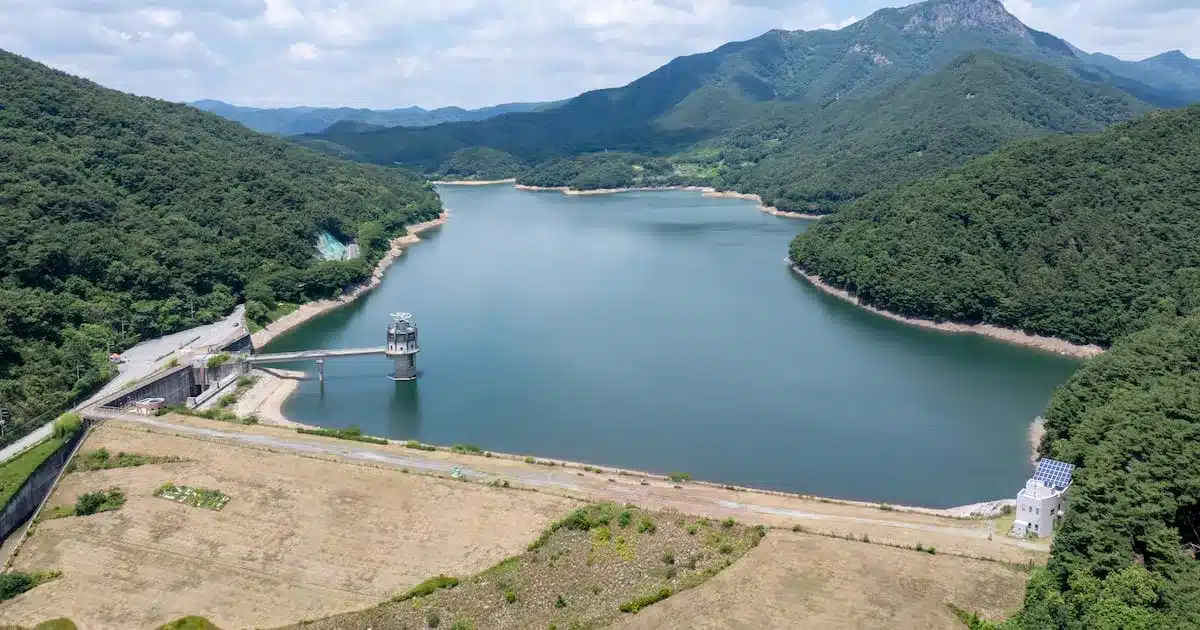
Authorities are reportedly exploring the conversion of agricultural reservoirs to supply water for the burgeoning semiconductor cluster planned for the Honam region. This initiative aims to address potential water shortages by tapping into existing agricultural water infrastructure, particularly in areas like Gwangju and South Jeolla Province, which are slated to host the new facilities.
Addressing Water Scarcity for Semiconductor Growth
Water is a critical component for semiconductor manufacturing, alongside electricity and talent. The industry is notoriously water-intensive, often referred to as a ‘black hole’ for water consumption. The proposed plan involves repurposing agricultural reservoirs to create a stable water supply chain, especially as the Yeongsan and Seomjin rivers, the primary water sources for the region, face limitations in their capacity.
Current Water Resources and Challenges
Currently, the Honam region boasts over 5,400 agricultural reservoirs with a combined storage capacity of approximately 1.12 billion tons when full. The plan specifically targets around 3,200 reservoirs in Gwangju and South Jeolla Province, holding about 720 million tons of water.
However, the initiative faces significant hurdles. For years, water scarcity has been a major concern for attracting advanced industries to Gwangju and South Jeolla Province. Compared to larger river systems like the Han River or Nakdong River, the Yeongsan and Seomjin rivers have a considerably smaller water volume.
Potential Solutions and Their Drawbacks
Initial considerations included drawing water from the Daecheong Dam, located in Daejeon and Chungbuk Province. However, this option is deemed less feasible due to the considerable distance (approximately 170 km to Gwangju), substantial construction costs for pipelines and pumping facilities, and the potential for inter-regional water disputes.
The utilization of agricultural reservoirs presents a more accessible alternative. Major reservoirs like Jangseong, Naju, Damyang, and Gwangju reservoirs alone hold about 300 million tons of water. These could be converted into primary and auxiliary water sources for the semiconductor plants.
Despite this potential, resistance from farmers is anticipated, especially given the increasing risk of droughts due to climate change. Furthermore, the quality of water in these reservoirs poses a challenge. ‘Damsuho,’ formed by blocking rivers, often have high concentrations of urea from agricultural runoff. Urea can interfere with the purification process required for ultrapure water in semiconductor manufacturing, potentially leading to ammonia gas generation in high temperatures and damaging equipment.
The use of desalination facilities is also considered problematic. The remaining ‘boron’ in desalinated seawater, after removing salt, can pass through ultrapure water filters. Boron contamination can cause wafer defects and reduce yield in semiconductor production.
A Necessary, Though Imperfect, Solution
Government officials acknowledge the complexities. “There are no suitable sites for additional dams along the Yeongsan and Seomjin rivers,” stated one official. “Ultimately, we have no choice but to repurpose agricultural reservoirs, a form of ‘water redistribution,’ to meet the demand.”
