

Expert Debunks Election Fraud Claims with Statistical Modeling
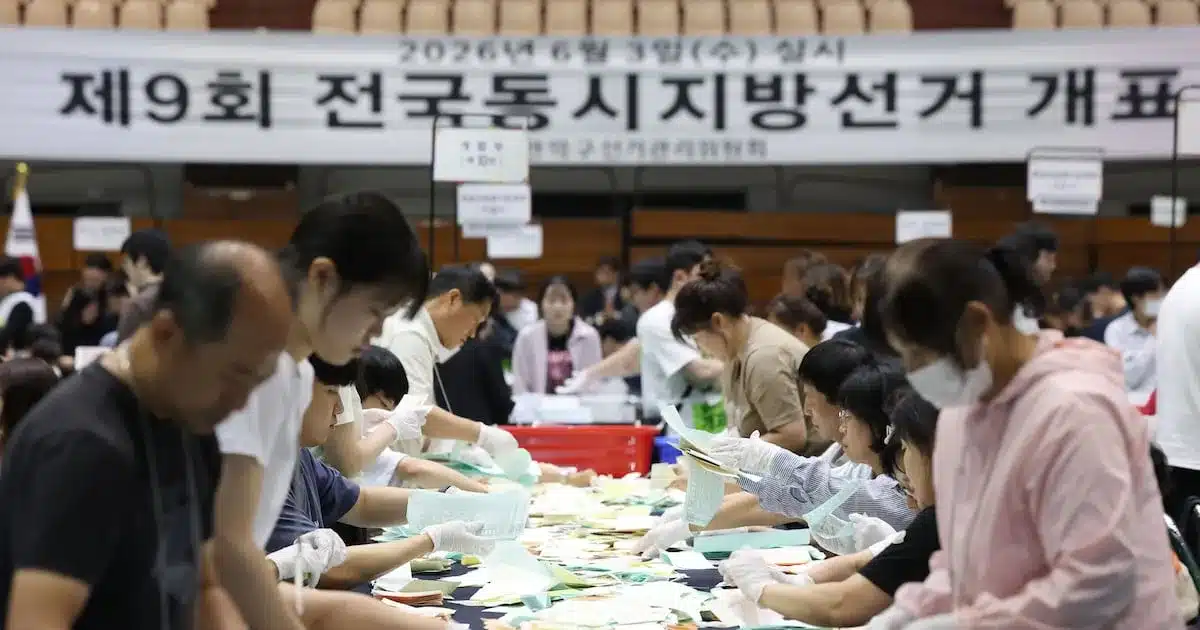
Recent allegations of vote manipulation in the 6.3 local elections have been met with a detailed statistical explanation, asserting that identical vote counts for candidates in certain districts are a natural outcome of probability. Professor Huh Myung-hoe, a renowned statistician and father of Huh Joon-yi, a recipient of the prestigious Philz Award, has presented findings demonstrating that these so-called ‘twin vote counts’ are not indicative of fraud.
Incheon Mayoral Election Case Study
The controversy first surfaced regarding the Incheon mayoral election, where early voting results showed identical vote tallies for the Democratic Party candidate and the People Power Party candidate in Songdo 1-dong and Songdo 2-dong. Professor Huh Myung-hoe likened this scenario to flipping a coin.
He conducted a simulation involving 4,470 coin flips (representing the combined votes of 3,030 for one candidate and 1,440 for another). The probability of observing the same number of heads, mirroring the vote share of the winning candidate, was calculated. Professor Huh explained, “The probability of the number of heads matching is 0.00903, approximately 1%.” This figure, he noted, might seem small in isolation but becomes more understandable when considering the broader context of the Incheon metropolitan area.
With 137 administrative districts in Incheon, the number of ways to pair two districts is 9,316. Assuming a 1% chance of finding two districts with similar vote counts and political leanings, the expected number of such pairs is 93. If the probability of vote counts matching within each of these pairs is also 1%, the expected number of ‘twin vote’ occurrences is approximately 0.84. Therefore, observing even one instance is not statistically improbable.
“Are we to suspect vote manipulation simply because two districts showed identical vote counts?” Professor Huh questioned. “That suspicion is not statistically sound.”
Gwangju-Jeonnam Gubernatorial Election Analysis
A similar situation arose in the Gwangju-Jeonnam gubernatorial election, where early voting records showed five instances of identical vote counts for the Democratic Party candidate (1,401 votes) and the People Power Party candidate (120 votes). Professor Huh’s analysis indicates that this is also statistically plausible.
In this case, the total number of coin flips was 1,521. The probability of matching heads increases with fewer flips. The probability of observing matching heads in the Gwangju-Jeonnam scenario was calculated at 0.9211, significantly higher than the Incheon case.
Furthermore, the Gwangju-Jeonnam provincial election encompassed 393 eup, myeon, and dong. The number of possible pairs of two districts is 77,028, substantially more than in Incheon. Professor Huh concluded, “The occurrence of ‘twin votes’ is more likely in this scenario, making the phenomenon naturally understandable from a statistical perspective.”
Election Commission Affirms Randomness
The National Election Commission also addressed the ‘twin vote’ phenomenon, attributing it to chance. They stated that observers from both major parties were present throughout the counting process. The identical vote counts resulted from the convergence of data from different locations and personnel, which coincidentally matched.
The commission urged the public to refrain from raising unfounded suspicions or spreading baseless rumors about the integrity of the vote counts, emphasizing that such claims lack factual basis. They requested that the public exercise restraint and avoid making unsubstantiated accusations.
