

Confederate Monuments and Colonial Figures Re-emerge Across the United States
Statues that were removed during the 2020 Black Lives Matter protests are being re-erected in various locations across the United States. The movement to reinstate monuments honoring figures like Christopher Columbus and Confederate General Robert E. Lee, once deemed symbols of racial injustice and colonialism, is gaining momentum. This resurgence is occurring as the nation approaches its 250th anniversary of independence, fueling a cultural and political debate over history and identity.
Legal and Political Battles Over Historical Monuments
Reports indicate that conservative groups and citizens are filing lawsuits against local governments or lobbying political figures to restore historical monuments. Their central argument is that removing the past does not erase history. This sentiment is driving a new phase in the cultural conflict surrounding historical interpretations.
The Case of Christopher Columbus in Ohio
A prominent example is the city of Columbus, Ohio, named after Christopher Columbus. Following the widespread protests after George Floyd’s death in 2020, the city council removed a 6.7-meter statue of Columbus from its prominent location in front of City Hall. At the time, city officials explained that the statue symbolized oppression and division.
The statue is currently in storage. However, in April, Italian-American organizations filed lawsuits, asserting that the statue’s removal was unlawful. Jack Conte, who led the legal challenge, told the press, “The silent majority is now speaking out. There’s a limit to imposing a specific historical narrative on people.”
Reinstatement of Confederate Statues in the South
Similar movements are underway in the Southern states. A monument to General Robert E. Lee, once a hero of the Confederacy and a symbol of racial segregation, has reappeared in Marion Square in Charleston, South Carolina. The monument was reinstalled by the United Daughters of the Confederacy as part of a legal settlement with the city.
In Texas, the Texas Rangers restored a statue titled ‘One Riot, One Ranger’ to a public square. The statue was removed in 2020 following criticism that the Ranger who served as the model for the statue had opposed the integration of black students at a public university in the 1950s. However, the organization argued that the legacy of the Rangers, spanning over 200 years, is intrinsically linked to Texas history.
State-Level Intervention and White House Support
The Louisiana legislature has taken a further step, passing a bill that allows the state government to take custody of statues removed by local authorities and relocate or preserve them in state parks. Progressive cities like New Orleans have condemned this move as a “de facto confiscation of local government assets.” However, the conservative-controlled state legislature’s actions have so far overridden these objections.
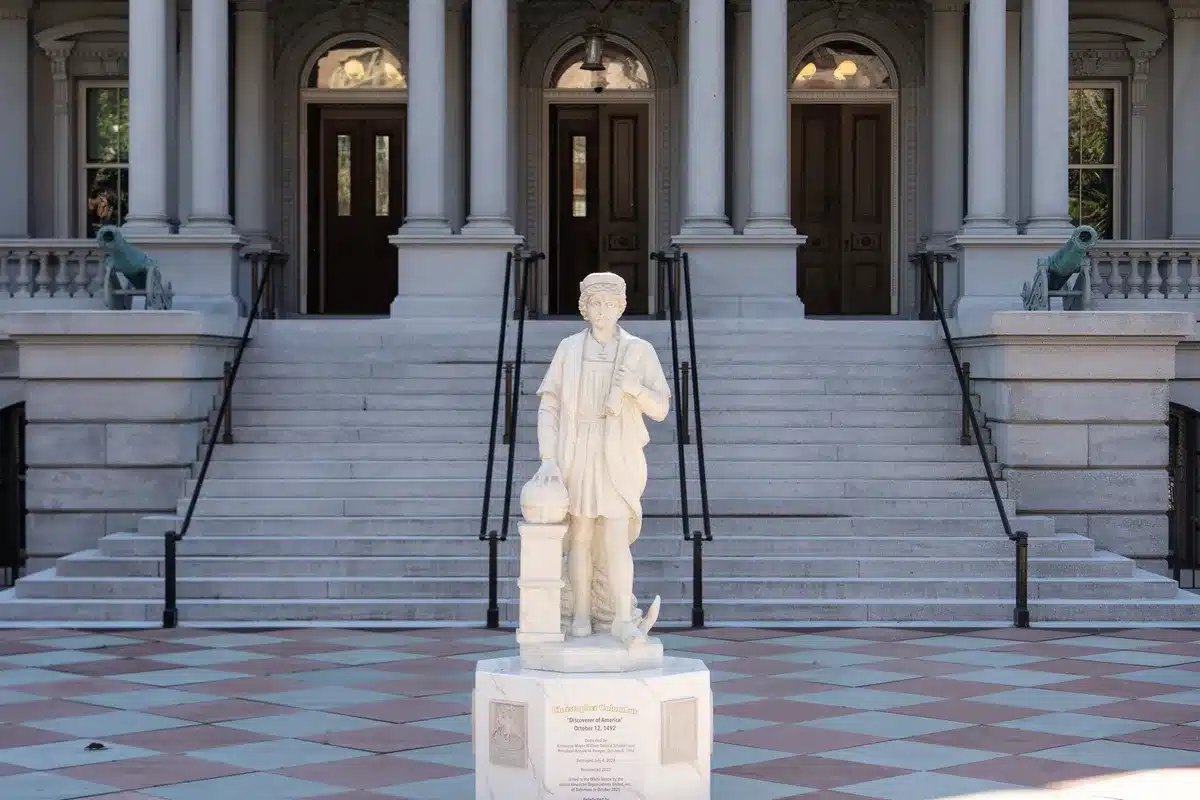
The White House views these “statue revival projects” as central to its agenda. Following the Trump administration’s rise, the debate over restoring monuments has escalated from local issues to a national concern. With the 250th anniversary of American independence approaching, the Trump administration is actively supporting efforts to reinstate historical monuments. In March, a new statue of Columbus was installed in front of the Eisenhower Executive Office Building. This replica is based on the statue that protestors had chained and attempted to push into the harbor in Baltimore in 2020. President Trump praised Columbus as “America’s first hero” in a letter to the media organization that facilitated the installation. More recently, a statue of Thomas Jefferson, a signatory of the Declaration of Independence who owned slaves, has been re-erected in Washington D.C.
Historical Preservation vs. Political Agendas
The White House argues that the 250th anniversary of American independence is an opportunity to re-examine the achievements of the nation’s founding generation. Ben Carson, a former White House advisor, stated, “We must choose whether to honor the historical decisions and figures of the American revolutionary generation or to entrust history to those who seek to use it as a political tool.”
However, this movement faces significant opposition. Academics and progressive groups strongly criticize it as a regressive step in historical understanding. Nicole Moure, president of the American Association for Public History, commented, “Humans can be complex, but racism and mob violence are not complex issues. If we understand history accurately, we must ask ourselves whether we should honor these figures in public spaces.”
Those who oppose the reinstatement of these statues argue that it is an attempt to glorify racism and colonialism under the guise of historical preservation. Conversely, proponents contend that the achievements of historical figures should be evaluated alongside their shortcomings, rather than re-judging the past through the lens of contemporary values.
