

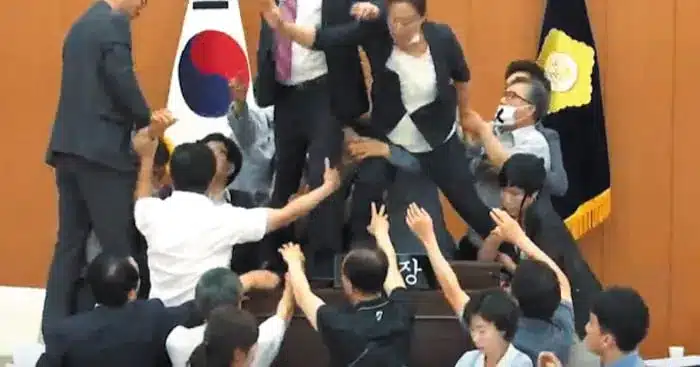
Local council sessions in South Korea have descended into chaos as opposition lawmakers, often fueled by alcohol, shout down speakers and storm podiums. In one recent clash at a Seoul district council plenary, nine officials created pandemonium, with four arrested for assaulting the chair and five more dragged out after entering intoxicated.
Yangcheon District Mayhem
During a July 2024 plenary in Yangcheon-gu, officials yelled ‘Hey, fool!’ at the speaker while demanding a vote recount. Despite pleas from the chair, who remained composed until 9:30 p.m., the disruption escalated. Police arrived, leading to arrests and investigations.
Analysis reveals a pattern: internal party votes splitting 4-5 prompt aggressive outbursts. Frontbenchers handle citizen safety issues calmly, while backbenchers target minjung (progressive) officials.
Past Incidents Echo Chaos
Similar violence struck in 2018 at the same council, where a full-time citizen safety official faced a group assault. That individual later received a 2 million won reward after a nameplate dispute and threats. In March 2024, a Gwangyang city official impersonated a colleague via phone, prompting party intervention and later suspension.
Anyang Dongan-gu saw a July 1 raid where officials brawled during a neighborhood meeting, injuring police. The involved party member denied intent, citing original authority from citizen safety roles.
Bounties and Suspensions Follow
Responding officers report assaults, with some perpetrators receiving up to 6 million won in party funds. One Yeonggwang county official grabbed investigators in May 2024, later threatening a drunk chair in July: ‘Among your officials sits someone threatening residents.’
Suspensions hit others, like a Jinju city member drunk and disruptive in July, facing a 20-day penalty by September.
Judicial Reckoning
Council ethics panels deny political motivations, citing clear violations. Planned hearings include public audits, individual interrogations, 30-day suspensions, and nameplate reviews. Data shows 18.7% of 75 judgments from 226 major cases (2018-2020) involved nameplates, with over half leading to suspensions—highlighting retaliation risks in divided votes.
