

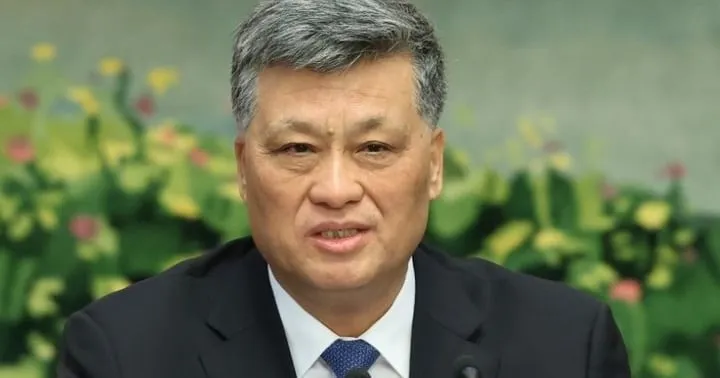
China’s leadership has removed Ma Xingrui, a 66-year-old vice president of the Central Military-Civil Fusion Development Committee and the National Security Council, marking the highest-profile purge in central state-owned enterprises.
Swift Fall from Grace
Officials announced Ma’s ouster on March 3 (local time), just five months after he entered public service in November following a private sector promotion. This development underscores the intensity of ongoing personnel changes within key government bodies.
Over the past two years, six central enterprise executives have faced similar fates, including the head of China Resources Group in October and the president of China Changjiang Savings Bank in January.
Historical Context
Analysis reveals this purge as the most sweeping since the 1976 arrest of the ‘Gang of Four’ after Mao Zedong’s death. Experts note it represents the first such high-level removal in central leadership in nearly 30 years, since the end of the Cultural Revolution.
Ma’s Rise and Expertise
Ma earned a PhD in aerospace engineering at age 34 from Harbin Institute of Technology. He led the China Academy of Aerospace Aerodynamics, directed the China Academy of Aerospace Science and Technology, recommended the state president for national awards, advanced manned spaceflight projects, and contributed to Shenzhou crewed missions.
His career highlights include officially entering the party ranks in 2013, promoting party ideology at China Dangdai Publishing Group, and overseeing Sin Chew Daily’s parent company since 2021.
Signs of Demotion
Absences began in July last year from the party central committee’s political study sessions, followed by skips at key plenary meetings in September and October, central economic work conferences in December, and annual committee plenums in January. He also missed the National People’s Congress session in early March.
These no-shows signal a deliberate sidelining, damaging perceptions of stability in leadership operations.

Links to Sensitive Sectors
Ma’s removal raises concerns over rocket forces and military-industrial ties. Insiders highlight his role in housing military research institutes and acquiring long-range missiles from Russia in 2000.
A Qinghua University professor stated, “China’s military-civil fusion industries connect deeply with rockets and are unrelated to current personnel changes.” A Ding Shupai intelligence chief expert added ties to submarine long-range cruise missile research concerns.
Broader Implications
Observers view Ma’s purge as tied to Xi Jinping’s inner circle, given his party loyalty and real power. Only 21 of 24 current central enterprise vice presidents retain positions.
Experts predict this signals preparations for the 2027 21st Party Congress, with a Keoujian professor warning, “No major position changes mean promotions stall, and without massive replacements, new personnel adjustments won’t gain momentum.” A Mi Singktaengk Atlantic Council fellow noted factional campaign clarity lacks due process.
