

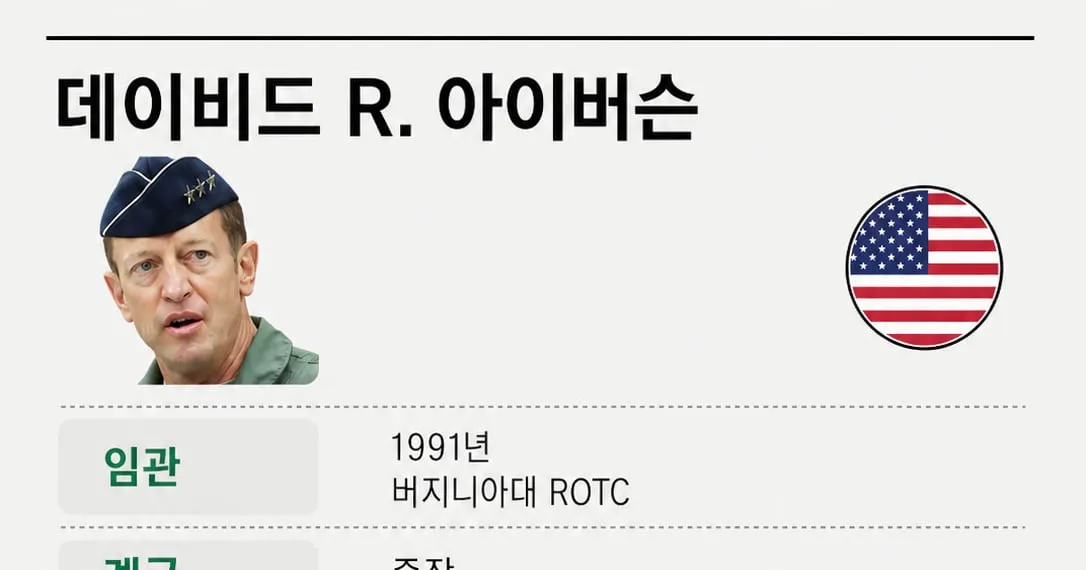
Key Personnel Change Elevates Korean Warfighter Experience to Strategic Pacific Command
A high-ranking United States Air Force commander, who previously oversaw aerial operations on the Korean Peninsula, is transitioning to a pivotal role within the U.S. Pacific Air Forces. This move signals a strategic broadening of focus, extending expertise honed in deterring North Korea to encompass the entirety of the U.S. defense strategy across the Indo-Pacific region.
On August 8th, current U.S. Secretary of Defense Pete Hegseth announced that President Donald Trump has nominated Lieutenant General David R. Ivers to serve as the Deputy Commander of U.S. Pacific Air Forces, based at Joint Base Pearl Harbor-Hickam in Hawaii. The nomination must undergo the standard confirmation process in the U.S. Senate before General Ivers can officially assume his new duties.
Lieutenant General Ivers brings a wealth of operational experience to this new assignment. A decorated combat veteran, he has amassed over 5,400 flight hours, including extensive time in F-15 fighter jets. Since January 2024, he has held critical leadership positions, including Commander of U.S. Forces Korea, Commander of the United Nations Command, and Commander of the Air Component Command for the Republic of Korea-U.S. Combined Forces Command, as well as Commander of the 7th Air Force.
His tenure as commander of the 7th Air Force, following in the footsteps of his predecessor General Ronald Ivers, has been characterized by a firm stance on regional security, according to multiple reports. This latest assignment represents a direct promotion from a field command on the Korean Peninsula to a senior headquarters position within the Pacific theater.
Strategic Significance of the Appointment
Military analysts view this appointment as a significant vertical move for a commander deeply familiar with the dynamic operational environment of the Korean Peninsula. The decision to place such an experienced warfighter into a key planning and operational role within the vast Indo-Pacific Command is being interpreted as a strategic enhancement of combat readiness.
U.S. Pacific Air Forces commands an expansive area of responsibility, covering more than half of the Earth’s surface and managing a force of approximately 46,000 personnel. This command is recognized as a central pillar of American military might in the region.
There is a prevailing analysis within defense circles that the U.S. government is seeking to more deeply integrate Korean defense capabilities into a broader operational framework that addresses challenges posed by China and Russia, as well as potential conflicts across the Pacific.
Leveraging the robust infrastructure and operational capacity at key bases in Korea, such as Osan and Kunsan, General Ivers is expected to play a crucial role in consolidating a formidable air network that links bases in Japan, Alaska, and Guam. His expertise will be instrumental in developing this expansive aerial integration.
The incoming Commander of U.S. Forces Korea will be Major General David G. Shoemaker, who has also been nominated for the position. Major General Shoemaker is also known for his extensive experience serving in Korea, having previously commanded the 8th Fighter Wing at Kunsan Air Base.
The elevation of the outgoing commander to a higher strategic role, coupled with the appointment of a seasoned commander to lead U.S. Forces Korea, suggests that U.S. expectations for the Korean Air Force are likely to increase significantly.
Some observers anticipate that the U.S. military strategy may increasingly call for enhanced air base resilience and rapid recovery capabilities at key Korean installations like Osan and Cheongju. This would include strengthening air defense networks to counter potential threats from ballistic missiles and unmanned aerial vehicles.
The potential exists for the Korean Peninsula to evolve from a purely forward-deployed staging ground into a critical linchpin supporting the operational framework of the entire Indo-Pacific Air Forces within the broader U.S. military strategic planning.
