

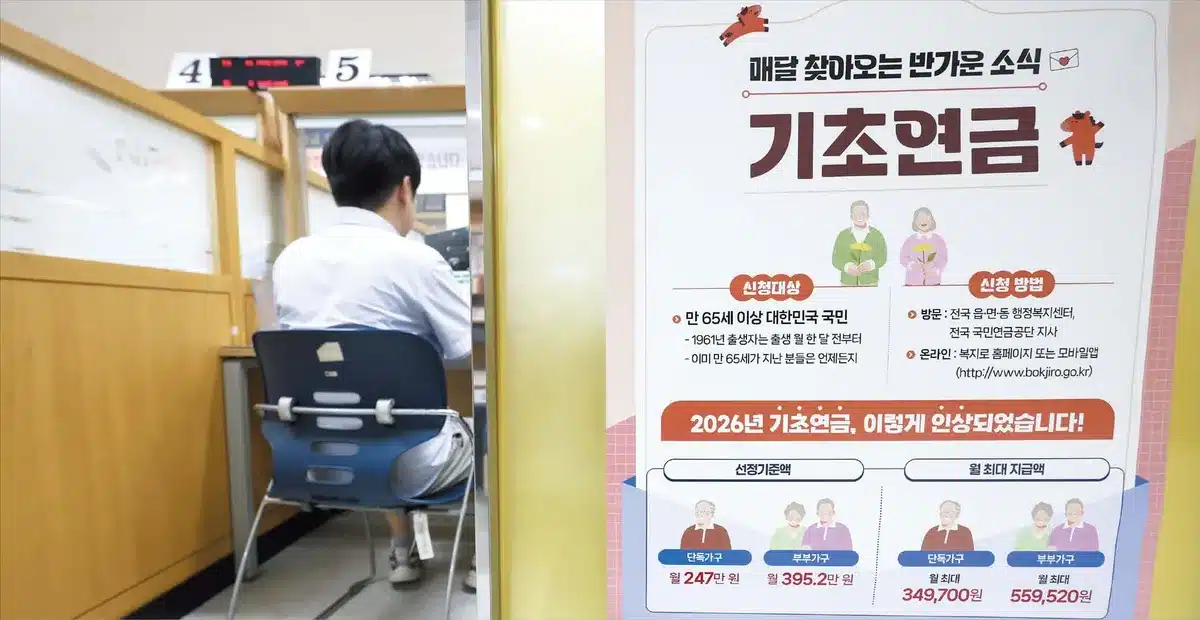
Recent government proposals to reform South Korea’s basic pension system have drawn criticism for failing to address a core issue: the distribution of funds to elderly individuals who do not meet the criteria for poverty. Despite the government’s announcement on the 1st regarding revisions, concerns persist that the system continues to provide pensions to a significant number of non-needy seniors, a practice often referred to as “basic pension scattering.” This approach, critics argue, dilutes the effectiveness of the program and prevents adequate support for those most in need.
Analysis Reveals Discrepancy in Pension Recipients
Research findings have highlighted a significant imbalance in the current basic pension distribution. According to Kim Man-soo, a senior researcher at the National Pension Research Institute, two papers published in February of this year and in 2023 analyzed data from the Elderly Status Survey. The analysis indicated that among individuals receiving the basic pension, the number of non-needy elderly—those not facing poverty—was approximately twice as high as the number of truly needy elderly.
The Elderly Status Survey is a comprehensive, legally mandated survey conducted every three years by the Ministry of Health and Welfare, targeting tens of thousands of seniors. It is considered the most extensive and reliable official survey on the elderly population’s status in South Korea.
Key Findings from the Elderly Status Survey
The research based on the 2020 Elderly Status Survey, which included 10,097 participants, revealed that 6,465 individuals were receiving the basic pension. A closer examination of these recipients showed that a substantial 64.3% (4,155 individuals) were classified as “non-needy elderly.” This classification is based on income exceeding 50% of the median income for all individuals in the country. The median income is a widely accepted benchmark used by research institutions both domestically and internationally to determine poverty levels.
Conversely, only 35.7% (2,310 individuals) of the basic pension recipients fell into the category of “needy elderly,” defined as those with a household income below 50% of the national median.
Wealth Disparities Among Pension Recipients
The analysis further delved into the wealth disparities among basic pension recipients. The top 10% of recipients, in terms of net assets, possessed an average of 556.29 million won. This figure is a staggering 240 times higher than the net assets of the bottom 10% of recipients, who had an average of just 2.32 million won.
Alarmingly, the study indicated that a considerable number of individuals with substantial net assets were still receiving the basic pension. For instance, households with average net assets of 219.5 million won—which is 2.5 times higher than the average net assets of households headed by individuals in their 20s and 30s—were found to be receiving the basic pension.
International Recommendations and Future Projections
International organizations have also weighed in on South Korea’s basic pension system. The Organisation for Economic Co-operation and Development (OECD) has previously commented on the program, stating that it “divides limited resources too thinly among too many elderly people.” The OECD recommended a more targeted approach, emphasizing the need to direct support precisely to those who require it the most.
The current system’
